Fijileaks
  • Home
  • Archive Home
  • In-depth Analysis
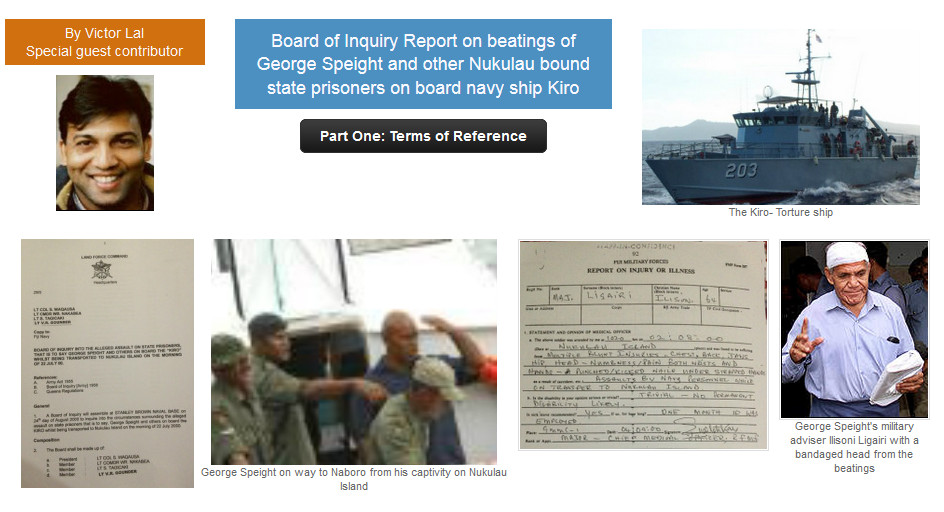
    • BOI Report into George Speight and others beatings
  • Documents
  • Opinion
  • CRC Submissions
  • Features
  • Archive

TURKEY: The £43m-a-year President, his 'shopaholic' wife and their £2,000 per roll silk wallpaper in the bathroom: Inside tyrant's £500million palace... so dripping in gold 'it would have even made Saddam blush'

18/7/2016

2 Comments


* Turkey President Recep Erdogan has £139million fortune and three palaces
* Wife is known for her love of luxury shopping trips and antique collecting 

* She caused chaos by closing a Brussels shopping centre for retail therapy 
* And in Warsaw she spent £37,000 on some antiques in one splurge alone - Source: The Daily Mail, London
Picture
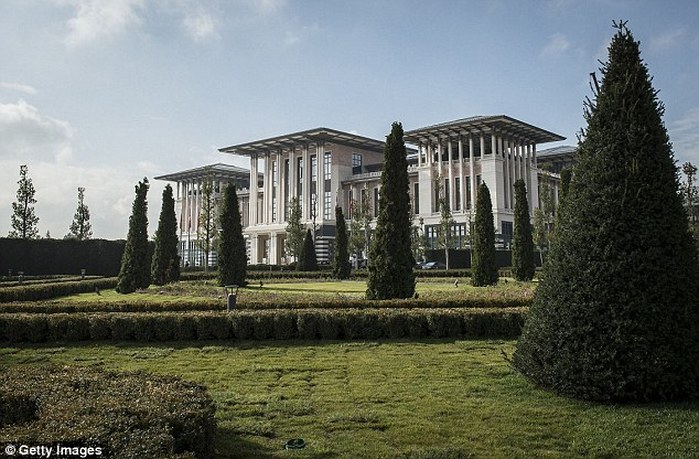
No expense spared: Critics of the monstrous building have said it is so extravagant that it would have made Iraqi dictator Saddam Hussein, known for his love of gold and jewel encrusted fittings, blush
Picture
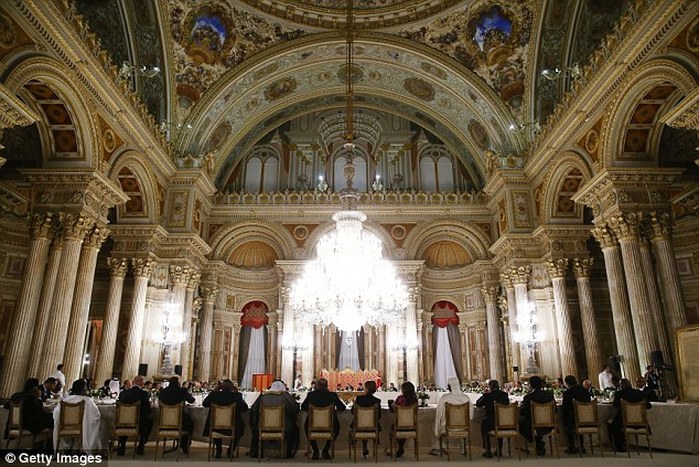
Entertaining: The tyrant and his wife in a country where two million people live of £3 a day enjoy state banquets at the state owned Dolmabahce Palace in Istanbul
Picture
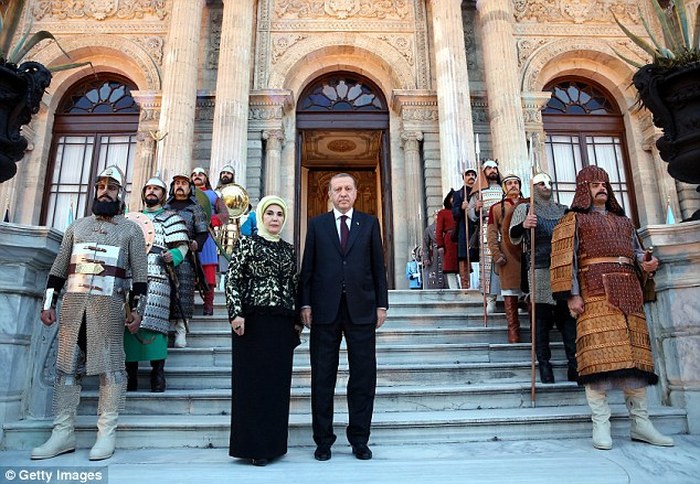
Decor: The building, known as the White Palace, cost more than twice the original estimate but Erdogan has dismissed criticism by saying it boosts Turkey's profile in the world

2 Comments

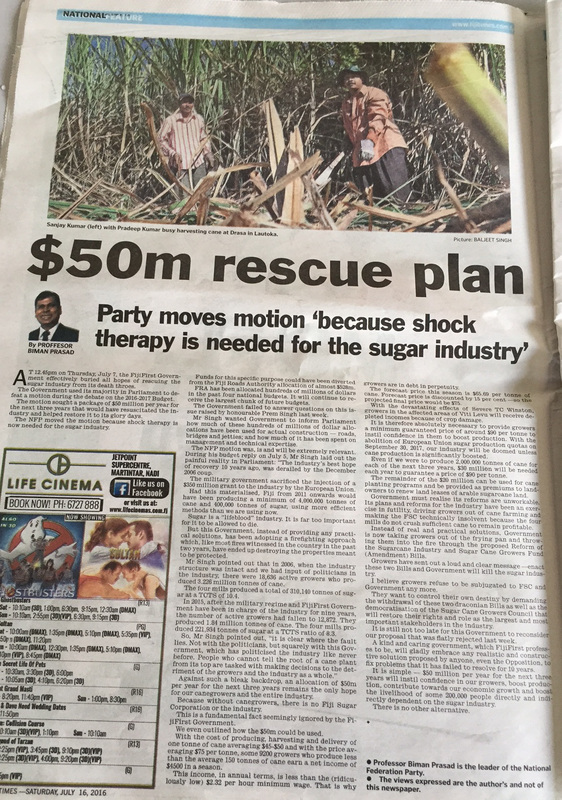
NFP left chewing 'sour sugar' over former ANZ chief Vishnu Mohan's appointment as new Fiji Sugar Corporation chairman; party claims the appointment smacks of "nepotism and cronyism of the highest order"

18/7/2016

3 Comments


FRANK BAINIMARAMA: “Given the importance of our sugarcane industry, we are constantly exploring ways to improve existing systems and appoint the right people to the right jobs at all levels. That includes ensuring that we have skilled and steady strategic direction at the very top. Mr [Vishnu] Mohan has consistently demonstrated that he has the talent, experience, and know-how to create complex financial solutions and develop the kind of sustainable strategies for growth that our sugarcane industry needs and our sugarcane farmers deserve to prepare for the challenges and opportunities that lie ahead.”

Picture
July 18, 2016
 
MEDIA RELEASE
FSC RESHUFFLE CHANGES NOTHING FOR CANE GROWERS
 
The appointment of former ANZ Chief Executive Vishnu Mohan as the Chairman of Fiji Sugar Corporation as well as the appointment of Abdul Khan as the Chief Executive Officer of FSC is a case of nepotism and cronyism of the highest order.
 
There have been many allegations labelled against Mr Khan especially about his salary, perks and privileges. Appointments were not based on meritocracy.
 
Any shareholder in a company should be concerned, especially if it happens to be the Government, which is the largest shareholder and has pumped in millions of dollars of taxpayer funds in loans and guarantees into FSC.
 
However, the Fiji First Government has blatantly disregarded all ethics of transparency and god governance by announcing Mr Mohan as new Chairman. He has a conflict of interest because during his term in ANZ he  developed the export finance facility for FSC. FSC also has loans with ANZ guaranteed by Government.
 
Mr Mohan is also the Chairman of Public Service Commission. Therefore he is a political appointee of the Fiji First Government. He is qualified as a commercial banker but has no knowledge of the sugar industry.
 
Once again, this Government has demonstrated that the appointment is to try and save the technically insolvent at the expense of writing off its Government loans and subjugating cane growers through the Reform of the Sugar Cane Industry and Sugar Cane Growers Fund (Amendment) Bills, which have been totally rejected by growers.
 
Furthermore, this is seemingly part of FSC’s Strategic Plan that has never been revealed to the cane growers who are the largest stakeholders in the industry and genuinely fear reduction in their income with change in the formula determining sharing of proceeds from sale of sugar from the current 70/30 in favour of growers.
 
These appointments change nothing for growers and the industry as a whole.  FSC will continue to be technically insolvent because already growers are demoralized and one must never forget that without cane growers’ increasing the crop production from the current low levels, there is no FSC.
 
In Mr Abdul Khan, FSC now has a CEO who as Executive Chairman did not hold the Corporation’s AGM for four years until May last year. He was a Board Member from October 2009 till December 31st 2010. From 1st January 2011, he was FSC’s Executive Chairman enjoying hefty salary, perks and privileges while FSC’s debt continued to rise astronomically.
 
The Fiji First Government has now rewarded him with the CEO’s position.
 
It is once again clear that this Government is clueless and not at all serious about reviving the industry that directly and indirectly supports the livelihood of some 200,000 people.
 
If Government is really concerned about the viability of FSC, it should authorise independent investigation into the management and operations of FSC to determine the truth.
 
Abdul Khan should immediately step aside and Vishnu Mohan should not take up his new appointment to ensure freedom and independence of the investigation process.
 
Biman Prasad
Leader

Picture
Picture
Vishnu Mohan has been drafted in as FSC chairman to "sweeten up" the sugar industry

"In Mr Abdul Khan, FSC now has a CEO who as Executive Chairman did not hold the Corporation’s AGM for four years until May last year. He was a Board Member from October 2009 till December 31st 2010. From 1st January 2011, he was FSC’s Executive Chairman enjoying hefty salary, perks and privileges while FSC’s debt continued to rise astronomically. The Fiji First Government has now rewarded him with the CEO’s position." - National Federation Party

Picture
Picture
Picture
3 Comments

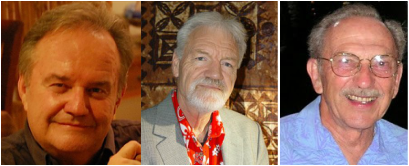
Marc Edge's Digital Buturaki presentation attracts counter-buturaki from David Robie as he confronts former USP journalism lecturer at World Education Journalism Congress with Graham Davis weighing into spat

18/7/2016

8 Comments


EDGE accused of writing out of his script his sacking for alleged misconduct at USP; he claims he was not SACKED but resigned due to political pressure piled on him because of his blog Fiji Media Wars

Picture
Picture

"I am monumentally indifferent to Marc Edge and his fate. This is academic dishonesty piled onto the chronic dishonesty of his other writings. I note that he doesn’t mention that he was dismissed from the University of the South Pacific for misconduct. Nor does he mention the astonishing attack on his credibility by David Robie, the region’s only journalism professor, in his article "The Lies of Marc Edge. 'Counter propagandist’." This is all an attempt, with a selective use of the truth, to punish me, Croz Walsh or anyone else who had the temerity to puncture his overweening ego and expose his humiliating treatment of his students at USP. The Qorvis angle merely gives him a global canvass on which to paint his sordid little personal vendetta." - GRAHAM DAVIS to Fijileaks

Picture
Picture

Digital buturaki: Government-sponsored blogs assail critics of Fiji’s military dictatorship

By Marc Edge, Ph.D.
University Canada
West
Vancouver

A PAPER PRESENTED TO THE WORLD JOURNALISM EDUCATION CONGRESS, JULY 14-16, 2016, AUCKLAND, NEW ZEALAND


A series of coups beset Fiji following its independence from Great Britain in 1970. Some blamed the press, segments of which had been critical of the government, for fomenting a coup in 2000 (Singh, T.R., 2011). According to Robie (2003: 104), ‘Many powerful institutions, such as the Methodist Church in Fiji, and politicians in the Pacific believe there is no place for a Western-style free media and it should be held in check by Government legislation’.

Self-regulation of the press by the Fiji Media Council was criticized as ineffective (Robie, 2004). A clampdown on press freedom by the military, which took control of the country in a 2006 coup, saw a new type of publication emerge in response. Enabled by websites such as blogger.com which offered free software and hosting of personal diaries, web logs or ‘blogs’ became popular at the millennium. Pro-democracy blogs in post-coup Fiji were almost exclusively anonymous, however, as anyone caught spreading anti-government sentiment risked being arrested and beaten by the military. It detained several suspected bloggers and also put pressure on the country’s telecommunications provider Fintel to block blogger.com. In response, a group of bloggers from New Zealand offered to host Fijian blogs on their servers (Fiji Times, 2007).

According to Foster, by cracking down on press freedom, the military ‘unleashed’ the blogs. The resulting ‘public relations nightmare’, she concluded, proved worse for the regime’s image than a free press would have.
The blogs’ no-holds-barred approach to military criticism picked holes in media coverage of the crisis, with blogs running stories detailing alleged military abuse as well as releasing several confidential documents (Foster, 2007: 47–48). Not all political blogs in post-coup Fiji were anti-regime, however. In early 2009, New Zealand resident Crosbie Walsh began a blog he called Fiji: The Way it Was, Is and Can Be, partly in response to what he saw as biased reporting on Fiji in the mainstream media of his country. A retired professor from the University of the South Pacific (USP) in Fiji,Walsh also published a study in 2010 which catalogued 72 known political blogs in Fiji, of which 42 were active. ‘Fifty-three were anti [- government] – 19 extremely so; 15 were more or less ‘neutral’, and three were pro government’ (Walsh, 2010: 164).Walsh deemed his own blog ‘mildly pro government’, compared to blogs such as Coup 4.5, which actively incited unrest. ‘The anti-government blogs, hailed by coup opponents as advocates of democracy, are little more than agents of uncritical dissent’ (Walsh, 2010: 174). Coup 4.5 was among the most popular blogs, notedWalsh, with a ‘staggering’ 60,000 visitors in November 2009 compared with 30,000 visitors to his own blog over a longer period (Walsh, 2010: 158).

In April 2009, Fiji’s Appeal Court ruled the 2006 coup unconstitutional, prompting the government to abrogate the constitution, sack the judiciary, declare martial law, and clamp down on civil rights. Several foreign journalists were deported and censors were installed in newsrooms to prevent negative news about the government being published. Blog activity spiked in an attempt to fill the news vacuum, prompting a renewed government crackdown. The pro-regime blog Real Fiji News published the names of several prominent Suva residents it claimed were behind the anti government blog Raw Fiji News, including the editor of the Fiji Times and three Suva lawyers, who were arrested and detained briefly for questioning (Merritt, 2009). In 2010, the regime appointed former Fairfax Media advertising executive Sharon Smith Johns as Permanent Secretary for Information, making her admittedly the country’s ‘chief censor and media strategist’ (Davis, 2010). A Media Industry Development Decree (Media Decree) was enacted by the military government the same year. It provided for fines of up to F$1,000 for journalists found in contravention of its guidelines, which increased to F$25,000 for publishers or editors and F$100,000 for media organisations (Foster, 2010; Singh, S. 2010).

In February 2011, Australian journalist Graham Davis began a blog he called Grubsheet after his production company Grubstreet. It covered a range of topics for its first year, but by early 2012 it began to focus on Fiji politics almost exclusively. Davis, who was born in Fiji, began that focus with a blog entry that criticised Coup 4.5 for alleging that Muslims were ‘colonising’ Fiji at the behest of Bainimarama’s right-hand man, Attorney-General Aiyaz Sayed-Khaiyum, who was a Muslim. ‘This grubby little offering isn’t just inflammatory but utterly false’, wrote Davis. ‘Simply put, Coup 4.5 – with this base offering – has become the local equivalent of a Nazi hate sheet’ (Davis, 2012a). The blog entry was reprinted in the pro-regime Fiji Sun newspaper, as well as on Auckland University of Technology’s Pacific Scoop and Pacific Media Centre websites, and on the blogs of Walsh and AUT journalism educator David Robie. ‘Who are these people?’ asked Davis of the contributors to Coup 4.5. A few wrote under their own names, he noted, including former Fiji Sun investigative reporter Victor Lal, who lived in England, and economist Wadan Narsey, who had been forced to resign his teaching position at the USP as a result of his outspoken opposition to the military government. Most, noted Davis, did not.

They’re always anonymous but are said to be a group of Fiji journalists running their site out of Auckland, with contributions from members of the deposed SDL government, ex civil servants and a hard core of antiregime
‘human rights’ advocates. . . . The wonder is that some of 4.5’s content is written by respected journalists and academics who are Indo-Fijians to boot (Davis, 2012a).

Qorvis Communications

In October 2011, the Fiji regime contracted with U.S. public relations company Qorvis Communications at a cost of US$40,000 per month. According to Bainimarama (2011), the purpose was ‘to assist with training and support for our Ministry of Information – to ensure its operations take into account advances in social media, the Internet and best practices regarding the media’. New Zealand journalist Michael Field, who was among the journalists barred from Fiji for reporting critically on the regime, pointed out that Qorvis had a sinister reputation in other parts of the world where it operated. ‘Qorvis specialises in putting a spin on dictators like those of Tunisia and Egypt who resisted Arab Spring. . . . Hiring Washington spin-doctors is a well-walked road for dictators who work on their image in Washington and at the United Nations’ (Field, 2011). American journalist Anna Lenzer, who had been arrested on a recent assignment to Fiji, noted in the Huffington Post ‘the Fijian junta’s exploding internet and social media presence in the weeks since Qorvis began its work’ (Lenzer, 2011).
The Huffington Post had earlier questioned the tactics employed by Qorvis on behalf of the dictatorship in Bahrain. ‘Beyond disappearing bloggers and rights activists, Bahrain also tries to disappear criticism’, it noted. ‘Most of the U.S.-based fake tweeting, fake blogging (flogging), and online manipulation is carried out from inside Qorvis Communication’s “Geo-Political Solutions” division’ (Halvorssen, 2011).

More so than intimidation, violence, and disappearances, the most important tool for dictatorships across the world is the discrediting of critics. . . . Oppressive governments are threatened by public exposure, and this means that it’s not just human rights defenders but also bloggers, opinion journalists, and civil society activists who are regularly and viciously maligned (Halvorssen, 2011). The Huffington Post also reported in 2011 that an exodus of Qorvis operatives had taken place over the firm’s unsavoury tactics and clients. In a space of two months, it noted, more than a third of the partners at Qorvis had left the firm, partly because of its work on behalf of such clients as Yemen, Bahrain, Saudi Arabia and Equatorial Guinea. ‘I just have trouble working with despotic dictators killing their own people’, one former Qorvis insider said (Baram, 2011).
The Fiji regime lifted martial law in early 2012, which resulted in censors exiting the country’s newsrooms. Numerous decrees, however, impinged on press freedom in addition to the Media Decree. ATV Decree enacted in 2012 permitted the minister responsible for communication to revoke the licence of any television station found to have contravened the Media Decree. It was enacted shortly after Fiji TV aired interviews with two former prime ministers who questioned the need for another new constitution. The broadcaster was reportedly then warned by the regime that its soon to- expire broadcasting licence might not be renewed as a result (Ashdown, 2012). It was, but for only six months at a time instead of the usual twelve years. Soon a campaign began against critics of the military dictatorship. Following is an analysis of issues focused on by pro-regime blogs in Fiji subsequent to the lifting of martial law in early 2012 until elections were held in September 2014.

1: Bruce Hill and Radio Australia

A favorite target of pro-regime blogs, especially Grubsheet, was reporting by Radio Australia, the foreign service of the Australian Broadcasting Corporation (ABC), and its influential Pacific Beat programme. One regular target of Davis was Pacific Beat reporter Bruce Hill.When the Pacific Islands News Association (PINA) controversially held its conference in Fiji in early 2012 despite the country’s restrictions on press freedom, Davis assailed Hill’s reports of dissension at the event. ‘It’s pretty clear in the minds of conference organisers that Hill came to PINA spoiling for a fight, or at least to pursue his favoured narrative of a Pacific media umbrella in tatters by continuing division over Fiji’, Davis wrote in a blog entry that was reprinted not only in the Fiji Sun but also in The Australian (Davis, 2012b). Hill interviewed a delegate from one South Pacific country who claimed it was not the job of journalists to oppose governments, then filed a story that highlighted the comment, which drew criticism from Davis.

The AUT’s David Robie observed that without Hill’s presence, there would have been little dissention at PINA. Robie described the . . . fracas as a construct of ‘western-style conflict journalism’. Hill, he said, had set out to generate controversy by seeking a contentious opinion and then using it to generate more controversy (Davis, 2012b). Davis lodged a formal complaint with the ABC in 2013 after Pacific Beat ignored what Davis called ‘the biggest change in Australian official attitude towards Fiji’ since the 2006 coup (Davis, 2013a). Deputy Leader of the Opposition Julie Bishop gave a speech that signaled a normalising of relations with Fiji if her party came to
power in upcoming elections. ‘Here was the first significant change in official Australian attitudes towards Fiji in the six and a half years since Voreqe Bainimarama’s takeover’, blogged Davis. ‘But Radio Australia chose to ignore it.

Instead, it ran two items highly critical of the Fijian Government, both by the same reporter, Bruce Hill’ (Davis, 2013a). Davis claimed that Radio Australia was trying to subvert the political process in Australia’ by ignoring the Bishop speech. ‘The Australian taxpayer is now entitled to know . . . by whose authority Hill, and the rest
of the Radio Australia editorial team, chose to overlook a major shift in Australian attitude’ (Davis, 2013a).
It is more than a grave editorial lapse. It is also contrary to law. On the available evidence, it’s a case of the publicly funded broadcaster taking a partisan position in a manner that contravenes every aspect of the ABC’s Charter. This legally requires it – under an act of Parliament – to report without fear or favour in the interests of every Australian (Davis, 2013a).

In a subsequent blog entry, he called for an inquiry into the matter. ‘Bruce Hill needs to explain himself, as does the entire Radio Australia news team’, he wrote. ‘Because without a doubt, it is one of the most blatant instances of censorship and news manipulation Grubsheet has ever witnessed’ (Davis, 2013b). By this time, Davis had revealed he was working for Qorvis Communications on its Fiji account (Davis, 2012d). He spent much of his time in Suva working for Qorvis, he admitted, flying back and forth from his home in Sydney and staying at a leading local hotel. The admission came in September 2012, two weeks after Davis had been named host of the Southern Cross Austereo network’s weekly public affairs television programme The Great Divide (Jackson, 2012).

Yash Ghai and the Constitutional Review Commission

A Constitutional Review Commission that was tasked by the regime with drafting a new constitution for Fiji ran into difficulties throughout 2012. Yash Ghai, a University of Hong Kong law professor who headed the commission, first complained of interference from the head of the military government, then clashed dramatically with the regime at year’s end. In a November interview with Radio Australia’s Campbell Cooney, Ghai revealed there had been ‘massive interference’ by the regime with the commission’s work. ‘I get emails from the PM to do this or not to do that, and this is a kind of harassment’ (Radio Australia, 2012a). The situation came to a climax after the commission submitted its draft constitution to the government just before Christmas. Ghai ordered copies printed for distribution prior to it being considered by a special Constituent Assembly of citizens, which was planned to ratify it. Police seized the copies over Ghai’s objections, however, and incinerated several while he watched. ‘I have never been in a process where there has been such an attempt to hide the recommendations of a body which was set up by this very government’, Ghai told Hill in an interview (Radio Australia, 2012b). The regime at first denied the seizure and burning, but pictures of the incident were soon posted online. Davis was unusually silent on the issue, having recently informed readers of his blog that he was bowing out of the Fiji political fray because of his work for Qorvis. ‘I have a clear conflict of interest when it comes to commenting on political matters in Fiji, and especially partisan politics in the lead-up to the election,’ he wrote.

‘I am now spending much of my time in Suva working on the Qorvis account that services the Fijian Government’ (Davis, 2012e). Walsh accused Hill of ‘making a mountain out of a mole-hill’ and deconstructed his interview with Ghai line by line. ‘It shows how a supposedly neutral interviewer reveals his true colours’, wrote Walsh. ‘No one could possibly be in doubt about his feelings during the Yash Ghai interview. There was no attempt at neutrality’ (Walsh, 2012a).Walsh followed that with another blog entry two days later. ‘Government’s intention was never to prevent public discussion on the draft decree [sic.]’, he wrote. ‘The whole Ghai-police incident and its fallout is unfortunate, inflated, and has been largely misinterpreted, by the media mainly unintentionally, by anti-Government bloggers deliberately’ (Walsh, 2012b). Walsh then speculated that the cause of the seizure was that the regime had lost confidence in the neutrality of the Commission. ‘There were so many stories of Yash Ghai socialising with known Government opponents. . . . I can well understand why
government was concerned: a commission whose key member was no longer neutral was also no longer independent (Walsh, 2013a). The Fiji Sun then ran a front-page story under the screaming headline ‘ACCUSED: Neutrality Of Yash Ghai’s Commission Questioned’ (Bolatiki, 2013). It repeated Walsh’s speculation and outlined in detail the military government’s objections to the Ghai draft, including that it would restore the Great Council of Chiefs, which the regime had earlier abolished (Bolatiki, 2013).Walsh objected in a subsequent blog entry that the newspaper had been selective in reproducing his analysis. ‘The Sun did not misrepresent what I said but it only published half of it – the half sympathetic to Government’ (Walsh, 2013b).

By then the Ghai draft had been published on Fijileaks, a new blog by Victor Lal that specialized in publishing leaked documents à la Wikileaks (Fijileaks, 2012). In addition to restoring the Great Council of Chiefs, it would have repealed or rewritten decrees such as the Media Decree which restricted human rights, provided a role in
Fiji politics for NGOs, and greatly reduced the role of the military. Despite his promise to refrain from commenting on Fiji politics, Davis charged that the Ghai draft was ‘a patently flawed formula’ for achieving democracy that required major revision.

‘If you dissect its provisions, Fiji would wind up with an elite of non-elected representatives and hereditary chiefs whose numbers would far exceed those directly chosen by the people. And what – pray tell – is democratic about that?’ (Davis, 2013c). Davis quoted an anonymous ‘friend’ of Ghai who speculated that his ‘emotions may well have got in the way of his better judgment’. Ghai had a ‘distinctly romantic notion about finally being able to resolve the intractable “Fiji Problem”’, according to this friend, and had come to believe that he could be ‘just as big a saviour as Frank Bainimarama’ (Davis, 2013c). According to Davis’ single anonymous source, Ghai was disappointed when he was initially criticised on anti-government blogs as a stooge of the military government and set about correcting that assumption by courting elements known to oppose the regime. Ghai then went over to their side, according to Davis, deciding to ‘go rogue’ and ‘thumb his nose at due process’ (Davis, 2013c). The Ghai draft was rejected out of hand by the regime, which wrote its own constitution that expressly permitted its restrictive decrees, excluded NGOs from the political process, and provided a continuing political role for the military. It then cancelled the Constituent Assembly that had been planned to ratify it (The Economist, 2013).

3. Participant observation

The author also became the subject of by attacks by pro-regime blogs starting in mid- 2012 while Head of Journalism at the USP in Suva. In a Radio Australia interview with Hill in April of that year, I corroborated his account of dissention remaining within South Pacific media despite a lack of open conflict at the PINA conference. Davis, who along with the AUT’s David Robie had promoted a ‘Pacific media at peace’ meme following the conference, called the interview ‘the biggest crack at revisionism in recent Pacific media history’ (Davis, 2012c). His blog entry was reprinted in the Fiji Sun and on Walsh’s blog, and was the subject of a news story on AUT’s Pacific Scoop (2012). ‘Our recollections of what took place are so vastly at odds that I wonder if we were on the same planet’, he wrote, ‘let alone at the same venue in the same country’ (Davis, 2012c). The conference was boycotted by numerous delegates because PINA decided to hold it in media-managed Fiji. ‘Yes, there were people who stayed away from PINA because it was being held in Fiji’, admitted Davis. ‘Yes, a breakaway organisation, PasiMA, was formed after the debacle in Vanuatu of mainly Polynesian delegates opposed to Fiji’s coup. Yes, one or two delegates . . . made their displeasure felt’.

But for one of the region’s most prominent journalistic educators to seek to exacerbate that division when others are trying to build bridges speaks of a man who simply doesn’t grasp the subtleties and nuances of island relationships (Davis, 2012c). In mid-2012, I started a blog called Fiji MediaWars. ‘It does seem like a bit of double jeopardy’, I blogged about the new TV Decree. ‘Not only are TV stations subject to fines for violating the Code of Ethics and to having their journalists thrown in prison, now they can be put out of business as well’ (Edge, 2012a). That brought a government complaint to USP, as a result of which I put Fiji MediaWars on hiatus for more than two months after posting only a few entries. In September 2012, I organised a two-day symposium at USP on Media and Democracy in the South Pacific. On the first day of the event, Davis posted a blog entry which referred to the event as ‘Edgefest’ and claimed it had caused official consternation across the region. ‘Dr Edge caused intense heartburn right from the start as he set about organising this
conference’, he wrote (Davis, 2012e).

He appears to have set out to be deliberately provocative. In the first draft of the program placed on the USP’s internet website, the list of speakers included two journalists formally banned from Fiji. . . . There was also general astonishment when Dr Edge posted the following [Call for Papers] to the conference comparing certain Pacific countries to the repressive regimes in the Middle East that sparked the ‘Arab Spring’ (Davis, 2012e). Davis claimed that Fiji, Samoa and Tonga had ‘formally complained to the University of the South Pacific. The USP subsequently ordered the posting withdrawn from its website. . . . Unfortunately for the USP, its funding comes from some of the countries Dr Edge appears to be targeting’ (Davis, 2012e). Subsequent to the symposium, I revived Fiji Media Wars to discuss some of the issues raised during the event, including journalistic standards and the problem of self-censorship by Fiji journalists working under the Media Decree (Edge, 2012b). Davis then posted a blog entry that claimed I was clinging to my job by my ‘fingernails’ after ‘official protests and open conflict with other academics’ during the symposium. ‘Grubsheet understands that the USP has triggered formal internal disciplinary proceedings that could lead to the dismissal of the Canadian-born academic. He has evidently been given a formal warning’. It was in an addendum to that blog entry that he admitted what many in the blogosphere had suspected: ‘Graham Davis is now a part-time advisor to Qorvis Communications’ (Davis, 2012f). In November 2012 I posted a blog entry which summarized available information about Qorvis Communication. ‘The more I learn about these rascals’, I wrote, ‘the more I suspect that I have been a victim of their back ops’ (Edge, 2012c).

A subsequent blog entry questioned Walsh’s ethics for accepting a trip to Fiji that was paid for by the regime and designed to provide material for his blog (Edge, 2012d). Another regime complaint to USP demanded that I remove the blog entry about Qorvis. I did so, but I was nonetheless stood down as Head of Journalism by USP
administration. I remained at USP as a senior lecturer, however, and both Davis and Walsh repeatedly demanded that I be dismissed. ‘The School is said to be irrevocably split between the brainwashed first years who worship Dr Edge and senior students who think he is bordering on the certifiable’, wrote Davis, who also complained about a joke I made about Qorvis at the annual USP Journalism awards night. ‘He has brought the USP and its journalism school into disrepute and the sooner he departs these shores the better’ (Davis, 2012g). Walsh took umbrage with my criticism of him for taking a trip to Fiji paid for by the regime. ‘The problems begin with him accepting what’s called a “junket” in the journalism world’, I wrote. ‘As any first-year journalism student knows (mine certainly do), you will not have any credibility if you do not maintain independence from those you write about’ (Edge, 2012d).

Walsh claimed the criticism by myself and other bloggers was unwarranted and suggested that my work permit should be cancelled. ‘It says much for the tolerance of the government and the university that he is still able to publish partisan polemic exercises on his blog’, he wrote. ‘Others have their association with the university terminated, and their work permits cancelled, for less’ (Walsh, 2012c). Davis then leaked email correspondence between USP administrators which showed that my remaining at the university was the subject of disagreement among them. He also renewed his calls for my dismissal as a result of an email that I forwarded to students, which he reprinted and deemed ‘an abuse of office’ on my part. The email was part of a series of satirical missives written by an anonymous author that mocked Davis and Smith Johns and were widely circulated in Fiji. ‘It’s staggering that Dr Edge thinks that it is appropriate for a senior lecturer at USP to pass on this drivel to
those he is meant to be schooling in the serious practice of Pacific journalism’, Davis wrote. ‘In our view, he is abusing his office and it’s high time that the USP brings this continuing farce to a halt’. (Davis, 2012g) As a result of these and other pressures placed on the university, I resigned my appointment just before the end of 2012.

After his August 2013 attack on Radio Australia, Davis blogged infrequently and not always on Fiji in the year leading up to the election, which saw Bainimarama returned in a landslide. In a December 2013 blog entry responding to my noting his months long absence, Davis (2013e) wrote that he had ‘gone quiet primarily because my work is done. . . . Everything that I set out to achieve when I started Grubsheet at the beginning of 2011 and began highlighting the Bainimarama revolution’s achievements has been accomplished’. His absence from the Fiji blogging fray, however, may have instead been the result of a complaint I lodged with SCA CEO Rhys Holleran in mid- 2013 about Davis simultaneously acting as a TV news host and a propagandist for a regional dictator.

Conclusions

Fiji suffered international opprobrium in early 2013 when a video surfaced online showing uniformed officers beating and burning with cigarettes two escaped prisoners, on whom they had also set dogs (Siegel, 2013). While not excusing the abuse, Davis (2013d) claimed it was widely supported in Fiji. ‘These individuals are violent, hardened criminals who had escaped from lawful custody and can hardly have expected to be garlanded when they were eventually tracked down’, he wrote. ‘Many law abiding Fijians actually like being ruled with an iron fist if it means being able to sleep soundly in their beds at night’ (Davis, 2013d). Such abuse was a widespread practice in Fiji, noted Davis. ‘It’s a fair bet that everyone in that clip was raised as a child to expect a “hiding” – the traditional form of discipline in most Fijian homes for even relatively minor infractions. . . .The buturaki – the premeditated beating – has always been the traditional method of enforcing order at village level’ (Davis, 2013d). Political commentary in the U.S. has been likened to a ‘spin cycle’ or ‘echo chamber’ of like-minded pundits repeating and reinforcing pre-determined ‘talking points’ (Kurtz, 1998; Jamieson and Cappella, 2008). This case study shows the same phenomenon imported to Fiji.

The fact that Qorvis Communications was a U.S.-based public relations was likely not coincidental to the Fiji regime adopting an American style system of ‘attack’ commentary. A cycle of attacks on regime critics by regime friendly blogs such as those published by Davis and Walsh was amplified by their frequent reprinting in the pro-regime Fiji Sun, not to mention on other blogs and on several websites associated with the AUT. This not only gave their commentary wider circulation but also greater legitimacy. The online treatment of regime critics by pro government blogs, while typical of Qorvis operations elsewhere in the world, assumed in Fiji a vicious nature not unlike the beatings meted out to pro-democracy advocates and escaped prisoners. This ‘digital buturaki’, as with the real-life beatings, served as a form of social, political, media, and even academic control. It proved a powerful deterrent to anyone who would dare to criticize the regime and a key component of its hegemony. References -  (Fijileaks: We have not included the references)

http://www.marcedge.com/buturaki.pdf


Graham Davis: 'Nor does he [Edge] mention the astonishing attack on his credibility by David Robie, the region’s only journalism professor, in his article "The Lies of Marc Edge. 'Counter propagandist’."

PictureRobie
Sunday, February 3, 2013

The lies of Marc Edge, 'counter propagandist'


BENJAMIN FRANKLIN once said that “half a truth is often a great lie”, but in the past few weeks the blog Fiji Media Wars has been treating readers to a steady smear campaign. Café Pacific publishes here a statement by journalist and media educator David Robie:

Canadian Marc Edge projects himself as a dispassionate scholar. In fact, he is a polemicist and “counter propagandist” – as he admits proudly on his website – who has regularly used his position at a Pacific university over the past year and since to peddle self-serving disinformation. For those who wondered why I was departing from the usual editorial line of Café Pacific to make a rare personal public condemnation with my “Vendetta journalism” article last Wednesday, the answer is quite simple: To make the truth known. 

When I heard Dr Marc Edge’s distortions on his Radio Australia interview late last month blaming Fiji’s military backed regime as the sole cause of his demise at the University of the South Pacific, I decided I could no longer remain silent. In my capacity as a regional journalism educator and journalist, I had the misfortune to cross paths with Marc Edge several times and over varied projects over several months at his university last year. I quickly learned he had his own personal agenda and little of it was to do with the truth or journalism education. In fact, I am now convinced that he never had the welfare of students or the USP journalism programme at heart. He merely wanted to use USP as a pawn in gathering fodder for his proposed “Fiji Media Wars” blog book to trash Fiji and portray himself as a media freedom “hero”. It backfired.

After his misrepresentations and lies in the wake of his disastrous Media and Democracy in the South Pacific conference that he organised last September, I decided to break off any connection with him. Due to his insecurities, his paranoid modus operandi is to run smear attacks against anybody he perceives as an enemy or as competition.  Eleven of the last 12 postings (as at January 31) on his blog Fiji Media Wars have been devoted to personal attacks on individuals. 

I was particularly disturbed by his repeated misrepresentations of my own views relating to global comparative journalism strategies, such as critical development journalism, deliberative journalism and peace journalism. It is my task with one of the courses I teach at AUT's School of Communication Studies to research and explore comparative journalism models. Clearly, Marc Edge is not even familiar with the literature, let alone to even engage with me on the same page.

He has made false claims about my views and yet never had a professional or theoretical discussion or debate with me. Such a closed mind is dangerous for a university, which should be about ideas and innovation.

For somebody who threatens others with legal action, he is astonishingly reckless with failing to establish facts. Among the many defamatory lies and distortions he has served up about me in his Fiji Media Wars blog in the past few days are:

1.    "This assault [my article] was unprovoked by me [Marc Edge]." 

FACT: Marc Edge had been harassing me and some of my students for weeks (including one who had lodged a formal complaint with USP) before he was dumped, even falsely accusing me of waging a "vendetta” against him. (We are talking about mature-aged and experienced postgraduate students here with an independent mind of their own).

... David has now enlisted his students in his apparent vendetta against me. [Pacific Media Watch editor] Alex [Perrottet] and Rukhsana Aslam both had full-page op-ed articles that were critical of me [Dr Edge] published in the Fiji Sun ... [Extract from a paranoid letter sent to AUT, Oct 5, 2012]
2.    "Make no mistake, Robie is the third leg of the Fiji regime's propaganda stool that is more publicly presented by bloggers [Graham] Davis and [retired USP professor] Crosbie Walsh.

FACT: I have always been an independent journalist and media educator and my mission includes to “balance” the propaganda and disinformation of media people like Marc Edge, who is new to the Pacific, naive and acts if he is an instant expert. 

3.    Robie's support for the repression the military dictatorship has inflicted on the country's news media is longstanding and central to justifying the current regime's tight control.  

FACT: I have been an opponent and critic of Fiji coups and military dictatorship since 1987 – more than two decades before Edge even set foot in Fiji – and my book Blood on their Banner: Nationalist Struggles in the South Pacific was a denunciation of both military repression and ethno-nationalism in Fiji. Unlike Edge, as well as reporting on the earlier coups, I lived in Fiji for five years and experienced the 2000 George Speight coup and political aftermath as an educator at first hand. Also my 2004 book Mekim Nius: South Pacific media, politics and education condemned political interference in education and defended academic freedom.


David Robie's 2004 book Mekim Nius 
on Fiji and Pacific media and politics.
4.    In fact, his 2001 "Coup coup land" theory was the very justification for the draconian 2010 Media Decreethat provides fines and even prison sentences for journalists.

FACT: This article in Asia Pacific Media Educator was not a “theory”, it was a widely referenced and cited peer-reviewed preliminary exploratory paper about the George Speight coup and media coverage. It has led to many independent serious academic studies at different universities since then that have borne out my findings. In addition, I was among some 26 individuals and organisations that provided submissions to the independent and self-regulatory Fiji Media Council Review in 2009. Nevertheless, the regime ignored the constructive Review recommendations and imposed its own repressive law. I have never had anything to do with the draconian decree but I have written many papers condemning and critiquing it. The Pacific Media Watchproject that I was co-founder of in 1996 has been dedicated to media freedom in Fiji and the region. 

5.    "Robie has been pushing government-friendly alternatives to press freedom in Fiji and elsewhere in the South Pacific, namely "development" journalism, which sees media working in partnership with government to encourage development, and "peace" journalism, which envisions media proactively proposing solutions to conflict in society rather than merely reporting events neutrally. 

FACT: As part of my “comparative journalism studies” course, I have explored varying models of journalism and none of them are “government friendly alternatives”. There are several different notions of “development journalism” and Marc Edge seems to have no familiarity with this complexity – he constantly trots out a discredited Western-defined version. I do not, and have never, advocated “working in partnership” with governments, except for collaboration in defined issues such as climate change, and only in a democratic framework devoid of censorship or media persecution. Instead, I have argued for critical development journalism (a style of robust investigative journalism seeking solutions) and deliberative journalism (a more democratic form of journalism). A quick excerpt from this fullpage article of mine in The Fiji Times on September 13:  
Deliberative journalism involves empowerment, often a subversive concept in conservative societies. It involves providing information that enables people to make choices for change. 

Deliberative models include notions such as public journalism, critical development journalism, peace journalism and even human rights journalism. 

Development journalism in a nutshell is about going beyond the “who, what, when, where” of basic inverted pyramid journalism; it is usually more concerned with the “how, why” and “what now” questions addressed by journalists. Some simply describe it as “good journalism” with greater context. 

The notion of peace journalism is actually a very positive approach, especially in countries where social and ethnic conflict has been long-standing and is a form of journalism that addresses the root cause of the problems, not just a surface compromise. Leading global journalists and academics advocating this approach include Associate Professor Jake Lynch, director of Sydney University's Centre for Peace Studies, who was a keynote speaker at a conference at USP about the strategy.

None of these notions are necessarily substitutes for “watchdog” journalism holding powerful institutions to account, they are additional tools well-suited to the complexities of the times and communities we live in. And media corporations and companies are themselves among these “powerful institutions” that need to be held to account. However, the failures of watchdog journalism itself and media credibility are under serious scrutiny as part of the global journalism crisis – the News of the World phone-hacking scandal backlash is an example of this.
Part of the problem in Fiji is that there is little “neutral” journalism in the country. Six years of censorship and self-censorship have seen to that. But much of the reporting about Fiji in Australia and NZ is also biased. It often takes independent external media organisations such as Al Jazeera to provide a better balance.

6.    "PMC is obviously pro-regime … "  

FACT: The Pacific Media Centre is an independent research, publication and media resource centre at AUT University and governed by an advisory board and is part of the Communication Studies school. It does not have any political line, but seeks to publish a wider range of articles about Asia-Pacific media and socio-political issues than is usually available in New Zealand-based media. Marc Edge has never visited the PMC, or even this university for that matter, and his ignorance about PMC is astounding for an academic.

The objectives of the PMC can be viewed here in this 5min video on YouTube. The PMC’s mission is also on public record here. 

Ironically, while Marc Edge falsely accuses me of support for the Fiji regime's media policy and repression it is actually he who is “collaborating” with the Media Decree; he currently has a complaint against a Fiji media organisation before the Media Tribunal – using the very instruments of media persecution imposed by the regime. Hypocrisy in other words.

In the words of one of Marc Edge’s former students, one of the many victimised during his USP “dictatorship” era, Magalie Tingal, from Radio Djiido in New Caledonia, it is time for him to move on and get a “get a real job” and let us in the Pacific get on with ours in peace.

David Robie is author of Mekim Nius: South Pacific media, politics and education (USP Book Centre, 2004) and was the head of journalism at the Universities of Papua New Guinea and the South Pacific (Fiji) for a decade. 

Download all WJEC Full Papers below:

8 Comments

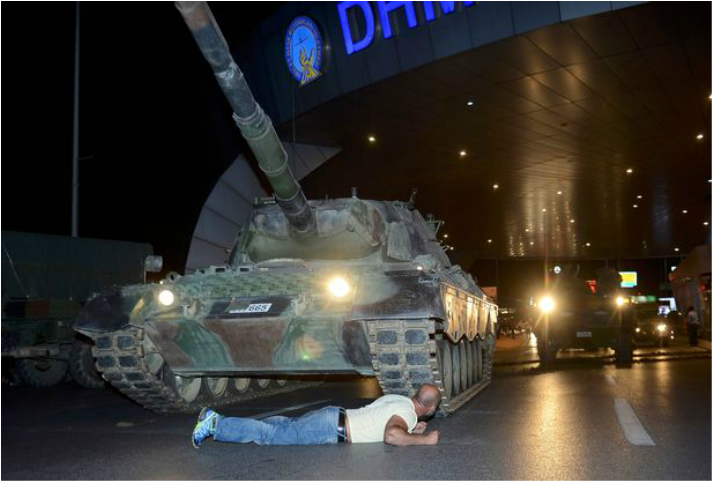
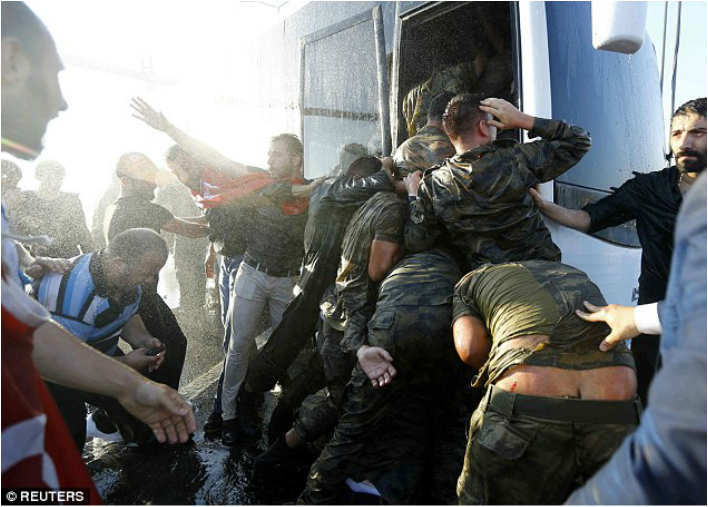
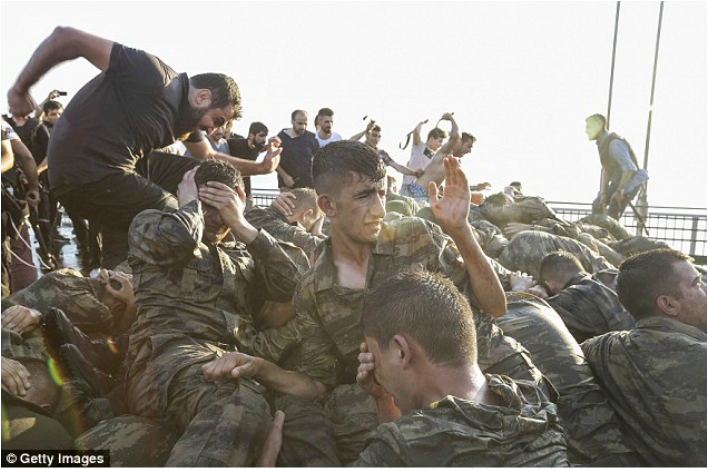
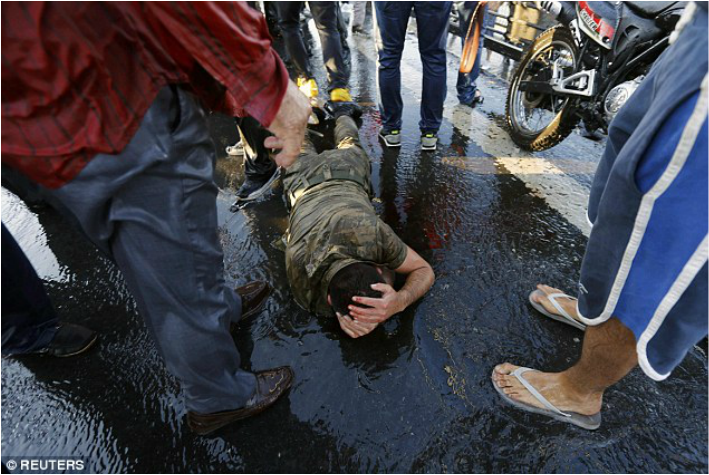
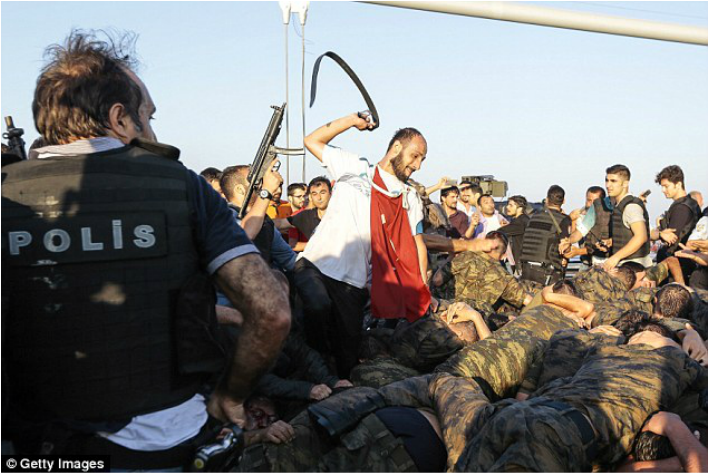
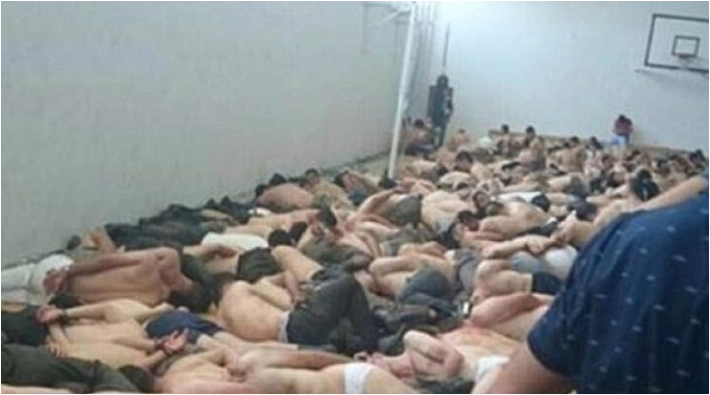
A TALE OF TWO COUPS: As Turks confront and end attempted coup in 2016; ten years ago, in 2006, coward native Fijian nationalists fled into hiding, leaving FRANK Bainimarama and his cronies to seize power

17/7/2016

9 Comments


In standing up to their military the Turkish people (especially a violent mob) have at last broken with the past and tamed the army -
but at what price?

Picture
Picture
Picture
Picture
Picture
Picture
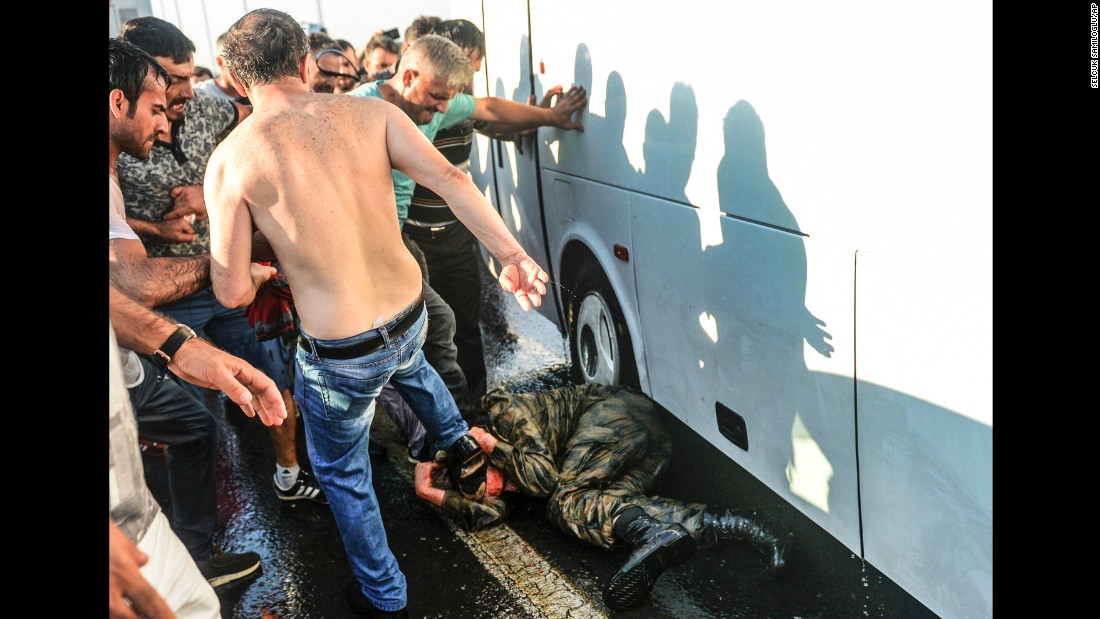
Turkish coup soldiers stripped naked by peoples power
Picture
Picture
Picture
Picture
Picture
Picture
People kick and beat a Turkish soldier who participated in the attempted coup
9 Comments

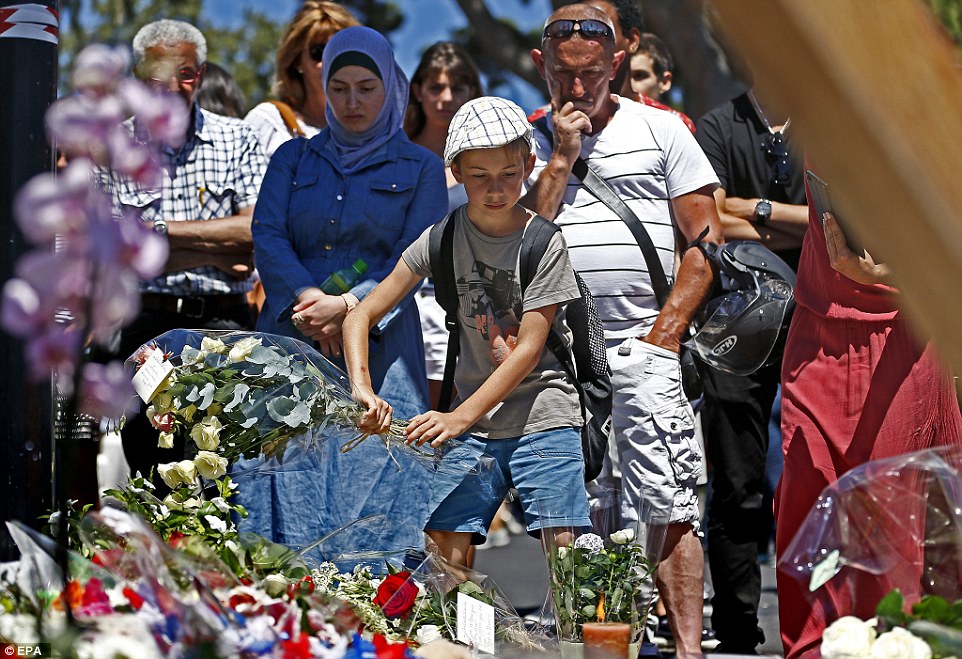
The Bastille Day Massacre: 'She wore the veil of Islam and practiced a true and balanced religion…a real Islam. Not the one of the terrorists.' Hamza Charrihi, holding up an identity card belonging to his dead mum

15/7/2016

10 Comments

 
Picture
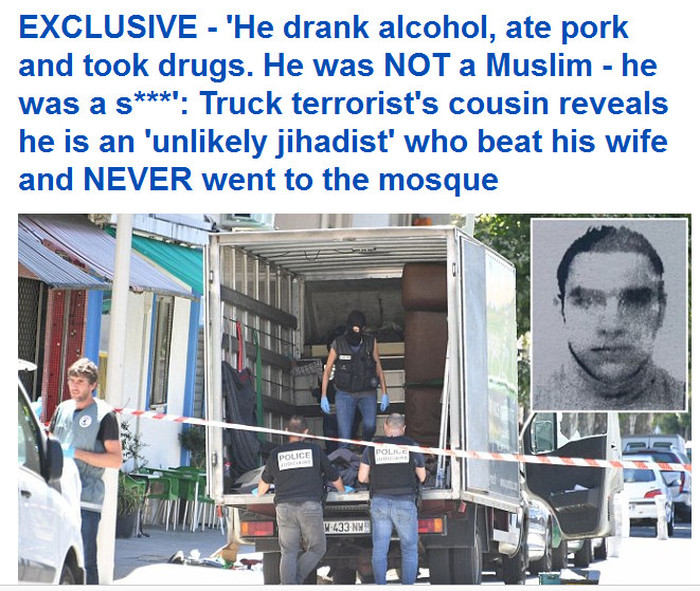
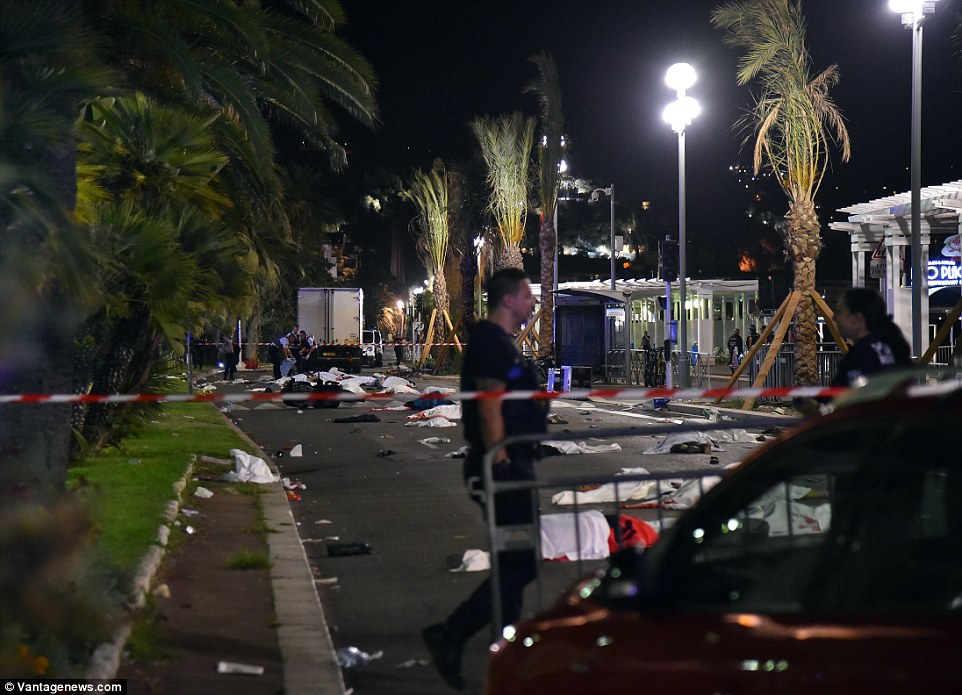
Truck terrorist Mohamed Lahouaiej Bouhlel beat his wife and never went to the mosque, a cousin of his estranged wife told MailOnline. The father-of-three was branded an 'unlikely jihadist' by the cousin who revealed he also ate pork, drank alcohol and took drugs, all of which are prohibited by Islam. The cousin insisted that Bouhlel 'was not a Muslim, he was a s***'. Detectives had raided the 12th floor apartment he had shared with his estranged wife in the early hours of the morning, and his wife was taken into protective custody.
WARNING GRAPHIC CONTENT:

Picture
Horror: Witnesses described seeing bodies of the dead being sent flying in all directions or being jammed under the wheels of the lorry
Picture
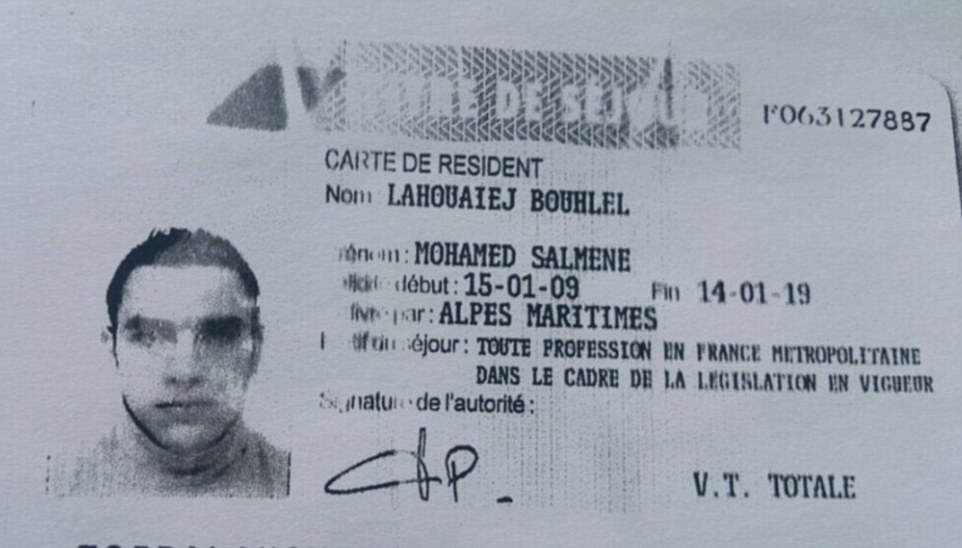
Pictured: This is reputedly the ID card in the name of terror suspect Mohamed Lahouaiej Bouhlel found in the cab of the lorry used to mow down and murder 84 people and injure dozens more who were among 30,000
Picture
Picture
10 Comments

Coups have given legitimacy to the culture of violence. Rabuka recently refused to reveal his co-conspirators but one of the masked gunman to enter Parliament with him was Naivalurua - later the Police Commissioner

15/7/2016

4 Comments


From Coupists to Commissioners of Police

Picture
Picture
Picture
Picture
Picture
Picture
Picture
Picture
Picture
Picture
Picture
Picture
The Testimonies of George Speight Group

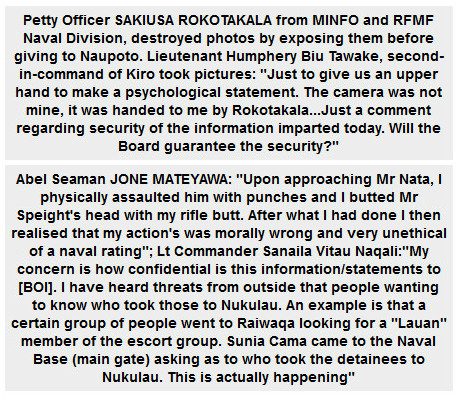
BUKARAU: "Naupoto gave a short brief, which basically said, "if you try anything to escape or untie the rope, you will be dead". He said this 2-3 times. There were about 6 men in front of us, and a lot more at the back with weapons...We received kicks, rifle butts and continuous verbal abuses. George, Ligairi and Silatou were getting most of the abuses and we had people rubbing their boots on the back of our heads. We than sailed to Nukulau through Beqa waters. We were constantly assaulted and abused thoughout the 2 hours or so journey. We were soaked and from the rough seas. I could feel that certain individuals did not have their hearts and minds on what was happening (assault and abuses). I received a swelling on the left side of my face and 3 days later we were taken to hospital."

KOROVUSERE: "It was still dark when we reached the Naval Base. Naupoto warned us that if we tried to do anything, we would be shot. Mua was kicked on the esohagus. Silatolu at one stage had difficuty breathing due to the continuous punching. I was asked about Adi Samanunu and what she was doing in the country. I was kicked on the face. They told us to experience life in the navy and one of our detainees was threatened of being sexually assaulted, and that it was normal in the Navy. Once we arrived near Nukulau, one of the boys said I was his Commanding Officer in Sinai and Lebanon, whilst I was being kicked and had his foot on my head. Our hands were released at about 0800hrs once we were inside the perimeter fence."

LIGAIRI: "Upon arrival [at the Naval Base] I was the second last to board the awaitig ship. We were moved to the forecastle and we were handled roughly. NAUPOTO briefed us and his orders were very aggressive. I had a feeling that he didn't care about who we were. I never expected Fijians to behave and act in that manner. I was so confused that I did not listen to what they were saying or asking. A lot of questions about my ability to change myself into rats and other things were put forward. I was assaulted with punches, rifle butts, kicks to my head and body. I was also very concerned about our safety particulalry with our hands tied at our backs and the possiblity of us getting washed to the sea. The assault inflicted on me has caused me headaches, blurred vision and this is due to a rifle barrel pushed to the side of my head."

SAVUA: "We were than taken to the Naval Base. Upon arrival we boarded the ship and briefed by Naupoto, "If you try anything to escape or untie the rope, you will be dead". One of the navy personnel began verbal abuses. Abusive verbal language was hurled at me and others, "Savua/Mua drau vei cai". One of them asked me if I wanted to be Commander. They stated that this was Commander's (Bainimarama's) vessel...They even threatened to sexually assault Nata and stated that it was quite common in the Navy. They continued to butt and assault us. Wainiqolo was inflicting most of the punishment...The assault continued right until we arrived at Nukulau and when the ship was anchored off at Nukulau"

MUA: "We were driven to Walu Bay. They told us to come out of the truck one by one. I was walking behind Speight when he was thumped from the back. We were ushered to the forecastle of KIRO. We were seated between the gun turrett and the wave breaker. As soon as the ship left the pier the assault started. I was kicked in the face, rifle butted on the face and verbally abused. I lost one tooth in the process. This sequence went on for approximately 3 hours until we got here (Nukulau). My vision was blurred for 3 days due to the injuries I sustained. I was kicked around and on the esophagus. When this happened, I almost lost all consciousness and I thought I was going to die. We were told that we were going to an unknown destination...During the transfer to Nukulau, I slipped and was given two more kicks before I reached ashore. I cannot believe that people could be so brutal. The Military Police (MP) who were on Nukulau wept and asked us to forgive them for what had happened on the ship [Kiro]"

KONATACI: "We were taken to the Naval Base and as soon as we arrived, they shoved us onto the ship and forced us to the forecastle. We were given instructions to stay in one place and not to move or we would be shot. We were told to sit in front of the ship (forecastle), and as we sat down we were punched, kicked and verbally abused whilst our hands were tied. It seemed they were acting on instructions. As we left the harbour towards the open sea, I was very frightened naturally because I came from the highlands. My hand was kicked and my fingers were crushed with a boot, which was fractured. It was around 07000hrs, when we arrived near Nukulau. I could see others carrying injuries...A lot of verbal abuse was hurled at us. The two Lauan colleagues particularly copped a lot of abuse. I thought that we would be treated well and arrested as political prisoners and not be treated the way we were."

NATA: "We were taken to Naval Base and as soon as we got off, I was punched on the left, and I knew we were in for a rough ride. Once we got to the forecastle, we were warned in unequivocal terms that we were to follow orders. We were taken for a 2 and half hours ride and throughout the journey I was punched, kicked, butted and abused. Apart from the inhumane treatment, I was disappointed with the sexual taunts and the threat to be sexually assaulted. We were threatened and one particular chap WAINIQOLO (Leading Seaman Walesi) was very abusive and continued to physically assault us. Both Mua and mysef were badly hurt because of our links to Lau and Tui Nayau, Ratu Sir Kamisese Mara so was George Speight, Ligari and Silatolu. The MP's treated us well and they even cried when they saw the state we were in...My colleagues would have mentioned other details of the assault".

SPEIGHT: "As we moved away from the pier, the assault began...They punched, kicked, rifle butted and one person continued to kick my head. We were buffetted by the big waves and the assault continued. I felt numb after the first half an hour. The most painful was the rope tied behind my back, which became very sore. The most excruciating pain was when I fell back with my full weight. This is when I felt fairly numb. We were subjected to this until the sun rose and this whole episode lasted about two to two and half hours. Before we were helped to our feet one of the officers took pictures of us on an instamatic camera. The 3 MPs (Military Police) who escorted us from QEB to Naval Base were all waiting at Nukulau. Two of them broke down and cried when they saw the state we were in. We were then freed from the ropes by the MPs, which were tied with our hands together. By this time I was so tired that I slept for about three days."

Fijileaks Editor: Major Epeli Nailatikau, Chief Medical Officer, RFMF, who had attended to the detainees, detailed the injuries, noting "Assault by navy personnel in navy boat - while on transfer to Nukulau" - Report on Injury or Illness Form
Picture
Picture
Picture
Picture
Picture
Picture
4 Comments

NFP leader: 'Genuine democracy and parliamentary democracy can be achieved if the recommendations of the Annual Report of the Electoral Commission for 2014 election and the Report of MOG are implemented.'

14/7/2016

5 Comments


"Any deviation from the recommendations would render the 2018 general elections meaningless and may also prompt the NFP to re-consider its participation in the next elections under the current regressive and draconian decrees and constitutional provisions relevant to
conduct of elections."

Picture
Picture

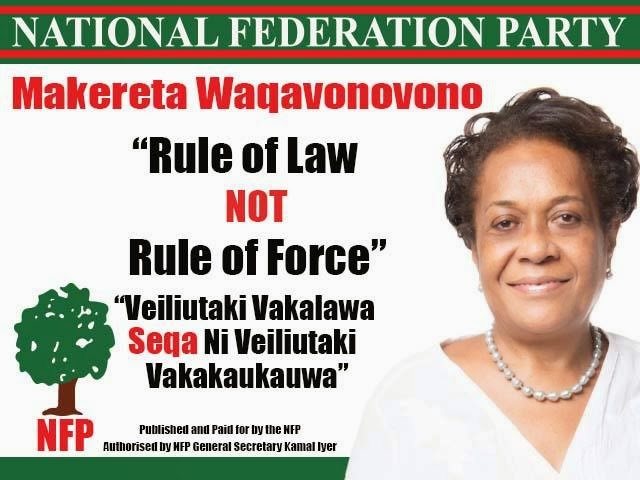
"We were denied two capable candidates in Ms Makereta Waqavonovono and Mr Jone Vakalalabure on residency qualifications, which require candidates to be ordinarily resident in Fiji for two years. Citizens working or studying abroad cannot be candidates. But those working for Government and serving in peacekeeping missions are eligible to be candidates. This wasn’t the case under the Electoral Act of 1998. What we have now is clearly a case of double standards."

Picture
SUBMISSION TO THE PARLIAMENTARY STANDING COMMITTEE ON JUSTICE, LAW AND HUMAN RIGHTS RECOMMENDATIONS OF THE MOG AND ELECTORAL COMMISSION REPORTS 2.30PM, THURSDAY JULY 14, 2016

BY NFP LEADER HON PROFESSOR BIMAN PRASAD
 
Genuine democracy and parliamentary democracy can be achieved to some measure if the recommendations of the annual Report of the Electoral Commission for 2014 and, especially the Report of the Multi-national Observer Group (MOG), which monitored the September 2014 elections, and the Annual Report of the Electoral Commission, are implemented.
 
Fourteen months after the MOG, Electoral Commission and the Joint EC/SOE Reports were refereed to it by the Honourable Madam Speaker, the parliamentary standing committee on Justice, Law and Human Rights is scrutinising the Reports.
 
On 15th April 2015, soon after the release of the Final Report of the MOG, the Supervisor of Elections Mr Mohammed Saneem welcomed the findings of the Report in a statement to the media.
 
A report on Fiji Live stated : -
 
“Fiji's Supervisor of Elections Mohammed Saneem says the report by international observers on the 2014 election will assist the Fijian Elections in efforts to achieve international best practices and adopt innovation.
 
Welcoming the 53-page MOG report, Mr Saneem says the FEO will carefully review the report and its recommendations as it prepares for the 2018 election. 
 
"The MOG which was co-led by Indonesia, India and Australia conducted itself in a professional and courteous manner and their insights has been a great benefit to the FEO," Mr Saneem said. 
 
"While the MOG's general endorsement has been known for some time, this report offers useful analysis on special aspects of the election." 
 
Fiji Live – 15th April 2015
 
It is therefore vitally important that recommendations of the reports be incorporated in any strategic planning undertaken by the Elections Office as part of preparations for the next general elections scheduled in 2018.
 
MOG Report
 
This can only happen if Government brings before Parliament, the Media Industry Development Decree, Political Parties (Registration, Conduct, Funding & Disclosures) Decree and the Electoral Decree, to make the necessary changes as recommended by the MOG, to make the next elections credible.
 
The recommendations contained in the 53-page MOG report are credible and highlights the difficulties and frustrations faced by the political parties, candidates, the media and non-governmental organisations (NGO’s) during the last elections.
 
On the Media, MOG rightly noted that harsh penalties in the Media Industry Development Decree prevented most media outlets from effectively reporting on election issues.
 
The contents of the report on Media Environment, Media Industry Development Decree and Media Industry Development Authority (MIDA) also show the ineffectiveness of Media Industry Development Authority.
 
The MOG rightly recommended the need for regulation as well as an independent institution to prevent and adjudicate on media bias thus ensuring a level-playing field amongst election participants, as well as a review of penalties in the Media Decree.
 
The fact that the MOG has recommended for an independent institution proves MIDA’s lack of neutrality because it is a body appointed by Government. A free, fair, credible and unfettered media industry in Fiji is rendered meaningless if MIDA continues to exist.
 
The MOG report also highlights the need for amendment to the Political Parties (Registration, Conduct, Funding & Disclosures) Decree. It rightly points out that the broad definition of a public office holder excludes a large number of citizens from freely participating in the political process. Furthermore the report describes the prohibition on trade union officials from being members of political parties, as a limitation on political freedom.
 
The MOG has recommended for requirements to be reduced for political party registration as well as allow public office holders and trade union officials to be political party members. This has been the case throughout our Independent history.
 
The MOG has recommended changes to the Electoral Decree. Most importantly, the MOG notes that the absence of political party identification from the ballot paper and National Candidates List was unusual – the lack of any names, symbols and photographs on the ballot paper.
 
The MOG also observed that voters were prohibited from bringing "how-to-vote" pamphlets into polling stations and anyone caught breaching this provision faced a hefty fine of $50,000 or imprisonment of a term up to 10 years, or both.
 
The NFP had made submissions to the Electoral Commission on the need to change the ballot paper to include symbols of political parties and names of candidates.
 
Section 23(2) of the 2013 Constitution (Bill of Rights) (Political Rights) states, “Every citizen has the right to free, fair and regular elections for any elective institution or office established under this Constitution.”
 
We firmly believe a ballot paper with numbers denies this constitutional right because it erodes the principle of free and fair elections.  We maintain a voter is unable to exercise a meaningful choice in the absence of names and symbols.
 
Voters recognise political parties by their symbols. The Political Parties (Registration, Conduct, Funding and Disclosures) Decree 2013 requires political parties to set out the symbol of any proposed party. This is re-confirmed in the Decree’s second schedule that outlines the contents of the constitution or rules of a political party, which amongst other things requires the logo and symbol of a party.
 
The symbol is the identity of a political party and candidates that are sponsored under its banner.
 
This identification was totally missing from the ballot paper, as was the link between a candidate and his/her nominating party.
 
This led to promotion of single numbers.
 
Furthermore, in the last elections, Non Governmental Organisations (NGOs) were denied the right to be election observers. The MOG has recommended for this to change to ensure credibility of the election process; symbols and names of candidates to be included on the ballot paper and the National Candidates List; penalties for election related offences to be reviewed in accordance with international standards and practice; and that Government should review and finalise all existing electoral laws and regulations well in advance of the next election.
 
If Government truly believes in common and equal citizenry and the protection of fundamental rights and freedoms, it should have no hesitation in accepting the recommendations of the MOG, which observed the elections in strict compliance with Government’s Terms of Reference.
 
The recommendations have to be implemented to ensure the next general elections are credible, without any perceived or real fear of suppression of fundamental rights and freedoms.
 
Electoral Commission Annual Report 2014
 
The Electoral Commission through its Annual Report for 2014 has pointed out that its work was affected by it not having the services of an independent legal advisor. The Commission stated that repeated requests for an independent legal consultant to the Minister of Elections remained unanswered.
 
This confirms that concerns raised by the NFP as well as other political parties were not appropriately addressed because of the inability of the Commission to seek independent legal advice.
 
Some of the concerns, after our submissions were rejected, that we raised in writing, in meetings with the Commission, electronically or verbally through phone were: -

  1. Ballot paper size and visibility of the number, tick in counting stations for counting agents verification.
  2. Counting result certification by party agents at each polling station.
  3. Voting guide booklet to include: Candidates listed together by Party: Party symbol against each candidates name and number.
  4. Polling station venues to be also assigned by maximum walking distance of 1km for each voter.
  5. Soft copy of polling station voter rolls to be expedited and given to Parties.
  6. Voter guide booklets to be given to parties as soon as possible or at least 2 weeks before polling.
  7. Count agents to be able to take pens and pencils to record results during counting
  8. The non-presence of police just outside count centres. They were instead stationed 50 metres away at polling stations
  9. Procedure surrounding the announcement of protocol of results. 
  10. Stoppage of announcement of protocol of results
  11. Non-verification by political parties and certification of the IT system in which results phoned from count centres were entered
 
The Commission also noted that it was inhibited in fulfilling its role in direction the Supervisor of Elections on matters concerning his performance. The Commission also pointed out that the position of the Supervisor of Elections be re-advertised but was informed by the Minister of Elections of the appointment of Mr Mohammed Saneem.
 
These are serious concerns that cannot be ignored. The observations of the Electoral Commission clearly point out that the independence of the office of the Supervisor of Elections was compromised before the general elections.
 
Last year one of the Commissioners Professor Vijay Naidu resigned and also told the media through an interview that the Supervisor was not acting upon the instructions of the Commission.
 
The Commission also recommends changes to the Decrees and Amendments to the Decrees governing the conduct of political parties and elections. It also recommends changes to the
 
Constitution on reducing the 5% threshold to 3.5% (Section 53(3) of the Constitution).
 
We were denied two capable candidates in Ms Makereta Waqavonovono and Mr Jone Vakalalabure on residency qualifications, which require candidates to be ordinarily resident in Fiji for two years. Citizens working or studying abroad cannot be candidates. But those working for Government and serving in peacekeeping missions are eligible to be candidates. This wasn’t the case under the Electoral Act of 1998. What we have now is clearly a case of double standards.
 
Conclusion
 
We strongly believe the Standing Committee on Justice, Law and Human Rights incorporate all recommendations of the MOG and Electoral Commission Reports in its Report.
 
This can then be thoroughly scrutinised and debated in Parliament. The recommendations are too important to be ignored by any Government, especially one that consistently preaches about international best practices, true democracy and common and equal citizenry.
 
Any deviation from the recommendations would render the 2018 general elections meaningless and may also prompt the NFP to re-consider its participation in the next elections under the current regressive and draconian decrees and constitutional provisions relevant to conduct of elections.

"The contents of the report on Media Environment, Media Industry Development Decree and Media Industry Development Authority (MIDA) also show the ineffectiveness of Media Industry Development Authority. The MOG rightly recommended the need for regulation as well as an independent institution to prevent and adjudicate on media bias thus ensuring a level-playing field amongst election participants, as well as a review of penalties in the Media Decree. The fact that the MOG has recommended for an independent institution proves MIDA’s lack of neutrality because it is a body appointed by Government. A free, fair, credible and unfettered media industry in Fiji is rendered meaningless if MIDA continues to exist."

Picture
Picture
Picture

The 2014 General Elections – Final Report of the Multinational Observer Group report is available for download here: http://www.parliament.gov.fj/.../2014-General-Elections

The Electoral Commission 2014 Annual Report is available for download here: http://www.parliament.gov.fj/.../2014-General-Elections

The 2014 Joint Report by the Electoral Commission & the Supervisor of Elections is available for download here:
http://www.parliament.gov.fj/.../Fijian_EC_AR2014.pdf.aspx


5 Comments

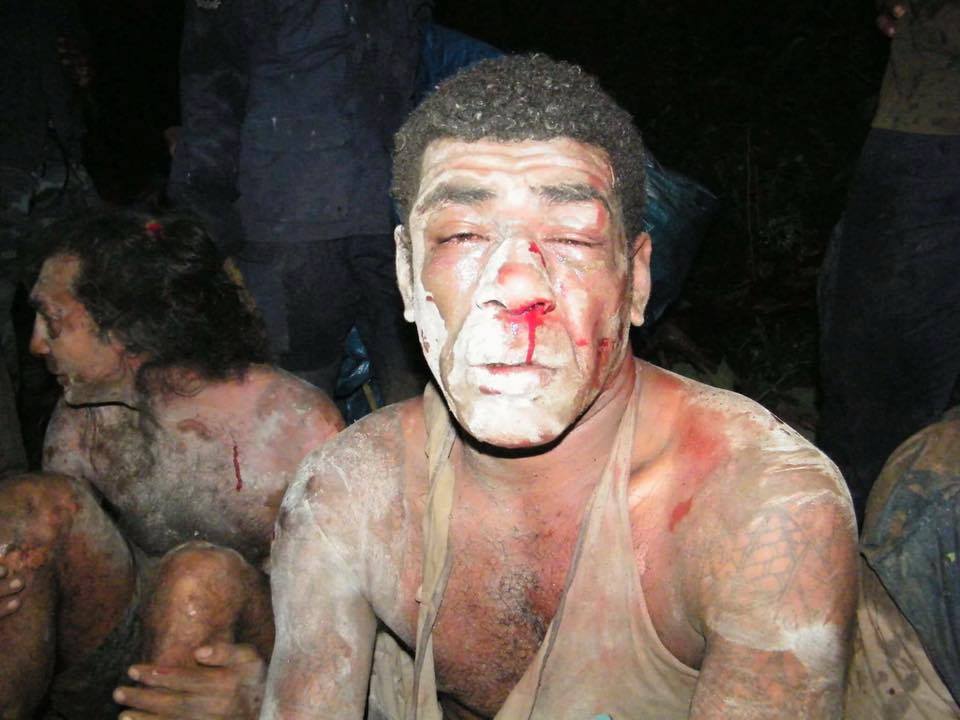
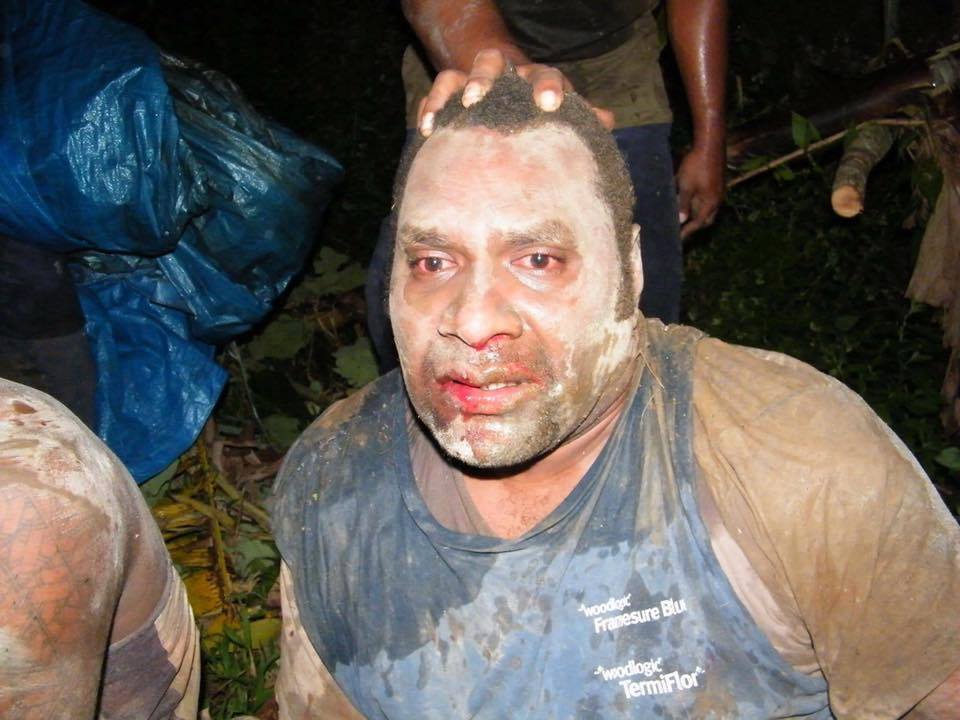
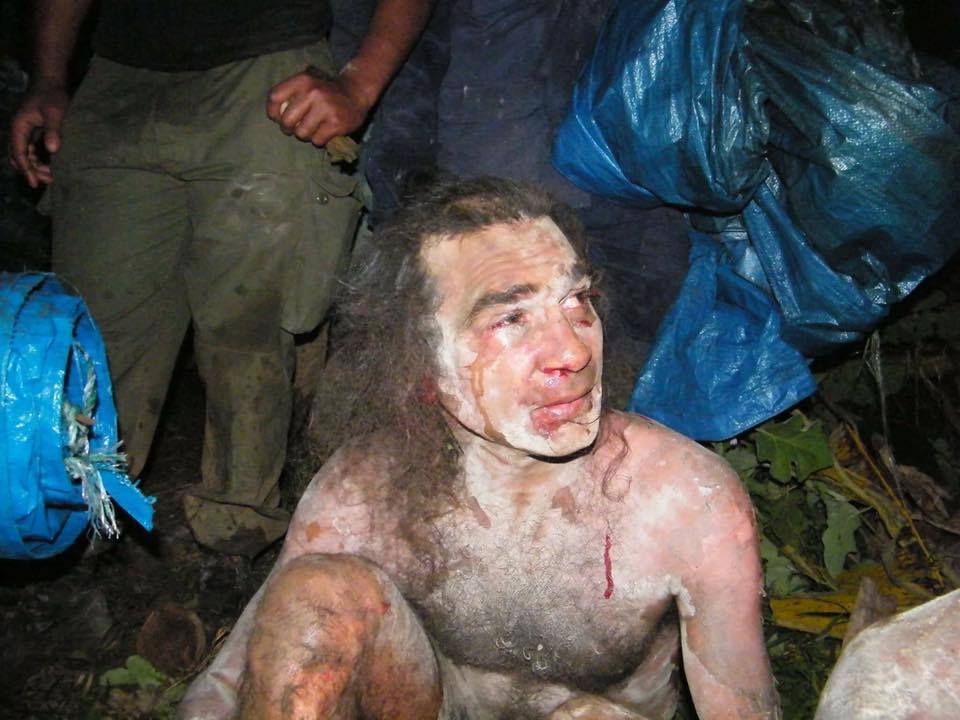
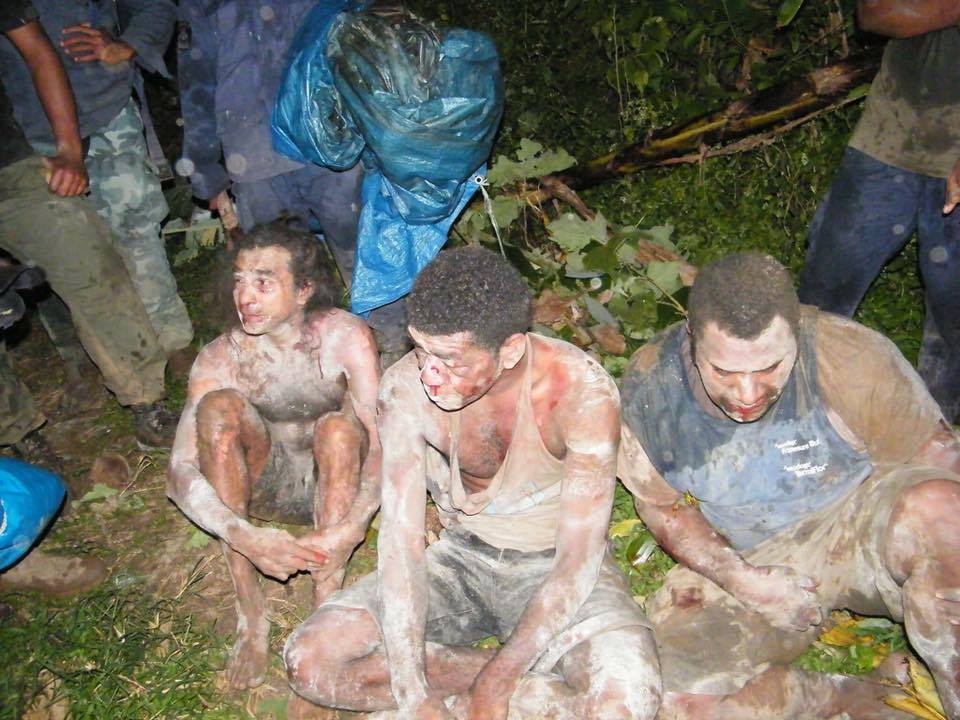
BEATING PHOTOS can't be consigned to SCRAP ALBUM: 'They must have thought I was Indian because they used very foul language against my mother and kept saying they were doing it because I was a 'kai idia'"

14/7/2016

25 Comments


"I was expecting to get a beating because of what we were doing, but what I did not expect was for one of the police officers to pour the boiling water from the kettle over my body."

Picture
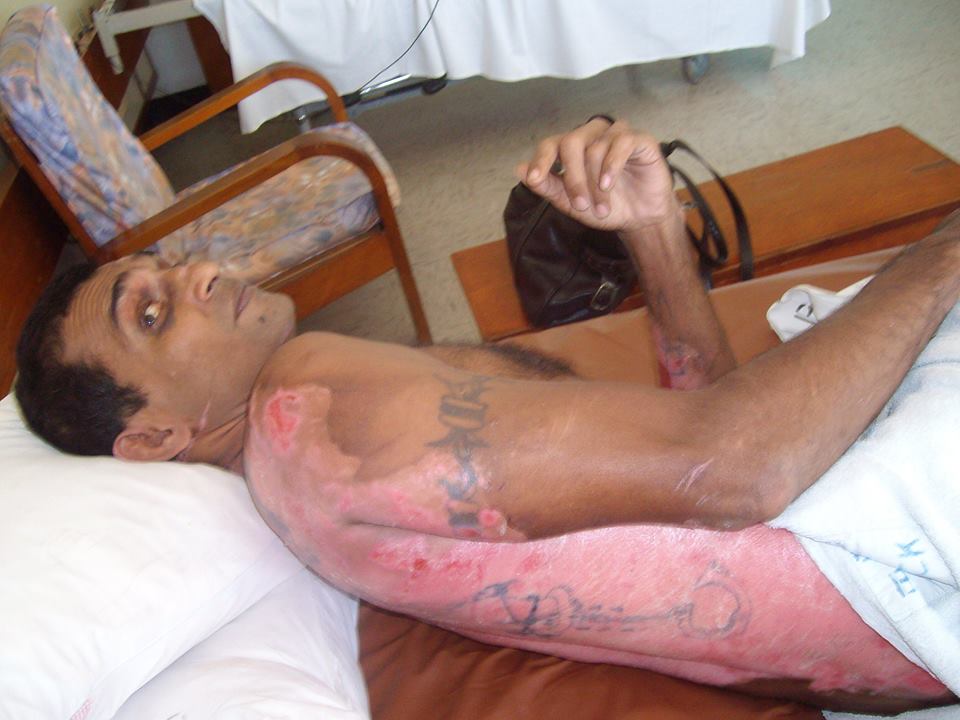
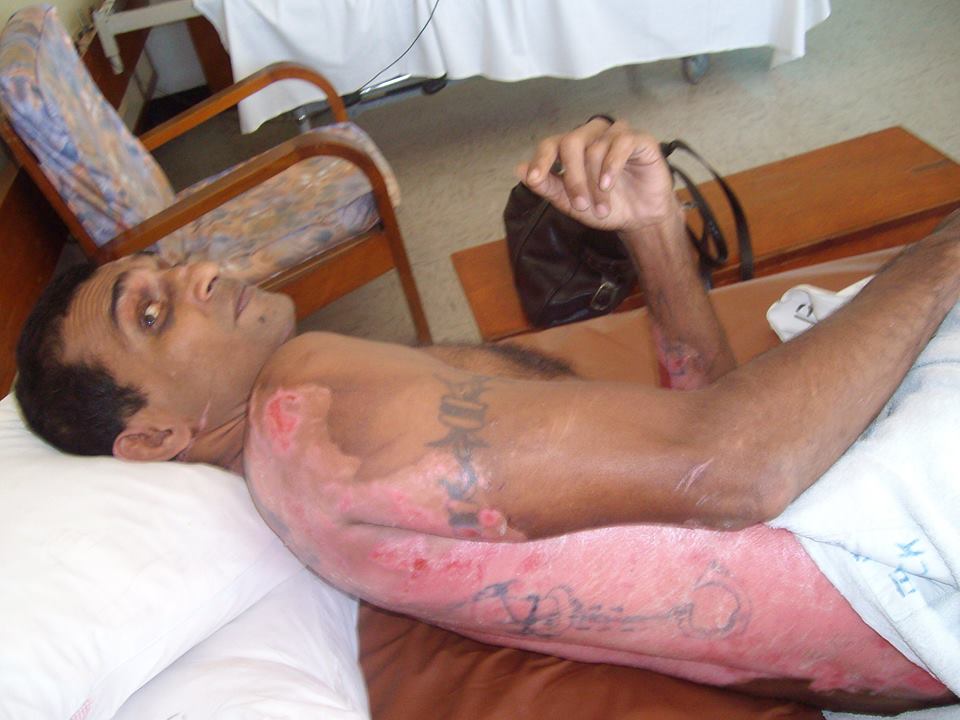
Jim Knowles (now known as Jim Kusi) while he was admitted in hospital in 2009.
Picture
By Felix Chaudhary
Fiji Times
Thursday, July 14, 2016


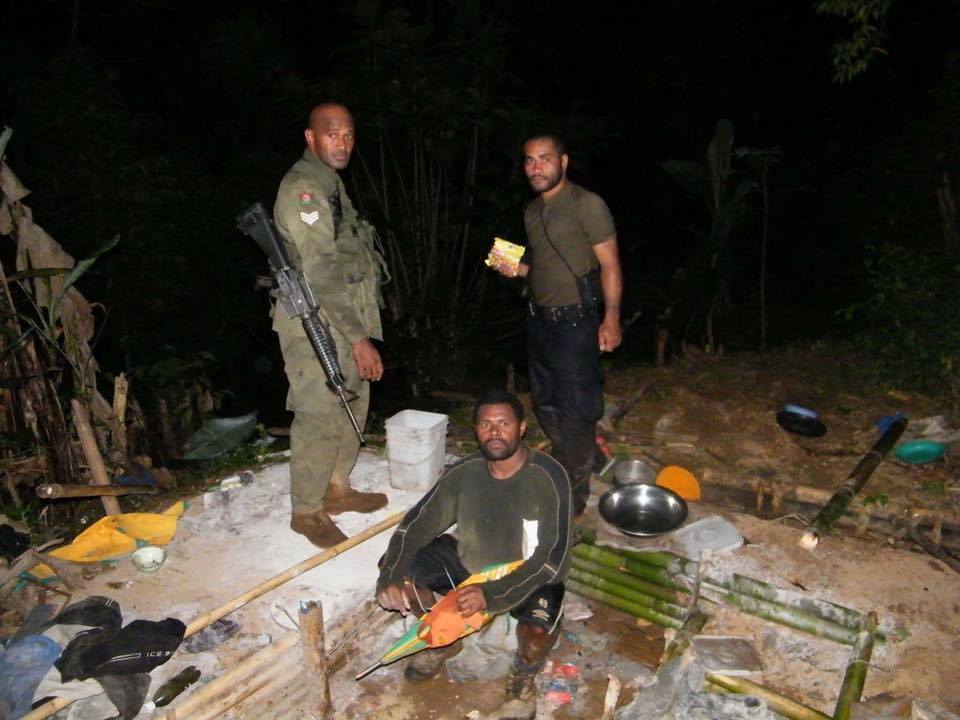
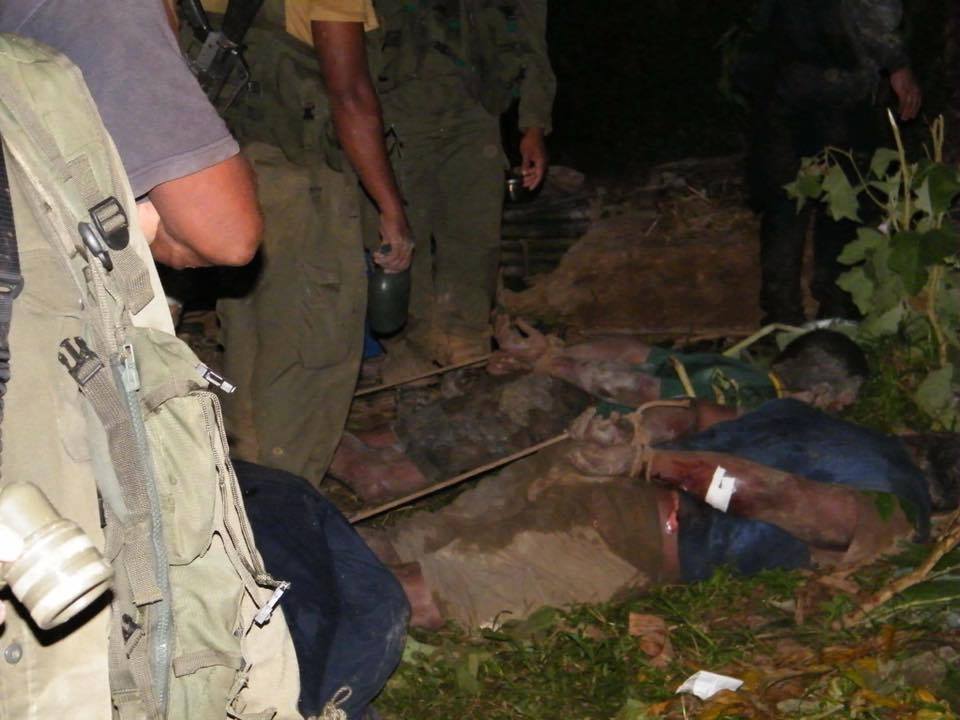
ONE of the three men caught allegedly cultivating marijuana by a team of police and military officers in 2009 says he still does not understand why they were tortured and then forced to walk for six hours to a village to be transported to hospital.

He also claimed the security forces team used racially derogatory remarks while torturing him because they thought he was a Fijian of Indian descent. Jim Kusi, a resident of Sigatoka, claimed he still had trouble sleeping because of the trauma invoked by the combined police and military squad.

"I had already admitted to them that we were looking after the farm and we were all prepared to go and face court over any charges but what they did to us that evening is something I will never forget," the 47-year-old shared.

"It was sometime in June. Because we were up in the highlands, we had no idea there was an operation to sweep for drug farms. Around dusk as we were preparing to have tea, about seven or eight men attacked us."
"All we could see was police and military uniforms as they began punching and kicking us and using sticks to poke us," Mr Kusi alleges.

"I was expecting to get a beating because of what we were doing, but what I did not expect was for one of the police officers to pour the boiling water from the kettle over my body.

"And while I was screaming in pain, they poked sticks into my back and were laughing as they did it. They must have thought I was Indian because they used very foul language against my mother and kept saying they were doing it because I was a 'kai dia'."

Mr Kusi alleged he and the other two victims were tied up like animals as the beating continued.

"One of the men used burning ember to burn off my long hair while the others laughed. After that they tied our hands together and made us walk for six hours to a village.

"We were taken to hospital and kept isolated from other patients. While I was in hospital, a man came to me with some papers.

"He said they had the right to kill me and do whatever they wanted with me because I was growing drugs.

"He forced me to sign some papers and then I never saw him again," he claimed.

Mr Kusi spent a few weeks in hospital recovering from severe burns, cuts to his back and bruising all over his body before being released. He now stays at home and looks after his four young children.

Picture
25 Comments

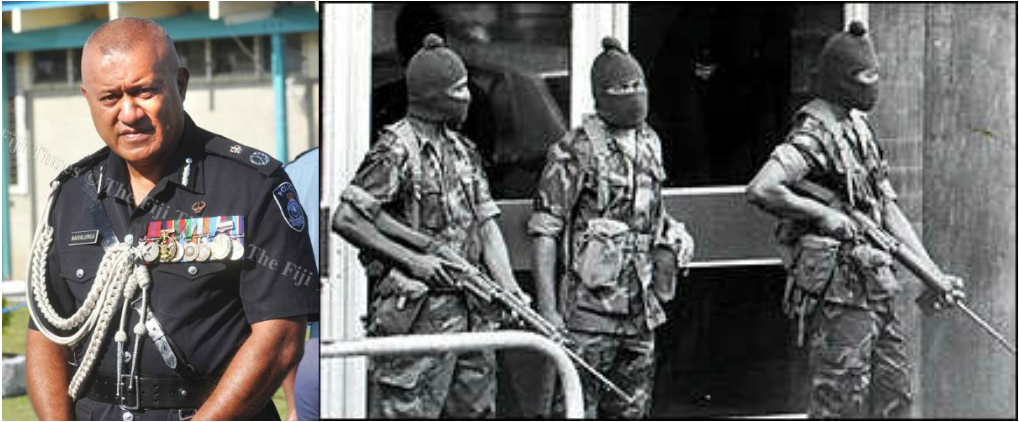
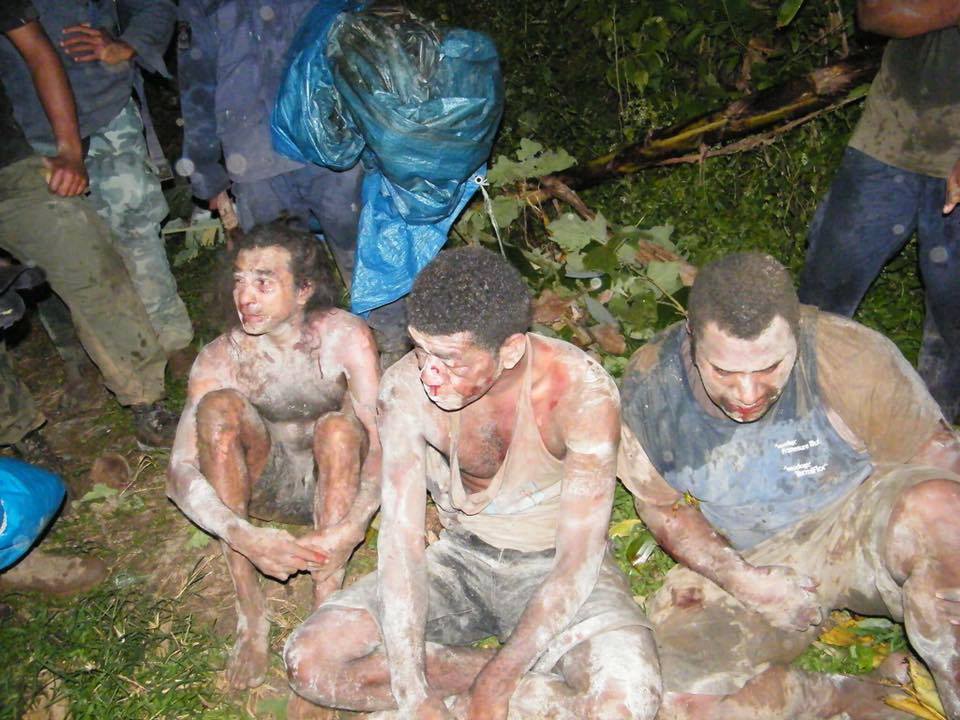
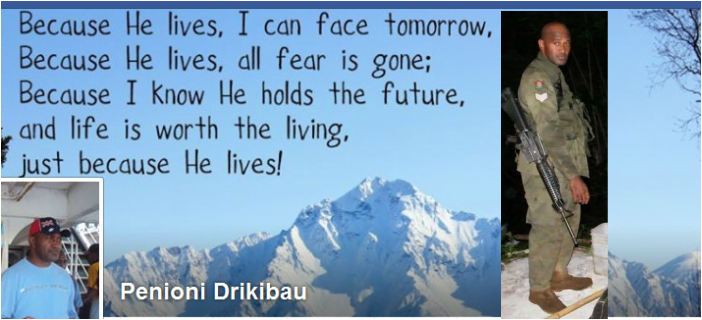
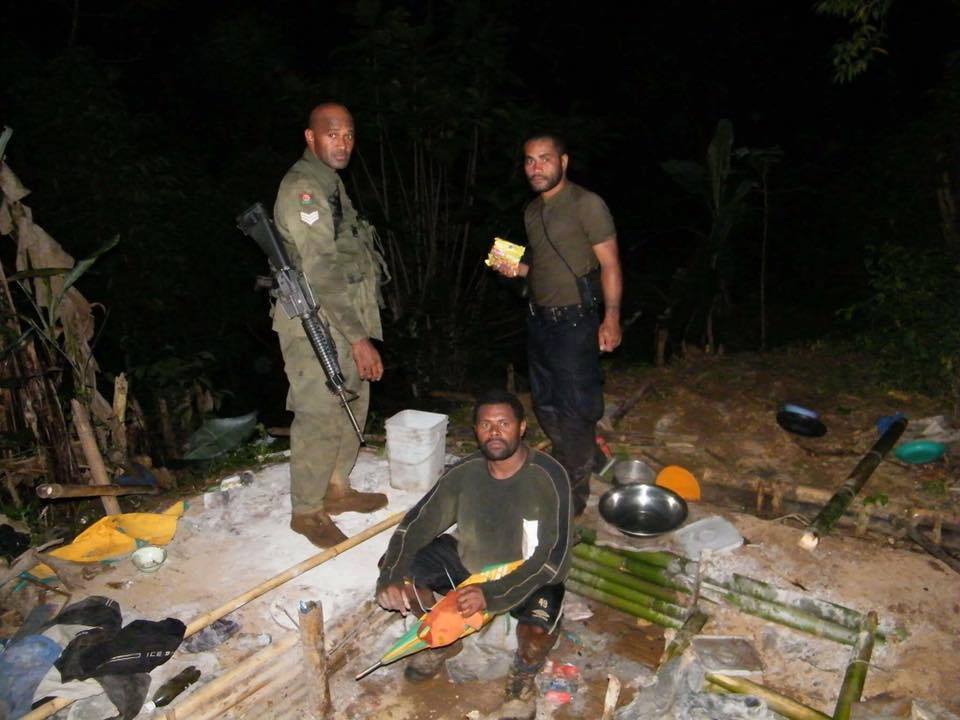
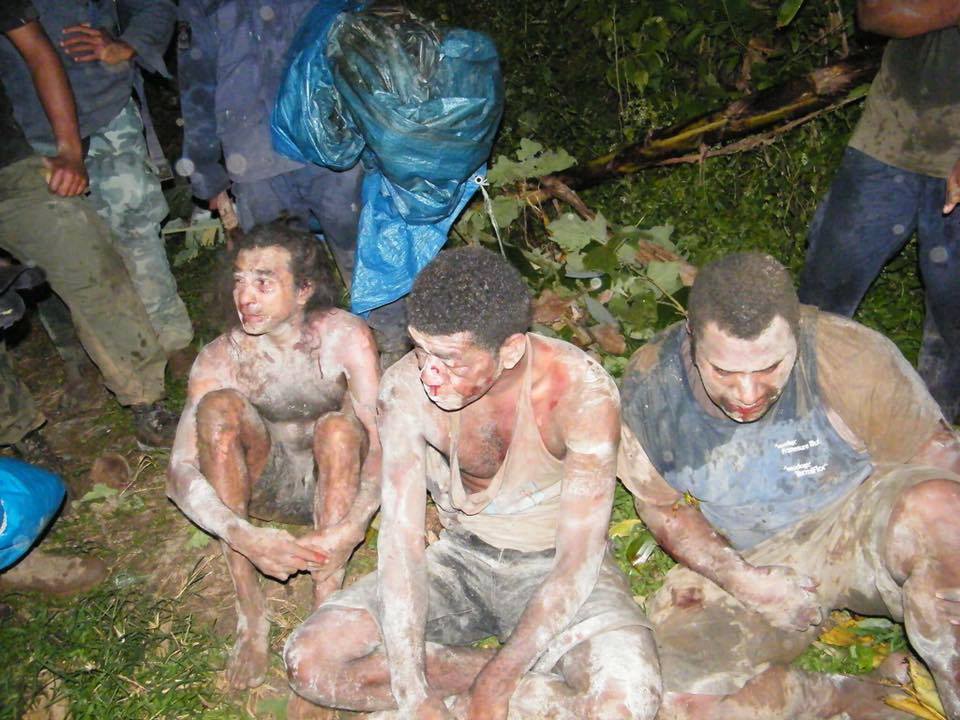
Police Commissioner Qiliho: 'One of the military officers identified in the pictures has been serving overseas since last year.' Yes, and he has been unmasked for Fijileaks as -  Sergeant Penioni Drikibau from Lomaiviti

13/7/2016

8 Comments

 
Picture
Picture
Picture

The RFMF has a history of shipping out of the country its officers implicated in brutal beatings, torture, and other criminal activities

PictureThe late Rabaka
From Fiji Coup 2006 Archive, September 2011

UN Played Key Role in Blocking RFMF from Deploying Nadi Teenager Sakiusa Rabaka’s murderers to Iraq


BY VICTOR LAL

Military spokesman Mosese Tikoitoga had feigned ignorance of murder charges against soldiers and policeman at Black Rock 

The UN could play a part investigating human rights abuses in Fiji according to UN Secretary General, Ban Ki-Moon, human rights campaigners heard during the recent Pacific Islands Forum meeting in Auckland, New Zealand.
  

In fact, the UN had come down hard in 2007 when the murderous Fiji military and then Police Commissioner Esala Teleni had tried to secretly ship out for a United Nations assignment to Iraq eight soldiers and one policeman who were accused of sexual abuse, torture and cold blooded murder of 19-year-old Nadi teenager Sakiusa Rabaka.
 

The Nadi teenager had died in February 2007, a month after he and a group of friends were assaulted at the Black Rock military training base in Votualevu, Nadi. He was hospitalised and underwent surgery for brain injuries in the days prior to his death.

The soldiers Joeli Lesavua, Jona Nareki,  Taione Lua, Napolioni Naulia, Ulaiasi Radike, Etonia Nadura, Ratunaisa Toutou, Ilaisa Kuruimavua and lone policeman Patrick Nayacalagilagi were jointly charged with one count of murder and four counts of assault occasioning actual bodily harm. They were, however, found guilty of a lesser charge of manslaughter, jailed for four years by regime’s lackey judge Justice Daniel Goundar. However, the killers were released within weeks on compulsory supervision order, prompting the DPP’s office to say that it was unusual for convicted criminals to be released so quickly after being sentenced for major crimes.

Bainimarama and Tikoitoga’s response to murder suspects Iraq tour

When Fiji media broke the story about the murder suspects being prevented from leaving for Iraq on Saturday 27 October 2007 the dictator, who has avoided a murder inquiry into his own conduct following the 2000 mutiny and deaths at Nabua camp, appeared on Fiji TV on 29 October. He denied any interference in the Rabaka murder case, claiming that he was helpless to stop any soldiers from going overseas on peacekeeping duties just because they were suspects in a murder case.
   

His side-kick and military spokesman Lt Col Mosese Tikoitoga said the Director of Public Prosecutions had not furnished them with a list of suspects. The Fiji Peacekeepers Association expressed concern that the soldiers implicated in the murder were not isolated from other soldiers. And Alinieta Rabaka, the mother of the late Rabaka told the press that she believed that the army had tried to send the suspects abroad to thwart the course of justice. Police, on the other hand, claimed that they were trying to establish why policeman and murder suspect Nayacalagilagi was booked on the Iraq flight.

Flight to Freedom Thwarted at Nadi Airport

On Tuesday 30 October the DPP’s Office disclosed that murder and assault charges had been laid against the nine accused on Thursday 25 October and it was forced to obtain a court order to bar the nine from leaving for peacekeeping duties in Iraq. The DPP said it had to intervene after attempts to talk to the military about Rabaka’s death had broken down. The charges were filed in the Magistrate's Court in Nadi on Thursday and the next day court summons were served on all. The DPP's Office said if the suspects had been allowed to leave on the UN-chartered flight on Saturday night it would have deferred the case for an indefinite period. In other words, the killers would have escaped justice.

The DPP issued a stop order to the Immigration Department at the Nadi International airport on Saturday. Immigration Director and military strongman Viliame Naupoto said the soldiers were taken off the flight by the army at the airport. He said the officers names could not have been on the Immigration “Watch List” if the officers made it through immigration. Tikoitoga refused to comment further, referring the press to speak to military arsonist and human rights abuser Lt Col Sitiveni Qiliho, who Tikoitoga said was responsible for the matter as he was in Nadi.

The Great Lie and Cover Up

But the Wikileaks cables from the US Embassy in Suva tell a very different story, exposing the lies and cover up of the murderous Fiji regime which was planning to send the Rabaka murderers to Iraq after the US led coalition had toppled Bainimarama’s dictator cousin Saddam Hussein, later executed for his crimes against the Iraqi people.

In one of a series of cables Larry Dinger, the then US ambassador to Fiji wrote to Washington on 25 October 2007, the day DPP had laid the charges. Under the heading “RFMF deploying murder suspects to Iraq”, Dinger wrote: “We have received information that o/a Oct. 27 the Republic of Fiji Military Forces (RFMF) will deploy to UNAMI in Iraq ten soldiers who allegedly participated in the beating deaths of two civilians early this year, the only confirmed killings related to the military “clean up” campaign after last December's coup.  Ever since the beatings, the RFMF, the Fiji Police, and the Public Prosecutor Office have supposedly been investigating who did what, and consulting on what charges might be laid in what venue.  It has appeared pretty obvious that the culprits were identified very early on.  The endless to-ing and fro-ing since has brought repeated pleas from the families of the victims, the media, and human-rights activists for appropriate criminal trials and convictions.”
 

As usual, Dinger gave a background under the heading “The beating deaths: what happened”: “The military reportedly picked up Sakiusa Rabaka in the Nadi area on marijuana-related suspicions in early February.  He returned home the following morning badly beaten, described his ordeal, and complained of a severe headache.  Subsequent medical efforts to save his life failed.  He died on Feb. 24.”

And contrary to the liar Tikoitoga that the Director of Public Prosecutions had not furnished them with a list of suspects, the US Embassy had the names of the murderers for a week, as Dinger disclosed to Washington under the heading “The alleged culprits”: “This week we obtained the names of the one RFMF suspect in the death of...9 RFMF suspects in the beating of Rabaka: Taione Lua (NCO); Patrick Nayacalagilagi (Private); Ulaiasi Radika (Private); Etonia Nadura (Private); Ratunaisa Toutou (Private); Joeli Lesavua (Private); Jona Nareki (Private); Ilaisa Kurimavua (Private); and Napolioni Naulia (Private). All ten reportedly are to depart for Iraq Oct. 27, and we are told the RFMF moved up the departure date, which was initially scheduled for a few weeks from now.”

Dinger commented in the cable: “...Rabaka's first-hand account before his death made RFMF involvement clear in his case.  One Fiji Police officer was implicated, too.  Commodore Bainimarama has stated publicly that the RFMF and the interim government (IG) would not obstruct justice in the cases; however, the military's actions have certainly impeded the process.  There have been rumors for months that the RFMF had sent some or all of the perpetrators off to peacekeeping duties in MFO Sinai or Iraq to hinder investigations.  The planned deployment of the ten soldiers this weekend, if it takes place, would clarify rumor into reality.”

Leahy Amendment sanctions and RFMF murderers

Dinger asked for guidance: “Since the deployments are to UNAMI (United Nations Assistance Mission for Iraq), we flag the matter to USUN for possible referral to UNPKO.  We are also including the ten names on Embassy Suva's list for Leahy Amendment sanctions.  Please advise if further Embassy Suva action is advisable.”  

UN Key Role in stopping murderers’ flight to Iraq

On 29 October, the night the dictator appeared on Fiji TV and claimed that he was helpless to stop soldiers from going overseas on peacekeeping duties, Dinger told Washington under the headline, “UN letter halts RFMF plan to deploy murder suspects”: “According to a well-placed embassy source in Fiji. Immigration, a UN intervention is what kept the Republic of Fiji Military Forces (RFMF) headquarters from deploying 7 soldiers and one policeman, all charged with murder (see reftels), to UNAMI last Saturday.  Reportedly a letter from the UN reached the RFMF leadership on Saturday p.m. stating that the 8 personnel were unacceptable to the UN.  All 8 had been processed through Immigration and their baggage was on board the aircraft when the RFMF “move-con” officer pulled them back.  A source noted to us that RFMF plans to send the 8 had moved ahead, despite a court summons (ref A) that was intended to halt the deployment.  Then the UN letter arrived and brought activity to a halt.  Departure of the aircraft was delayed by two hours as events unfolded.  Earlier information indicated a total of 9 personnel were deploying. It is not yet clear what happened with the 9th, Private Etonia Nadura.”

Continued Dinger: “We have heard from the UNDP ResRep in Suva that he provided UNDPA a heads-up last week, “based on the rumblings in Fiji,” that allowed rapid consultations once the issue hit the media.  The ResRep said he has since been out of the loop, as DPKO and UNDSS took over, apparently conversing with the Fiji mission in New York.”
  

Teleni complicit in badly behaved Patrick Nayacalagilagi flight plan 
Under another heading “Senior Police complicity”, Dinger informed Washington: “An interesting aspect is that the one policeman implicated in the murder case was to be included in the deployment.  Reportedly, when Commodore Teleni moved from RFMF Deputy Commander to Police Commissioner last summer, he made arrangements for police to join RFMF PKO deployments, particularly to MFO Sinai.  The particular policeman, Patrick Nayacalagilagi, reportedly had a bad disciplinary record, even before being charged with murder.  Given the history, his inclusion in the deployment had to have been approved at a very senior level, presumably by Teleni personally.”

RFMF says “not fair;” Teleni seeks praise  
Dinger continued: “The RFMF spokesman, Lt Col. Tikoitoga, defended the decision to send the personnel on a PKO assignment abroad, proposing that the Office of the Director of Public Prosecutions (ODPP) had given no indication the men would be charged.  Tikoitoga said, “It is not fair” to bar departure at the final hour.  Police Commissioner Teleni indicated to the media that the Police had “acted in the name of justice” by refusing to allow suspects in the murder case to depart on PKO duties. Teleni said he knew nothing of the one policeman alleged to be deploying.”

Three Murderers also Rugby Sevens Ambassadors

But Dinger remained unconvinced, commenting: “Our knowledgeable sources are amazed by the gall of Tikoitoga to claim the RFMF was unaware the 8 were under investigation for murder.  The suspects have been known ever since the beating in February, and the ODPP has been trying for weeks to convey the news that charges were ready to be filed, with the RFMF constantly evading a meeting. Similarly, for Teleni to attempt to claim high moral ground is breathtaking.  While details remain to be sorted out, it now appears that a UN intervention blocked the deployment. The ODPP did what it could as well.  The RFMF and Fiji Police senior leaderships failed miserably to uphold proper standards of conduct. An interesting side note is that three of the RFMF suspects have been members of the Fiji “rugby sevens” team, the highest calling for any Fiji sportsman.”
  

The three national rugby playing murder suspects were Etonia Nadura, Jona Nareki and Napolioni Naulia. If the United Nations had not intervened, it is quite likely that not only the three would have escaped justice but dictator Bainimarama and his family, and Fiji Rugby Union chairman Tikoitoga, would have been cheering them on at future Hong Kong Sevens, and other venues around the world, at Fiji taxpayers’ expense.

Black Rock turned into Death Rock

Ironically, in August 2006, when the US House of Representatives Committee chairman Henry Hyde had visited Fiji, the dictator told him in Nadi, as the US Embassy reported to Washington, of his plans for Black Rock: “Bainimarama’s staff briefed on the history of the RFMF, focusing on its long and stellar history in peacekeeping.  Commander Bainimarama noted that Fiji is likely to expand its operations in support of the United Nations in Iraq.  He also reviewed Fiji’ plans to build a peacekeeping training center in Western Fiji at Black Rock, noting that forces from throughout the Pacific would be able to train there.”
 

Six months later, however, after the treasonous coup the dictator and his military goons turned Black Rock into Death Rock by murdering Sakiusa Rabaka, one of many beaten, tortured and murdered by the Bainimarama-Khaiyum illegal regime.

Picture
Picture
Picture
Picture

And big lamusonas on overseas missions: "Hands Up, We Are Cowards"

Picture
Picture
Picture
Picture
Picture
8 Comments

REGIME'S BRUTAL BEASTS: Police and Army officers sent to destroy drug farms in Sigatoka brutally assaulted the suspects - and hid their crimes since 2009. One of the soldiers now on an overseas mission! 

12/7/2016

11 Comments


Fijileaks: We have called for Sitiveni Rabuka's Immunity to be stripped (or he should volunteer to do so) so we can try him and the present thugs!

Picture
PICTURES of Fijian suspects beaten by security forces were taken during a drug raid in 2009 and suppressed under censorship laws enforced by the interim government. Relatives of the men from the western provinces of Nadroga and Navosa have identified the police officer responsible for the beating as a national rugby player. "We are thankful that the pictures have been made public - it's about time people know what went on," a relative of one of three the men in the pictures said this hour. "Police threatened to kill us at the time. If the Police Commissioner wants to talk we will talk to him. "The truth must be told." Pictures released to Islands Business show that one of the men was scalded with boiling water by a policeman during the raid. Police Commissioner, Brigadier Sitiveni Qiliho, has promised to investigate allegations of police brutality.

One of the men was scalded with boiling water by a policeman during the raid

"It was in May or June 2009. I had hot water poured on my back. It was still boiling. You know how one is tortured; it was with knives and sticks. I think there were about 20 of them. I still have scars on my back. Sometimes I have flashbacks of what happened, when people experience these things they sometimes have flashbacks of the incident. I was admitted for three weeks in hospital after the incident. Our case was then dismissed and we reconciled" - Vilimoni Mateiwai, of Nakoro Village in Navosa
Picture

This soldier who took part in the 2009 beatings is serving overseas!

Picture
Picture
Picture
Picture
Picture
Picture
Picture
Picture
Picture
Picture
Picture
Picture
Picture
Picture
Picture
Picture
Picture
11 Comments
<<Previous
Forward>>
    Contact Email
    ​[email protected]
    Picture
    Picture
    Picture

    Archives

    March 2026
    February 2026
    January 2026
    December 2025
    November 2025
    October 2025
    September 2025
    August 2025
    July 2025
    June 2025
    May 2025
    April 2025
    March 2025
    February 2025
    January 2025
    December 2024
    November 2024
    October 2024
    September 2024
    August 2024
    July 2024
    June 2024
    May 2024
    April 2024
    March 2024
    February 2024
    January 2024
    December 2023
    November 2023
    October 2023
    September 2023
    August 2023
    July 2023
    June 2023
    May 2023
    April 2023
    March 2023
    February 2023
    January 2023
    December 2022
    November 2022
    October 2022
    September 2022
    August 2022
    July 2022
    June 2022
    May 2022
    April 2022
    March 2022
    February 2022
    January 2022
    December 2021
    November 2021
    October 2021
    September 2021
    August 2021
    July 2021
    June 2021
    May 2021
    April 2021
    March 2021
    February 2021
    January 2021
    December 2020
    November 2020
    October 2020
    September 2020
    August 2020
    July 2020
    June 2020
    December 2018
    November 2018
    October 2018
    January 2018
    December 2017
    November 2017
    October 2017
    September 2017
    August 2017
    July 2017
    June 2017
    May 2017
    April 2017
    March 2017
    February 2017
    January 2017
    December 2016
    November 2016
    October 2016
    September 2016
    August 2016
    July 2016
    June 2016
    May 2016
    April 2016
    March 2016
    February 2016
    January 2016
    December 2015
    November 2015
    October 2015
    September 2015
    August 2015
    July 2015
    June 2015
    May 2015
    April 2015
    March 2015
    February 2015
    January 2015
    December 2014
    November 2014
    October 2014
    September 2014
    August 2014
    July 2014
    June 2014
    May 2014
    April 2014
    March 2014
    February 2014
    January 2014
    December 2013
    November 2013
    October 2013
    September 2013
    August 2013
    July 2013
    June 2013
    May 2013
    April 2013
    March 2013
    February 2013
    January 2013
    December 2012
    October 2012
    September 2012