Fijileaks
  • Home
  • Archive Home
  • In-depth Analysis
    • BOI Report into George Speight and others beatings
  • Documents
  • Opinion
  • CRC Submissions
  • Features
  • Archive

Part Two: Mahendra Chaudhry's confidential documents from DDP prosecutor on Justice Madigan's role in tax case and bid for recusal

14/10/2013

4 Comments

 
Picture
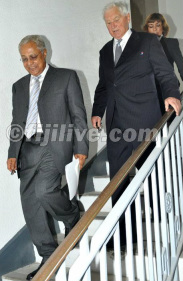
WASU Pillay is yet to admit or deny being the informant in Chaudhry's affidavits to oust Justice Madigan from case
"I never said he gave me the USB in Labasa. What I said was he gave me the info in Labasa and the PB (Prosecution Brief) in Suva" Rajendra Chaudhry on former DDP prosecutor Wasu Pillay
Picture
Rajendra Chaudhry stands by his claims
THE RECUSAL BACKGROUND
 
MAHENDRA Pal Chaudhry was charged and presented in the Suva Magistrates Court on 23 July 2010 with offences alleged under the Proceeds of Crime Act, Income Tax Act and Exchange Control Act. The matter was transferred on the same day to the High Court by the presiding magistrate Pamila Ratnayake.

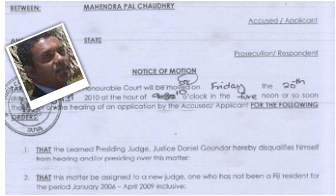
On 30 July 2010 Chaudhry appeared in the Fiji High Court before Justice Daniel Goundar. The Magistrates Court charges had been filed as Informations in the Hiigh Court the same day. In November 2010 Justice Goundar had dismissed Mahendra Pal Chaudhry's application to disqualify himself from presiding over the tax case. Chaudhry had filed an application against Goundar hearing the case on the grounds of apparent bias, and an interest in the outcome of the case.

Two years later, in July 2012, Goundar reduced the charges to Breaches of the Exchange Control Act against Chaudhry following a stay on proceedings application filed by his lawyers. However, the case was transferred for pre-trial conference before Justice Paul Madigan.

On 26 April 2013, partway through a hearing of Chaudhry's second application to quash or stay the indictment, his senior counsel Peter Williams QC, made an application for Madigian to recuse himself from proceedings on two premises. They were: (a) that Madigan had a "close association" with Counsel Ms E Yang for the State when they acted together in the investigation of the tax matters of former Chief Justice Daniel Fatiaki and (b) that Madigan was present at a workshop at the end of July 2010 at the Office of the DPP when this case was discussed and he (Madigan) made comments on it. Also present were Nazhat Shameem, Ana Tuiketei, Seini Puamau, Jasvil Singh, Wasu Pillay and the then acting DPP Aca Rayawa.

After taking time for consideration, Madigan delivered an oral, extempore ruling on the application in which he refused it. By a letter to the Court dated 10 July 2013 Williams required a copy of the oral ruling made by Madigan at the time. On 26 April 2013, in rejecting the application for recusal, Madigan provided a written ruling, stating as follows:

"I have absolutely no recollection of the "workshop" at the Office of the DPP in Gunu House in Suva. At the time I was sitting as the sole criminal Judge in Lautoka. I have no recollection of even attending a workshop in Gunu House although I do from time to time attend workshops for Legal Aid and for new practitioners at the offices of the Independent Legal Services Commission. There can be no perception of bias by that, if that is what is being alleged. I certainly have never discussed Mr Chaudhry's legal matters at any workshop. The application for recusal is refused."

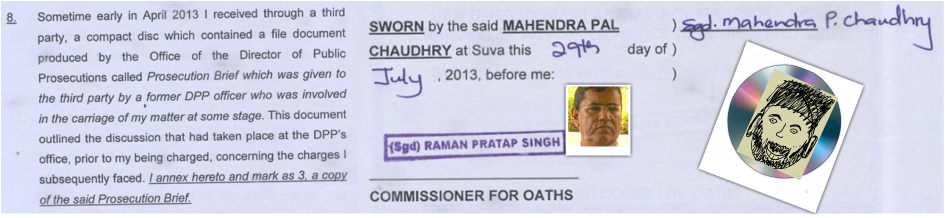
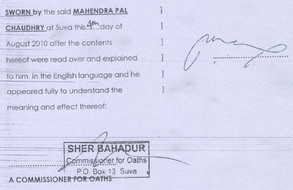
On 29 July Chaudhry filed another affidavit on "the basis of matters personally known to me and on the basis of information received from others, which I believe to be accurate". He called for Madigan to recuse himself from the case. In the affidavit, he claimed: "Sometime early in April I received through a third party, a compact disc which contained a file document produced by the Office of the Director of Public Prosecutions called Prosecution Brief which was given to the third party by a former DPP Officer who was involved in the carriage of my matter at some stage. This document outlined the discussion that had taken place at the DPP's office, prior to my being charged, concerning the charges I subsequently faced."


He also stated: "I was informed and so believe that the charges I face/d were the subject of a DPP workshop, which was organized prior to my being charged, around 16-23 July 2010, by Ms Nazhat Shameem, a former judge was then reportedly a consultant to the office of the DPP."

Chaudhry claimed that Madigan attended the workshop and his tax case was exhaustively discussed and in the course of the discussions Madigan suggested that a schedule of bank accounts be included as an appendix to the Information.

These facts Chaudhry claimed had since been confirmed to him by a former senior member of the DPP's Office. He did not identify Wasu Pillay as the alleged informant.

Chaudhry added: "As I have recorded in paragraph 6 of this affidavit senior counsel raised this matter with the presiding judge at the hearing on 26 April 2013. His Lordship said words to the effect that he could not recollect having attended a workshop on this case, but he did admit that he had attended workshops conducted by the DPP's Office. Given the information that has been supplied to me and give Justice Madigan's lack of recollection (as opposed to denial that he attended the workshop) I am concerned about the implications of this term of the fairness of the trial, and at the very least the perceptions of fairness...I therefore ask that in the interests of fairness and a fair trial and the appearance of such that Justice Madigan recuse himself from these proceedings."

Picture
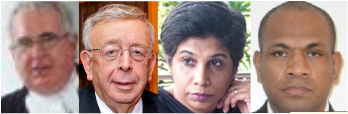
From left: Madigan, Grossman, Shameem and Rayawa
PicturePuamau
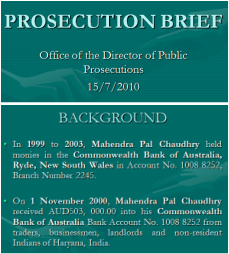
On 20 August 2013 Seini Korosaya Puamau, a principal legal officer with the DPP's Office deposed an affidavit confirming that the "Prosecution Brief" was a copy of a print-out of a power-point presentation by her on 15 July 2010, in her capacity as one of two acting Principal Legal Officers of the Serious Fraud Unit of the DPP's Office, and "as such is privileged and should not be in the possession of the Applicant" [Mahendra Chaudhry].

She said she prepared the power-point presentation on 15 July 2010 in anticipation of a meeting between the then acting DPP Aca Rayawa and Clive Grossman QC, which had been scheduled for, and indeed had been held in Nadi on 19 July 2010. That according to the courtesy brief sent to her on 19 July the presenting team, the only person present during the meeting were Rayawa, then manager of the Serious Fraud Unit Tuiketei, then legal officer Wasu Pillay and Grossman.

Responding to paragraph 13 of Chaudhry's recusal affidavit, she confirmed that Madigan and other members of the Judiciary have been invited, from time to time, to attend some DPP workshops to present on advocacy and jurisprudence and/or to critique mock presentations for conduct and advocacy. "I indicate that in these instances the exercise briefs have always been drawn from completed cases", she stated.

On 22 April Chaudhry responded to Puamau's affidavit: "I wish to say that the information of Justice Paul Madigan's participation at a DPP workshop.meeting.briefing at which my case was discussed was provided by a DPP officer, who was one of the primary case handlers, and who worked with other DPP officers, in the ex parte application for others to access my tax records from FIRCA. My information is that the said DPP officer was involved in my case from its preparatory and investigative stage to my charge and indictment in the High Court. As such I have no reason to doubt his version of events."

Chaudhry added: "In reply to the disclosure in Paumau affidavit the fact that a meeting was held with Mr Clive Grossman and prosecutors in Nadi, on my charges, prior to my arraignment is itself serious as there is no evidence to suggest that Mr Grossman was retained by the Office of the Director of Public Prosecutions in any capacity at that stage."

He also argued that Paumau was incorrect in asserting that members of the judiciary had attended workshops by invitation of the DPP, to comment only on determined or completed cases. "I have information to the contrary that Ms Nazhat Shameem conducted a workshop, together with Justice Daniel Goundar, on the Peniasi Kunatuba case when the matter was still a live issue before the court."


Chaudhry also referred to Madigan's recusal ruling where he had stated that he had no recollection of even attending a workshop in Gunu House. "The above is contradicted in the Puamau affidavit in paragraph 17 wherein she says that Justice Madigan amongst others have been invited to attend DPP Workshops from time to time."

On 18 September Madigan dismissed Chaudhry's recusal bid, ruling as follows: "It is unfortunate that these hearsay allegations are not supported by evidence, for example by an affidavit of the "former senior member" of staff. The reason why, undoubtedly, is that the allegations are mendacious, perfidious and malicious and s/he would not want to perjure h/self. I have never discussed the applicant's charges with any member of the office of the DPP outside of the Courtroom, let alone made suggestions as to the composition of the Information, which would be unthinkable for a criminal Judge."


Now, the Chaudhrys' claim that the former senior DPP officer is allegedly Wasu Pillay, of Gordon & Company, Lautoka. And they have provided a letter (published previously below) to Fijileaks Insight Team that Mahendra Chaudhry wrote to Pillay on 27 June 1013: "I have been informed by my son Rajendra Chaudhry and Mr. David Toganivalu, former Deputy DPP, that you had confided to them that Judge Madigan participated actively in the workshop and even suggested that certain schedules be added to the charges as presented in the Magistrates Court...I have been informed that you attended a workshop convened by the DPP’s Office to discuss my case following the laying of charges against me in the Suva Magistrates Court on 23 July 2010.  The case was subsequently transferred to the Suva High Court..All I seek of you in the name of justice and fair play is an affidavit or a letter confirming Judge Madigan’s participation in the workshop.  Just how important is this factual bit of evidence to my case may be well appreciated by you as a member of the Bar."

The Chaudhrys' catalogue of allegations against Pillay, Madigan, Shameem et al as claimed to Fijileaks Insight Team by Rajendra Chaudhry

  • Madigan knows he was there. Wasu would never lie about it. He had no reason to tell me when he did - he was at the time with the DPP and based in Labasa
  • How did I get the Prosecution Brief? Wasu confirmed in Nov 2011 in Labasa at the home of Uday Pratap - clerk to Amrit Sen
  • He dropped off the Prosecution Brief to my office in Suva in or around April 2012. He had it saved in a USB and copied it to my laptop.
  • Madigan came specifically for this briefing on 22 July 2010
  • He is definitely lying. This infor on Madigan was given to me by Wasu Pillay who was handling the file in the early days. He also gave us the Prosecution Brief, where the DPP reported each step of the investigation to Khaiyum.
  • The most important point is that in April ruling Madigan said he could not recollect attending the DPP workshop as in Sept he seems to have perfect memory even though Puamau contradicts him.
  • Puamau had no conduct of the matter so why would she prepare the prosecution brief?

  • Yes a special session was held from what Wasu told me. Puamau is being over compensatory in her response and this is strange.
  • Puamau prepared it. Naz and Madigan attended and it's the same brief used in the MPC case.
  • Yes and Madigan was in Lautoka High Court then. He went to Nadi to attend and that is why he in the April ruling referred to Gunu House when no one made reference to it.
  • Madigan was at the meeting of 19 July.
  • She (Naz) facilitated the workshop and also instructed Puamau to prepare the brief.
  • It was the day before MPC was charged and Madigan was in Suva.
  • Yes, Grossman also there on 19 July.
  • Why was Madigan there. To brief Grossman. Madigan is good mates with Grossman.
  • 19th with Madigan and 22 with DPP officers in Suva where Shameem conducted workshop. 
  • New practice. Trying to curry favour with Taliban so to get government briefs. When he gave the info and the brief he was not happy with outside interference in DPP

Picture
ET TU BRUTE? Despite repeated requests Wasu Pillay has chosen not to deny or rebut any of the allegations sent to him by Fijileaks.
CAGED for Ten Years Without Parole: Justice Madigan jails former senior FIRCA employee convicted of money laundering $350,000 to 12 years imprisonment
 
A 41-year-old former employee of Fiji Revenue and Customs Authority convicted of money laundering involving $350,000 has been sentenced to 12 years imprisonment. During the trial, the court heard that between 1st March 2008 and 30th September 2010, Robin Surya Shyam obtained $350,000 as a result of false income tax refunds.
It was also revealed that Shyam asked friends for their bank account details so that refunds could be paid into these accounts and then withdrawn in cash and given to him.
The court heard that Shyam told his accomplices that he was owed money but did not want his wife to know about it.
Shyam’s lawyer, Filimoni Vosarogo during mitigation informed the court that his client, who is married with two children, is remorseful.
However, High Court Judge Justice Paul Madigan said that Shyam has displayed a lack of remorse throughout the proceeding and is in a state of denial as he blames one of the accomplices for coming up with the idea to generate the funds.
Justice Madigan also said that there is no trace of any of the $350,000 generated by this scheme which could be returned to the Government revenue.
Shyam is eligible for parole after serving 10 years behind the bar. Source: Fijivillage News
Picture
4 Comments

JUDGE EXPOSED: Mahendra Chaudhry provides confidential documents from DPP prosecutor to prove Justice Madigan's secret role in tax case

10/10/2013

17 Comments

 
Picture
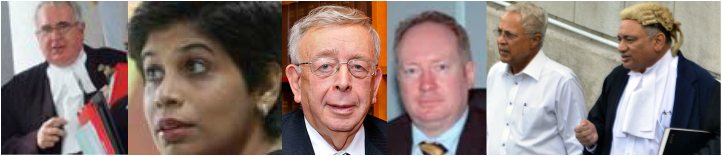
From left: Justice Paul Madigan, Nazhat Shameem, Clive Grossman QC, DPP Christopher Pryde, Chaudhry and his lawyer Anand Singh
"His [Mahendra Chaudhry's] grounds of application are that: (1) the applicant is "informed" that I attended a workshop conducted by the DPP from 16 - 23 July 2010 where these proceedings were "exhaustively discussed" and where I made the suggestion that a schedule of the applicant's bank accounts be attached to the information...He then goes on to say that these "facts" have been confirmed to him by a former senior member of the DPP's office. (2) the applicant "understands and believes to be common knowledge" that I have in the past "socialized" with the Prosecutor in the proceedings, one Mr. Clive Grossman, and have previously had a working relationship with Mr. Grossman's Junior Counsel, Ms. Elizabeth Yang...It is unfortunate that these hearsay allegations are not supported by evidence, for example by an affidavit of the "former senior member" of staff. The reason why, undoubtedly, is that the allegations are mendacious, perfidious and malicious and s/he would not want to perjure h/self. I have never discussed the applicant's charges with any member of the office of the DPP outside of the Courtroom, let alone made suggestions as to the composition of the Information, which would be unthinkable for a criminal Judge." - Justice Paul Madigan, 18 September 2103, while dismissing Mahendra Chaudhry's recusal application
By Fijileaks Insight Team
The tug-of-war between the Fiji Labour Party leader Mahendra Pal Chaudhry and Justice Paul Madigan for the judge to recuse himself from presiding over Chaudhry's tax case takes a dramatic twist.

The Chaudhrys have given Fijileaks confidential documents from DDPs Office (Prosecution Brief), affidavits, and letters which seem  to support their alleged claim that Madigan was intimately involved behind the scenes in framing the tax charges against Chaudhry.

They claim that their key informant in this matter is the former DPP prosecutor WASU PILLAY, now in private practice with Gordon Lawyers. Pillay is yet to reply to Fijileaks despite our numerous requests for comments.


Picture
PROSECUTION BRIEF: Mahendra Chaudhry claims that the 109 page long document was given to Rajendra Chaudhry by a former DPP prosecutor Wasu Pillay now in private practice
Picture
Picture
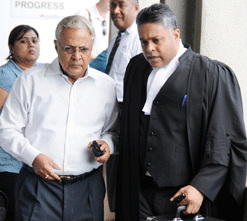
Chaudhry leaving the Fiji High Court with his NZ lawyers and Peter Williams QC and Heeni Philips. He has pleaded not guilty.
Picture

UNMASKED? DPP Mole allegedly Wasu Pillay

Picture
UNMASKED? Wasu Pillay as he appears on his Facebook page
Picture

Chaudhry: Prosecution Brief reveals Attorney- General Aiyaz Khaiyum interferred with case

Picture
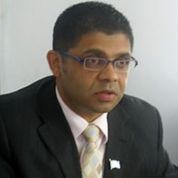
WASU PILLAY: Fijileaks sent to Pillay the allegations for comment but to date he has not responded to us
Picture
Aiyaz Khaiyum "interferred" with the case tainting the DPP, claim Chaudhrys
Picture
Seini Puamau from DPP's Office prepared Prosecution Brief but her affidavit in support of Madigan is disputed by Chaudhry
Picture
Picture
Picture
Picture
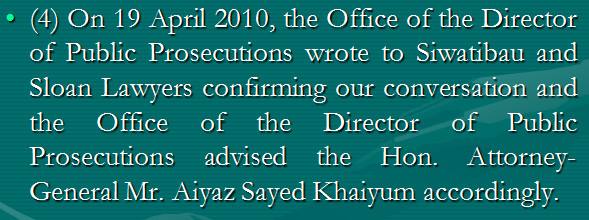
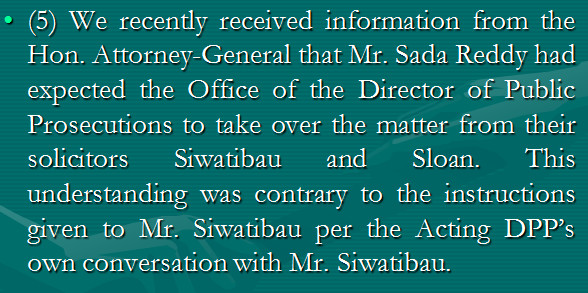
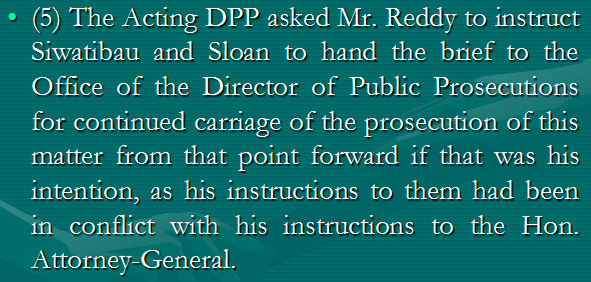
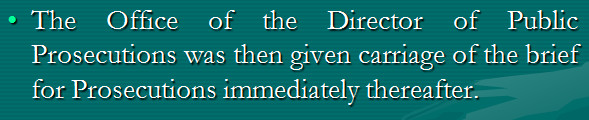
The above excerpts are from the Prosecution Brief which Chaudhry claims was passed onto him by Wasu Pillay
Picture
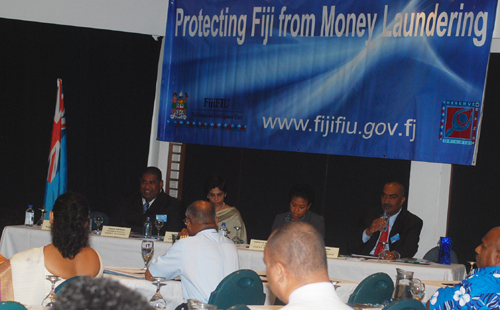
Former judge Nazhat Shameem (second from left) at a "Protecting Fiji from Money Laundering" conference
" I was informed and so believe that the charges I face/d were the subject of a DPP workshop, which was organized prior to my being charged, around 16-23 July 2010, by Ms Nazhat Shameem, a former judge who was then reportedly a consultant to the office of the DPP" - Mahendra Chaudhry in his affidavit for Madigan's recusal from his case
Picture
"He (Wasu Pillay) dropped off the Prosecution Brief to my office in Suva in or around April 2012. He had it saved in a USB and copied it to my laptop. He left for Labasa after MPC was charged and had applied for recusal of Goundar and permanent stay of the charges." - Rajendra Chaudhry to Fijileaks.
PictureThe Chaudhrys outside the Suva High Court
in August 2012.
_ 27th June 2013

Mr. Wasu Pillay

Messrs. Gordon & Company

Barristers & Solicitors

157 Vitogo Parade

Lautoka


Dear Mr. Pillay

I write to request your kind assistance in the Suva High Court Criminal Action 137 of 2010 against me.  You are familiar with the case as you dealt with it during your employment with the DPP’s Office in 2010.  The subsisting charges in this action against me relate to alleged breaches of the Exchange Control Act.

I have been informed that you attended a workshop convened by the DPP’s Office to discuss my case following the laying of charges against me in the Suva Magistrates Court on 23 July 2010.  The case was subsequently transferred to the Suva High Court.

Those who participated in the workshop included Mr. Aca Rayawa (then Acting DPP), Ms. Nazrat Shameem (former Judge) Justice Paul Madigan, a number of prosecution staff and other members of the legal fraternity.  The workshop was held on or about 28 July 2010.

I have been informed by my son Rajendra Chaudhry and Mr. David Toganivalu, former Deputy DPP, that you had confided to them that Judge Madigan participated actively in the workshop and even suggested that certain schedules be added to the charges as presented in the Magistrates Court.

As you know, my case was initially heard by Judge Daniel Goundar who dealt with the first stay application made by me to permanently stay/ quash all the twelve charges laid against me.  The other charges related to proceeds of Crime Act and Income Tax Act. 

Judge Goundar permanently stayed/ quashed all the charges except the three subsisting charges where he ruled that a case had not been made to establish abuse of process.  His ruling was delivered on 25 July 2012, following which he directed that the case be placed before Judge Madigan to deal with the remaining charges. 

A second application for permanent stay was filed in respect of the three remaining charges and was heard by Judge Madigan on 26 April 2013.  At this hearing my Senior Counsel, Peter Williams QC, requested Judge Madigan to recuse himself as it had come to the knowledge of the defense that the Judge had participated in a workshop convened by the office of the DPP in which my case was discussed.

The Judge ruled that he would not recuse himself as he had no recollection of attending a workshop convened by the DPP in which my case was discussed.  However, he admitted that he had, from time to time, attended a number of workshops and some of them were workshops convened by the DPP’s office.

It will be noted that Judge Madigan did not categorically deny participating in the workshop which discussed my case but said that he could not recollect attending such a workshop.

As a Counsel yourself, you would well appreciate my reasons for making this approach to you.  I find it extremely hard to believe that the Judge’s powers of recollection could be so weak.

Aside from your good self, two other former staff members of the DPP’s office have also confided that Judge Madigan participated in the workshop.  I will also approach them for confirmation.

All I seek of you in the name of justice and fair play is an affidavit or a letter confirming Judge Madigan’s participation in the workshop.  Just how important is this factual bit of evidence to my case may be well appreciated by you as a member of the Bar.

I did try to contact you by phone before writing this letter but was unable to speak to you as you were out of the office.

I shall be only too pleased to discuss the contents of this letter with you at a time convenient to you.  My contact numbers are 3301 865 (res) 9921 865 (mobile) 3373 317 (office).  I hope to hear from you soon.


With warm regards.
 

Yours sincerely
 
Mahendra P. Chaudhry


Picture
Picture
Picture

Fijileaks Editor: Full Investigation to be published soon.

17 Comments

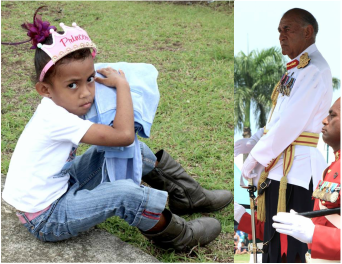
FIJI DAY attracts about 400 - mostly relatives of soldiers and regime supporters - with FLP leader saying "scant reason to celebrate" and UFDF asking: What are we celebrating this Fiji October 10th 2013?

10/10/2013

2 Comments

 
Picture
Picture
Picture
Picture
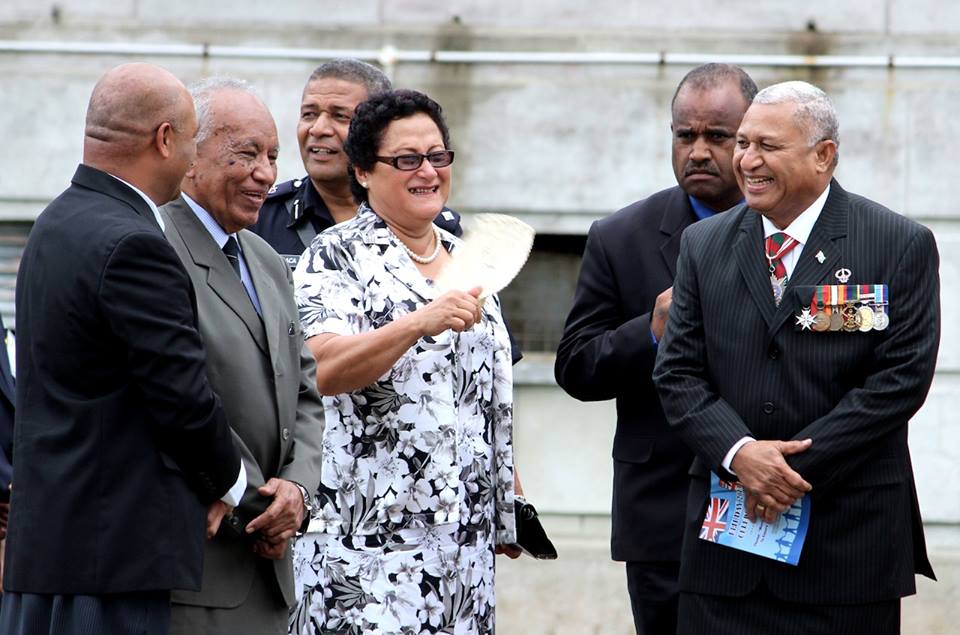
COUP BENEFIT: “And for the first time, any Fijian child can grow up to be where I am sitting now - to be the Head of State of Fiji." Excerpt from Ratu Epeli Nailatikau's address to nation
Picture
Picture
RESORTING TO BOLLYWOOD BHANGRA DANCE?
Picture
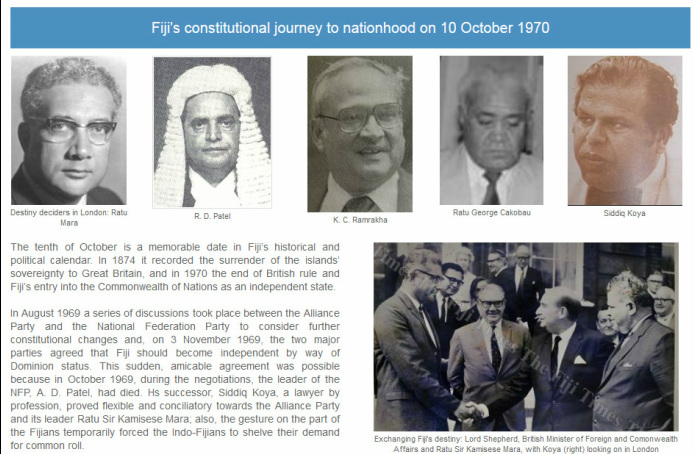
Click here to read Victor Lal's "Fiji's constitutional journey to nationhood on
10 October 1970"
Report of Constitutional Conference, 1970
2 Comments

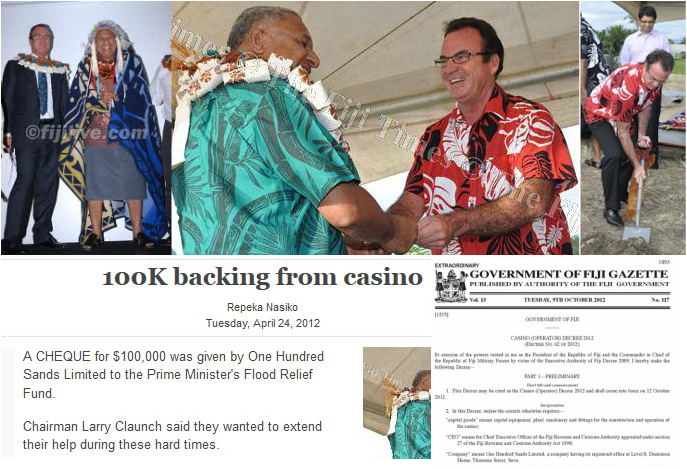
One Hundred Sands casino developer Larry Claunch says he has paid $100,000 fine for October - we say, SHOW US THE PROOF or CHEQUE?

9/10/2013

4 Comments

 
Picture

"I have received the cheque of $185,000, which is equivalent to $US100,000 from One Hundred Sands payable to the government today (yesterday)" - Aiyaz Sayed-Khaiyum.

4 Comments

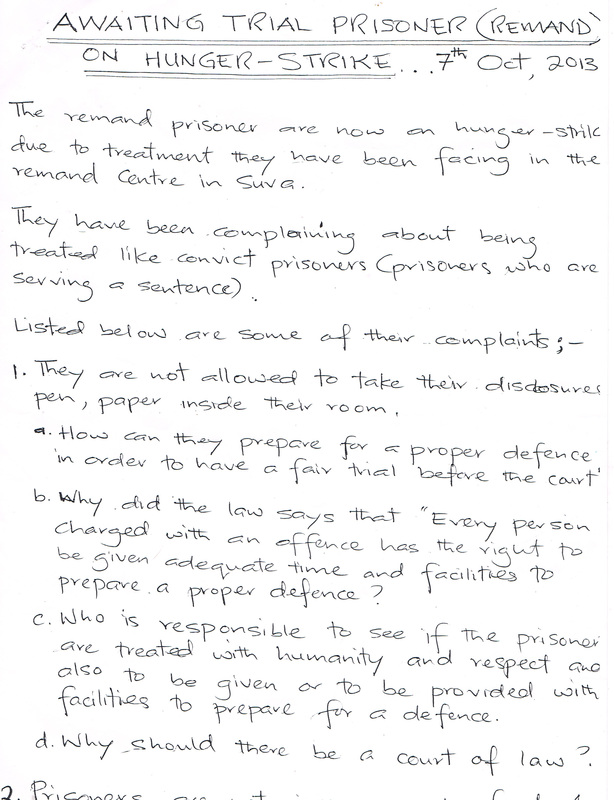
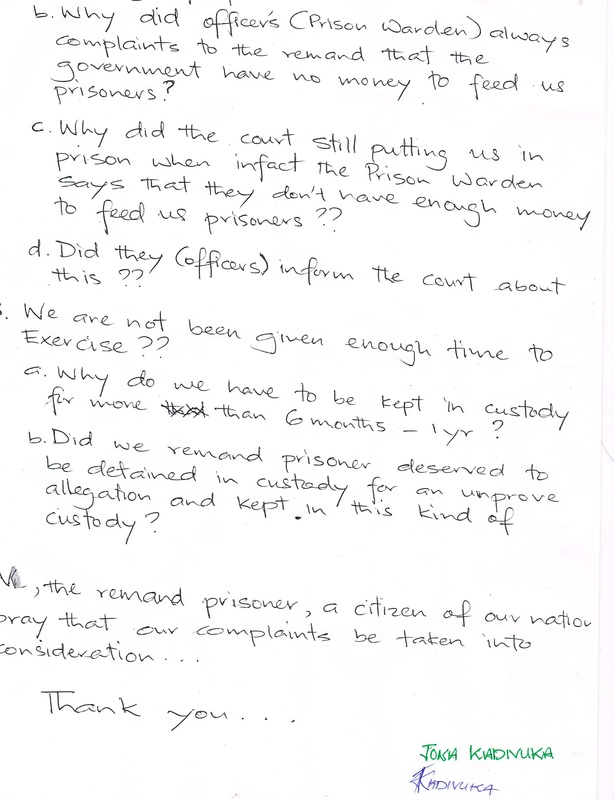
As hunger strike at the Suva Remand Centre ends, Fijileaks publishes  letter from remand inmate which protests being treated as convicted prisoners;"We told Government has no money to feed us, prisoners"

8/10/2013

3 Comments

 
Picture
A hunger strike at the Suva Remand centre yesterday has been resolved.
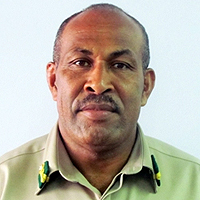
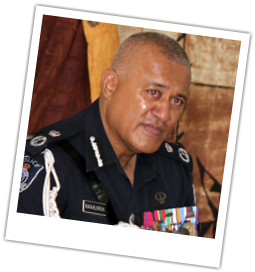
Corrections Commissioner Lieutenant Colonel Ifereimi Vasu (pictured left) said the incident involved a few of the remand prisoners who were not happy with the standard of food.

Vasu said that the issue originated from one of the prisoners but the issue was quickly resolved yesterday.

According to Vasu, this type of dispute is frequent in the remand centre but is usually resolved through communication.

He added that those involved in the hunger strike have now resumed eating following the resolution. Source: Fijivillage News

Picture
Picture
3 Comments

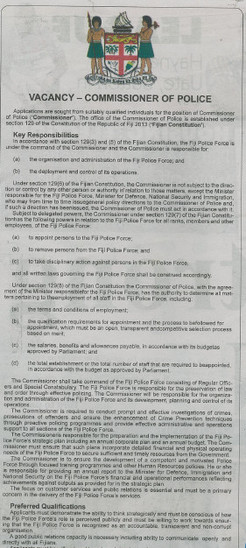
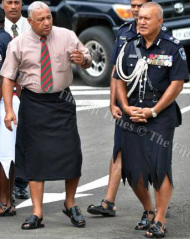
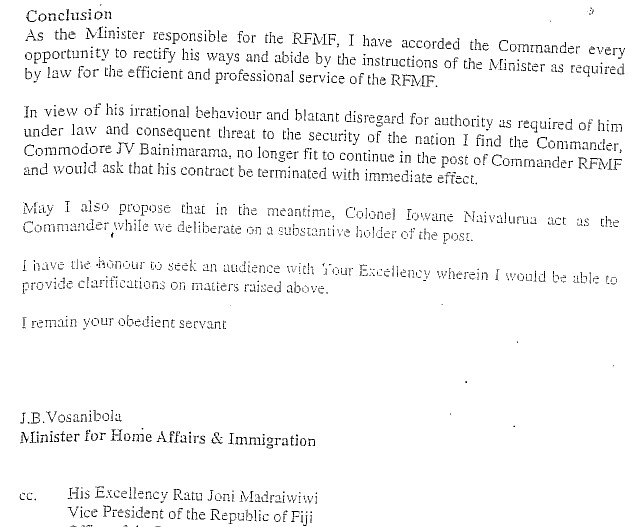
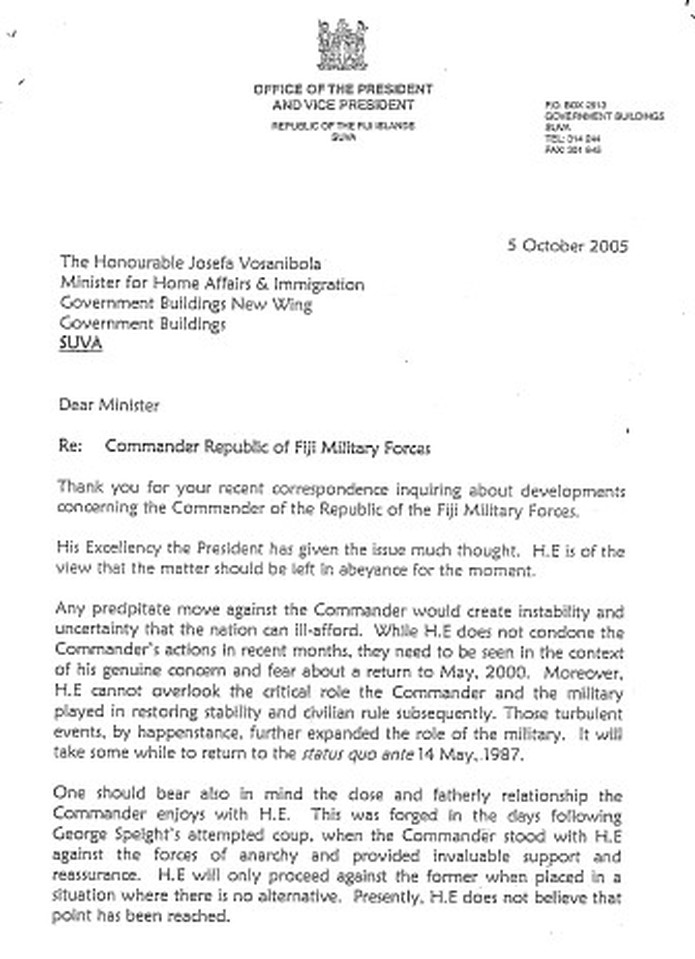
The Qarase government wanted to sack Bainimarama and replace him with recently dismissed Police Commissioner Iowane Naivalurua; Fijileaks told Bainimarama wants new Police COMPOL as "pay back" against former colleague for accepting army chief job offer

5/10/2013

14 Comments

 
Picture
Naivalurua: he was ready and waiting to lead RFMF
Picture
Picture
Frankly frightful of Naivalurua's every step!
Picture
Former US Ambassador Larry Dinger to Washington:

Beneath the surface: effort to suspend Bainimarama

---------------------------------------------

"We have heard from a reliable source that much more took place. In Qarase's meeting with the President and VP,  the three reportedly agreed that, after next week's Pacific Islands Forum events in Nadi, Home Affairs Minister Vosanibola (the RFMF's line Minister) is to lodge a formal complaint with the Fiji Police against RFMF Commander Bainimarama.  Vosanibola reportedly is at the same time to write to President Iloilo requesting that Bainimarama be suspended from his post as Commander, RFMF, for the duration of the investigation.The report we heard is not clear whether Iloilo has committed to then issue the suspension." Fijileaks Editor: See Documents which suggest both Iloilo and Madraiwiwi scuppered the plans,

Replacement in the wings

"Reportedly, Vosanibola will recommend that Brigadier General Iowane Naivalurua, who is about to return from a deployment to UNAMI in Iraq, take charge of the RFMF during a Bainimarama suspension. Vosanibola returned from a visit to Iraq a few days ago (Ref B).  While there, he reportedly discussed this scenario with Naivalurua and received his agreement to take the job, if necessary.  Naivalurua has been put forward to be Fiji's next Prison Commissioner, but his heart is with the Army. "

Comment

"We will seek opportunities to learn more.  The above scenario would break with President Iloilo's past reluctance to exercise his "commander in chief" powers to attempt to rein in Bainimarama.The scenario, if implemented, would force the RFMF's senior leaders to choose: follow an order of the President to permit Bainimarama's suspension; or protect Bainimarama by attempting to remove PM Qarase.  See Ref C for a DATT discussion of how RFMF factions seem aligned. That analysis suggests a key RFMF force commander would side with the President; but this is Fiji and nothing ever is certain.

For the next week, during the Pacific Forum, it appears all is intended to be calm on the surface; though one presumes Bainimarama (currently in London, then to Rome, the Sinai, and Iraq) has sources who will feed him the Government's plan in short order.  Whether that might shorten his "three weeks" ultimatum for Qarase's resignation remains to be seen. Bainimarama currently is scheduled to arrive back in Fiji on Nov. 8. DINGER"


Picture

Ratu Josefa Iloilo and Joni Madraiwiwi scuppered demand to dump Bainimarama as RFMF army chief and replace him with Naivalurua

Picture
Picture
Fijileaks Editor: For more details look forward to Victor Lal and Russell Hunter's forthcoming book
TREASON IN PARADISE: Commodore Frank Bainimarama and Fiji's 2006 Coup: The Inside Story
14 Comments

Treading in Moses’ footsteps: Fiji’s Fourth Constitution by Ratu Joni Madraiwiwi. Former Vice-President reflects on  new constitution after waking up in 2006 to find being ousted from Government House on orders from "Fiji's new Judas Iscariot"

5/10/2013

3 Comments

 
Picture
By Ratu Joni Madraiwiwi

In promulgating Fiji’s new and fourth Constitution earlier this September, the country’s leaders hailed it as “the Constitution Fiji needed to have in order to join the ranks of the world’s great democracies”, and described the event in triumphal terms ranging from “historic” to “revolutionary.”

The document is certainly progressive in some respects: it provides, for instance, an expansive bill of rights with particular emphasis on socio –economic and cultural rights; an equitable and non-racial electoral system in place of the communal based systems as well as oversight institutions to promote transparency, accountability and combat corruption. It also creates a common Fijian national identity, which for the first time makes all citizens ‘Fijians’ irrespective of their ethnic identity. The Constitution also transfers the powers of the Great Council of Chiefs (GCC) to appoint the President to Parliament. Unlike before, this makes any Fijian, regardless of ethnicity more likely to be appointed to this office. In general, the removal of this institution, which—because of its exclusively Taukei composition—tended to favor members of this indigenous community, creates hope for more equal opportunities to all especially with the recognition of ‘Fijian’ as a single national identity. But is this enough to earn such glowing description or is the government just indulging in unwarranted self-praise?

Reaction to the document itself has been mixed, mirroring the political and ethnic divisions which remain a subtext of ‘post-revolutionary Fiji’. Government sympathizers have welcomed the document. Fiji’s closely regulated media is also accentuating its positive features lest it be sanctioned by the government through informal ways like limiting their access to official events, sources of information or, worse still, outright intimidation. The main political parties like the Social Democratic Liberal Party, the National Federation Party, the Fiji Labour Party, and the National Democratic Party, who see the document as a brainchild of the government, have opposed it - citing issues of legitimacy and principle. One need not look far to understand their position. To begin with, this Constitution, unlike the 2012 Constitutional Review Commission (CRC)’s version—which emerged from a more credible and participatory process but was summarily rejected by the government—is far from being a democratic product, having being drafted with little or no public input.

Further, it contains some disquieting provisions such as s.161 which grants the president powers to amend the document by decree if ‘ necessary to give full effect to [its] provisions or to rectify any inconsistency or errors in any provision [therein].’ Although only valid for the transitional period, such a provision opens the window for potentially abusive amendments during this period should the President be so inclined. This is all the more so because the Constitution, except for a vague safeguard requiring the certification of the Supreme Court, does not provide any objective criteria for determining what is (or is not) ‘inconsistent, or ‘erroneous’ suggesting that such a determination is predominantly the government’s call based on what it considers to be ‘inconsistent’ or ‘erroneous’. Could it use such a provision to erode gains made so far? By abandoning the recommendations from a Commission they set up and discarding the draft constitution it produced, Fiji’s leaders have sufficiently demonstrated that they are an unpredictable lot. Nothing can therefore be ruled out even within the short transitional period.

Other equally disturbing provisions include those granting unconditional and inviolable immunity to military leaders (s.159); giving extensive powers to the PM and Attorney General, disrupting the balance of power between the different arms of state (s.133); limiting political rights (s.6); shielding decrees from legal challenge (s.173), and expanding the role of the army (s.130). Not only do these run contrary to the government’s own non-negotiable principles that set the bar for a quality document, but also, they pose serious implications for the cultivation of a democratic culture and strengthening of the rule of law. Rigid amendment procedures, for instance, beyond preventing responsiveness to societal dynamics, also expose the document to extra-legal approaches to change.

Likewise, granting immunity to military leaders; as well as entrenching and shielding certain decrees and legislation (which were largely arbitrarily made), from judicial review raises serious issues of accountable and transparent governance especially where a need may arise to revisit circumstances that warrant redress or reparation.

In the same vein, limitations to fundamental political rights tighten the space for political participation. The negative potential of such a provision are already apparent, as the government sanctioned protests, albeit limited, that preceded the promulgation ceremony on 6 September

All these only allow for cautious optimism. The Constitution, as is, does provide a framework for democratic development, but which needs to be embellished further. The role of the new institutions established to enhance accountability and transparent governance, and the personnel running them, will be critical in this regard. The judiciary, which is central to this transformation, but has virtually been cowed into silence since 2006, will need to regain its voice and independence. However, whether or not the government will give it, and other actors involved in this democratic project, that free hand as the implementation of the Constitution commences, is anyone’s guess.

The potential for change, regardless of what factors drive it, brings a great deal of hope and expectations; which may generate a great deal of momentum that the government may eventually be unable to control. Like Indonesia and Myanmar before it, Fiji –viewed through this lens— also presents an interesting example. It is true that, in the Fijian case, the Government lost its nerve and eventually aborted the CRC process. Yet, it must be acknowledged that the whole experience itself helped shed light on what considerations can incline people to get involved. These include public dialogue and awareness, civil society mobilization and trust, built by some of the institutions involved —in this case the CRC, whose role was critical in getting major opposition parties on board. All these will have long-lasting and far-reaching consequences on Fiji’s democratic development downstream.

One reason for this conclusion is that the CRC process created space—albeit brief—for dialogue and engagement that was inspiring. As the elections draw closer and political activity and debate gather pace, there is cautious expectation that a similar scenario will develop. This is being shaped, in part by the transition from an arbitrary climate to one where constitutional legality, admittedly piecemeal, is crystalizing and prompting greater interest and participation from youths, women and civil society.

A second, perhaps, related reason is that while this Constitution is not perfect, it still provides the most practical and expeditious means of moving from arbitrary rule to more accountable governance. It must also be recognized that the Government, inadvertently or otherwise, incorporated some of the CRC proposals which have now become some of the strong persuasive points of this document. They include the bill of rights, transparency and accountability provisions. It is expected that the new ‘one man one vote’ or common roll system which does not differentiate voters based on ethnicity will defuse ethnic tensions which the communal voting system encouraged, and also help to build a strong sense of the newly recognized single national identity. The hope then is that over time, Fiji’s increasingly informed, vibrant, active, and more resilient populace will be able to capitalize on the limited gains of this Constitution and use it to bring about deeper and more desired transformational changes.


Picture
Picture
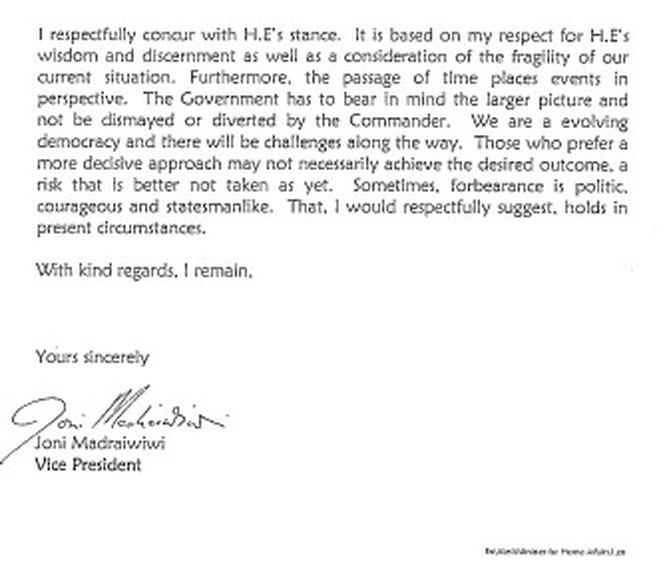
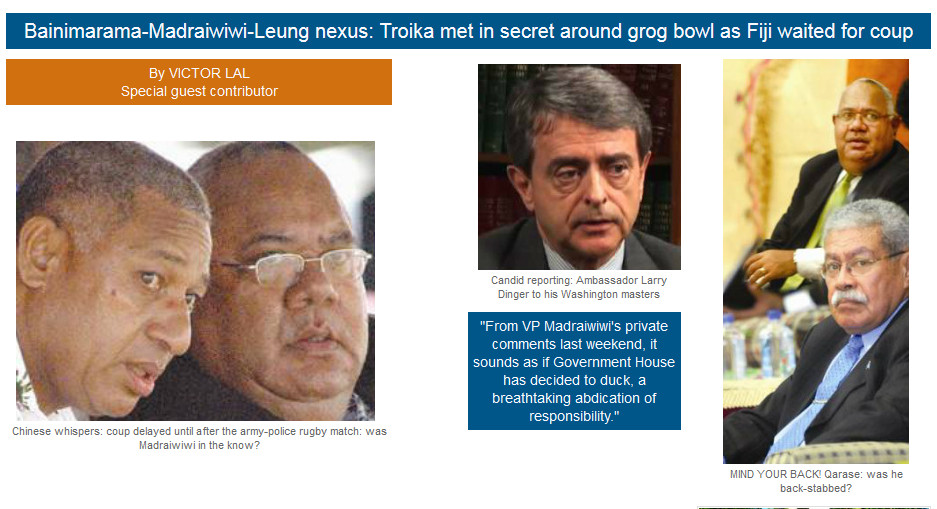
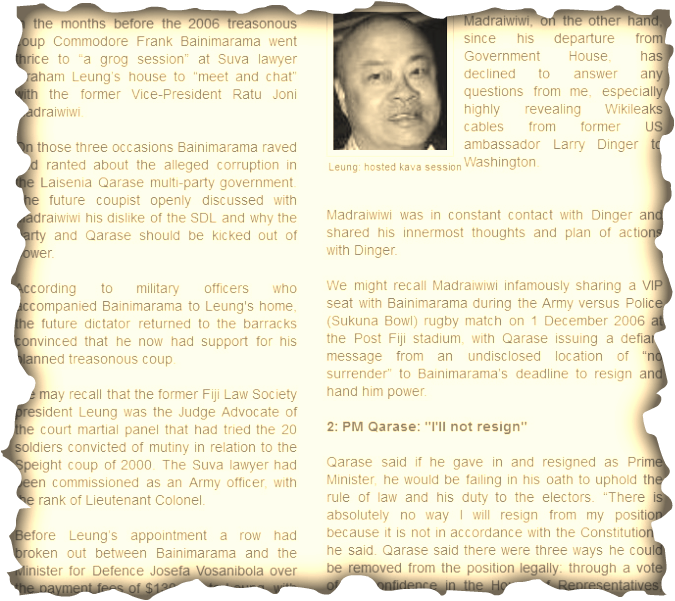
For Ratu Joni Madraiwiwi's alleged role in the events leading to the 2006 coup, see Victor Lal at http://www.fijileaks.com/in-depth-analysis.html
3 Comments

The Old Minimum Wages are dead: long live the New Minimum Wage

5/10/2013

0 Comments

 
BY
Professor Wadan Narsey

Dr Mahendra Reddy has announced his recommendation for a New Minimum Wage of $2.30 per hour for all of Fiji, following his survey of wages in Fiji.

Of course, Fiji's workers earning below $2.30 per hour (or $92 per week) will be  rejoicing in the expectation that their wages will now go up to that level.

Not only the Bainimarama Government but the Employers Federation have come out in support (and that should set off some alarm bells with smart workers).

For the sad reality is that Dr Reddy's New Minimum Wage recommendation is far worse than the Wages Councils system that had been in operation before it was suspended by the Bainimarama Government.

Dr Reddy strangely informs me that his Report is confidential to the Ministry of Labour, so the public and the workers affected cannot examine the basis of his recommendation.

Nevertheless, I suggest that Dr Reddy's single Minimum Wage recommendation of $2.30 an hour is seriously deficient for three objective reasons.

First, Dr Reddy chose not to examine and explain why the previous minimum wages system- the Wages Regulation Orders (WROs) issued by the Wages Councils under the chairmanship of Father Kevin Barr, were inappropriate, nor why the Ministry of Labour failed to enforce them.  

Dr Reddy boldly decided to reinvent a New Minimum Wages "wheel" without examining or explaining why the previous wheel did not work- extremely "strange" for a senior academic.

Second, Dr Reddy's recommendation of $2.30 per hour takes no account of the harsh  reality that there are certain industries in Fiji whose employers simply do not have the capacity to sustain even $2.30 per hour.  These employers will either not pay this minimum wage or go out of business if the attempt is made to force them.

Third, there are industries and employers in Fiji (such as in tourism) who are doing extremely well, and for whom the $2.30 per hour is far too low a minimum wage.

These employers will therefore very conveniently use Dr Reddy's recommendation of $2.30 an hour to refuse to increase the wages in their sector, even though they can well afford to do so, while remaining profitable and sustainable enterprises.

This new Minimum Wage is therefore just another game that the employers are happy to play along with, in order to delay increasing the wages as long as they can, and by as little as they can get away with.

The public also needs to understand why Father Kevin Barr, who as the Chairman of the Wages Councils was a victim of the employers' previous games, is strangely supporting Reddy's new minimum wages.

Conveniently ignoring the previous study?

Dr Reddy himself, (as Head of Economics at USP) helped to launch the previous study (funded by ECREA and done by me) into the minimum wages system operating as the Wages Councils, Just Wages in Fiji: http://narseyonfiji.wordpress.com/2012/03/30/just-wages-for-fiji-lifting-workers-out-of-poverty-ecrea-and-vanuavou-publications-2006/

That study had examined the actual operations of the Wages Councils since 1970, analysed all its failures (largely delaying tactics by employers), and had come up with recommendations which tried to safeguard the interests the employees by implementing annual increases, but also the interests of employers who could not afford to pay the stipulated increases.

Fiji's economy is characterised by different industries and labour markets, with totally different capacities to pay higher wages: hence the Wages Councils were empowered to set differential rates depending on the "capacity to pay" of employers and industries (some of which are already in decline).

The Wages Councils were also empowered to set differential rates within industries depending on the size of the employers, with small employers being allowed lower minimum wages.

All that any employer genuinely not able to pay the wage increase stipulated by the WROs had to do was to show their audited accounts to the Independent Chairman of the Wages Councils, who was sworn to secrecy not to reveal such accounts to the public or even other members of the Wages Councils.

That ECREA study was accepted and implemented by the Ministry of Labour during the Qarase Government, and also initially accepted by the Bainimarama Regime when it took over in 2006, until certain employers put pressure on an inexperienced Regime.

Why did the Wages Councils "fail"?

The Wages Councils "failed" for two reasons documented by Father Barr: first, not a single employer who claimed "inability to pay" ever showed their accounts to the Chairman of the Wages Councils or even the Minister of Labour; and, second, the inexperienced Bainimarama Government quickly gave in to the pressure from employers, whose goodwill Bainimarama needed.

The employers merely asserted that "times were hard", bypassed the Chairman of the Wages Council, and appealed directly to Khaiyum and Bainimarama.  So year after year, Bainimarama postponed the minimum wages stipulated by the WROs, while workers' real wages declined, eroded by the continuing high inflation.

In my 2009 Reverend Paula Niukula Lecture I had pointed out why Kevin Barr's efforts as Chairman of the Wages Council, were destined to fail, as a natural outcome of the damaging impact of the 2006 military coup on investment, economic growth, and employers' strategic reactions to constrained profits.  And so it happened.

http://narseyonfiji.wordpress.com/2012/11/14/the-2009-rev-paula-niukula-lecture-15-april-2009-marine-studies-lecture-theatre-usp-suva/

Bainimarama's current Minister for Labour (Mr Jone Usamate) who was also present at my Rev. Niukula lecture, conveniently makes no statement about any faults in the Wages Councils system, or  Father Barr's implementation  of it as Chairman.

Nor has Usamate made any statement about the underhand tactics and pressure by certain  employers on Father Barr and on the Bainimarama government.

Father Barr eventually resigned as Chairman of the Wages Councils, after three years of frustration, accusing the Bainimarama Government of practising "crony capitalism".

http://www.fijitimes.com/story.aspx?id=209424)

Following Barr's resignation, the Regime approved just under a half the percentage increases which had been recommended by the WROs, a tactic the employers had used over and over, for thirty years before.

So why is Father Kevin Barr now supportive of Dr Reddy's recommendation of one minimum wage of $2.30 per hour for all Fiji, even though it is a far inferior mechanism to the ten Wages Council mechanisms available before, under his chairmanship?

Father Barr is unfortunately a foreigner who knows that his previous public criticisms of the Bainimarama Regime's suspension of the Wages Councils led to him not only hearing some intemperate language (not expected by a cleric) but also a close encounter with expulsion from Fiji.  Father Barr desperately wants to live and work in Fiji.

Will the New Minimum Wages work?

Of course, something is better than nothing.

Of course, there will be some employers who will be forced to increase the wages of some workers to $2.30 an hour, and this will be trumpeted in the media with great fanfare.

But the Employers' Federation have already happily said that most of their employers already pay above $2.30 per hour.  They shrewdly and strategically understand that Dr Reddy's recommendation of a low $2.30 an hour, will enable many very profitable employers in some industries, such as tourism, to withstand any calls by unions for increases in their wages.

But, there are also many employers who will simply not be able to pay even the $2.30 per hour that Dr Reddy is recommending. If any attempt is made to force them to pay under threat of fines or imprisonment, they will simply sack their workers or even close their business.

The bottle collection business and bottle boys are a prime example, but many some small businesses such as restaurants, small garment manufacturers, and hundreds of  others, will come under this category.

There will,  of course, always be some employers who can afford to pay the stipulated minimum wages, but will, as before, put pressure on Bainimarama to delay its application "until the economy recovers" (it has been a long wait from 2006).

The Ministry of Labour officials will be powerless to enforce even this $2.30 an hour, just as they were when Bainimarama suspended the Wages Councils mechanisms.

So why reinvent wheels?

Some cynics might accuse Dr Mahendra Reddy of egotistic opportunism, in claiming to invent a New Minimum Wages "wheel" when there already existed a more appropriate wheel in the form of 10 differentiated Wages Councils and all that was needed was enforcement by the Ministry of Labour.

Some cynics might also accuse the current Minister of Labour of  political opportunism (another candidate for the 2014 elections) when he touts the new Minimum Wages as evidence of his concern for the poorest workers, when he also made no attempt as Minister of Labour to enforce the previous WROs under the Wages Councils.

But there are also other "first in Fiji" games going on currently, such as a new people's constitutions, true democracy, new political leaders, racial equality for the first time, a Revolutionary New Fiji, etc.

Unfortunately, the New Minimum Wages game, ominously supported by the Employers Federation, is being played out with the livelihoods of Fiji's poorest non-unionised workers, who have sunk deeper into poverty in the last seven years, and who surely deserve better.

The Old Minimum Wage is dead.  Long live the New Minimum Wage.


0 Comments
Forward>>
    Contact Email
    ​[email protected]
    Picture
    Picture
    Picture

    Archives

    July 2026
    June 2026
    May 2026
    April 2026
    March 2026
    February 2026
    January 2026
    December 2025
    November 2025
    October 2025
    September 2025
    August 2025
    July 2025
    June 2025
    May 2025
    April 2025
    March 2025
    February 2025
    January 2025
    December 2024
    November 2024
    October 2024
    September 2024
    August 2024
    July 2024
    June 2024
    May 2024
    April 2024
    March 2024
    February 2024
    January 2024
    December 2023
    November 2023
    October 2023
    September 2023
    August 2023
    July 2023
    June 2023
    May 2023
    April 2023
    March 2023
    February 2023
    January 2023
    December 2022
    November 2022
    October 2022
    September 2022
    August 2022
    July 2022
    June 2022
    May 2022
    April 2022
    March 2022
    February 2022
    January 2022
    December 2021
    November 2021
    October 2021
    September 2021
    August 2021
    July 2021
    June 2021
    May 2021
    April 2021
    March 2021
    February 2021
    January 2021
    December 2020
    November 2020
    October 2020
    September 2020
    August 2020
    July 2020
    June 2020
    December 2018
    November 2018
    October 2018
    January 2018
    December 2017
    November 2017
    October 2017
    September 2017
    August 2017
    July 2017
    June 2017
    May 2017
    April 2017
    March 2017
    February 2017
    January 2017
    December 2016
    November 2016
    October 2016
    September 2016
    August 2016
    July 2016
    June 2016
    May 2016
    April 2016
    March 2016
    February 2016
    January 2016
    December 2015
    November 2015
    October 2015
    September 2015
    August 2015
    July 2015
    June 2015
    May 2015
    April 2015
    March 2015
    February 2015
    January 2015
    December 2014
    November 2014
    October 2014
    September 2014
    August 2014
    July 2014
    June 2014
    May 2014
    April 2014
    March 2014
    February 2014
    January 2014
    December 2013
    November 2013
    October 2013
    September 2013
    August 2013
    July 2013
    June 2013
    May 2013
    April 2013
    March 2013
    February 2013
    January 2013
    December 2012
    October 2012
    September 2012