Fijileaks
  • Home
  • Archive Home
  • In-depth Analysis
    • BOI Report into George Speight and others beatings
  • Documents
  • Opinion
  • CRC Submissions
  • Features
  • Archive

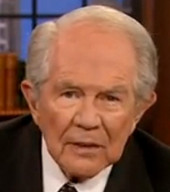
Orlando shootings are 'God's punishment' for same-sex marriage, claims US TV evangelist Pat Robertson - 50 dead and over 50 injured in shooting

12/6/2016

13 Comments


The homophobic preacher said “at least no or very few normal people were killed”, adding: “I think it’s a good thing it all happened here”
Picture
High profile and homophobic conservative televangelist Pat Robertson sparked fury after saying the Orlando nightclub shooting was God’s punishment for allowing same sex marriage in the States.

Wearing slippers and a bathrobe while being interviewed after flying in from Virginia on his private jet, he said: “I don’t even need to tell you what all of this means.

“This is how God is punishing us for the shameful SCOTUS (The Supreme Court of the United States) ruling on same-sex marriage, a catastrophic piece of legislature that I have so vigorously attempted to shoot down.”

He added that “at least no or very few normal people were killed,” before saying “When something like this happens, and I believe this was the first of many attacks, you start to realise how much real Americans care about their country and its future.

“Because, if you ask me, I totally get the guy who did this. I’m not defending him or anything, but I understand what drove him to such an act.

“This establishment was a lair of fornication and blasphemy, and if I’m honest, I think it’s a good thing it all happened here.”

“The fact that I’m here at the scene and that none of the Supreme Court Justices bothered to show up is proof enough of how little they care about what happens to the citizens of this country,” Robertson then argued.

“And that is why God will punish them for legitimising sodomy, and reward me and others like me for condemning it. It has already started, tonight is proof enough of that.

“What other evidence do we need? God is angry and we are suffering the consequences. Well, some of us, at least.”

“Not only do I oppose the disease of homosexualism, I also eat healthy, drink protein shakes and work out every day, despite of my age. I can lift 1,000 pounds, for crying out loud. And above all else – I love women.

“And that is why God saw fit to allow me to have my own TV show, my own private jet, my own little empire.

“Because I believe in him and because I live by His code. And to those who choose the dark path, God will continue to send once-normal people who have had enough, like he has done tonight.

“But it is not too late yet. Repent and change your evil ways, and He will forgive you,” Robertson urged yet again.

Two hours after the siege ended, a Texas Lieutenant Governor Dan Patrick posted an image of Bible verse Galatians 6:7 which says: “Do not be deceived: God cannot be mocked. A man reaps what he sows”.
Twitter users responded angrily to the post.

Star Trek actor and activist George Takei tweeted: “You are a disgrace to your state in this time of national sorrow. You should resign.”

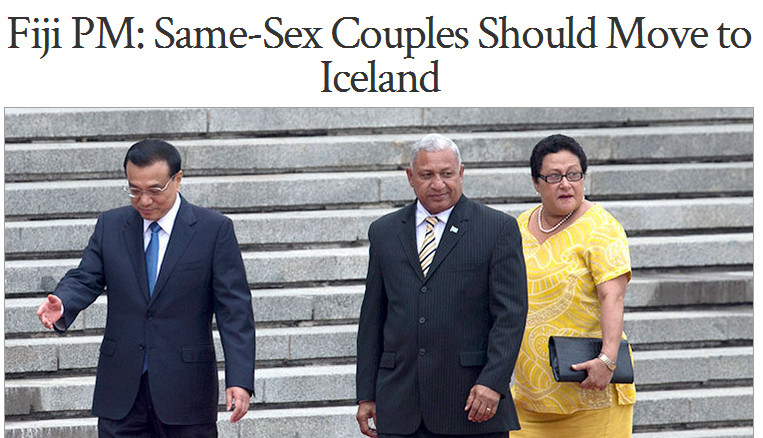
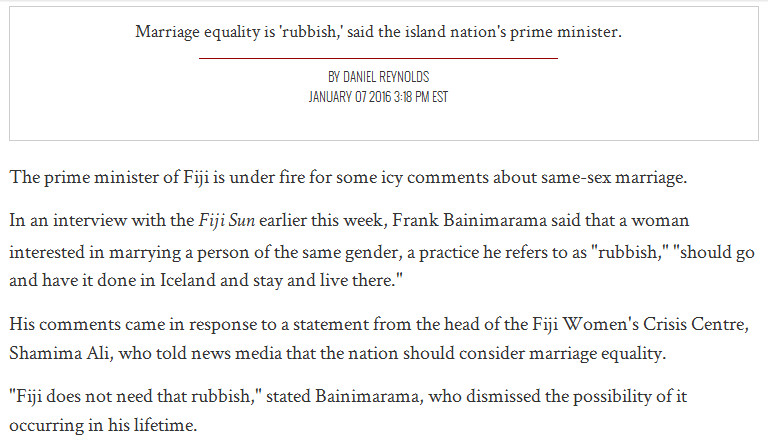
Sadly (and disgustingly), a search or an update on the Orlando shooting in the gay bar in Flordia also takes us to the comments of the homophobic Prime Minister of Fiji, Frank Bainimarama:
Picture
Picture
Picture
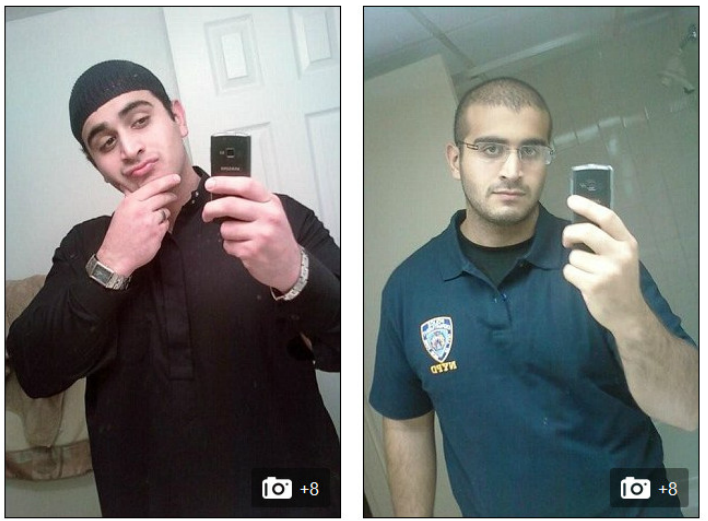
Pictured: US citizen Omar Mateen, 29, the suspected Islamic extremist who slaughtered at least 50 people inside a gay club in Orlando
Picture
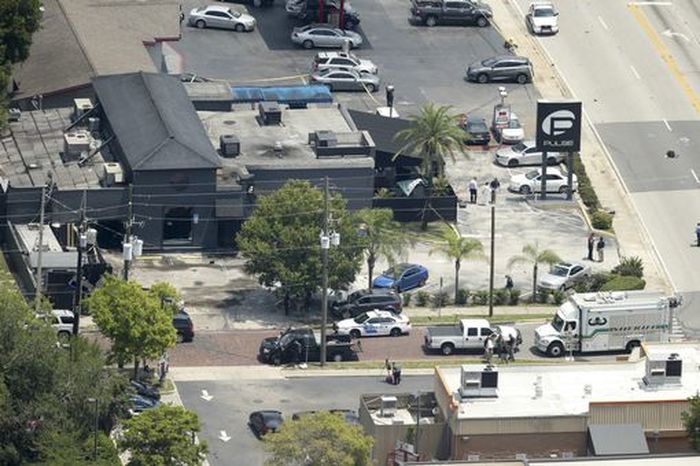
An aerial view of the massacre scene
13 Comments

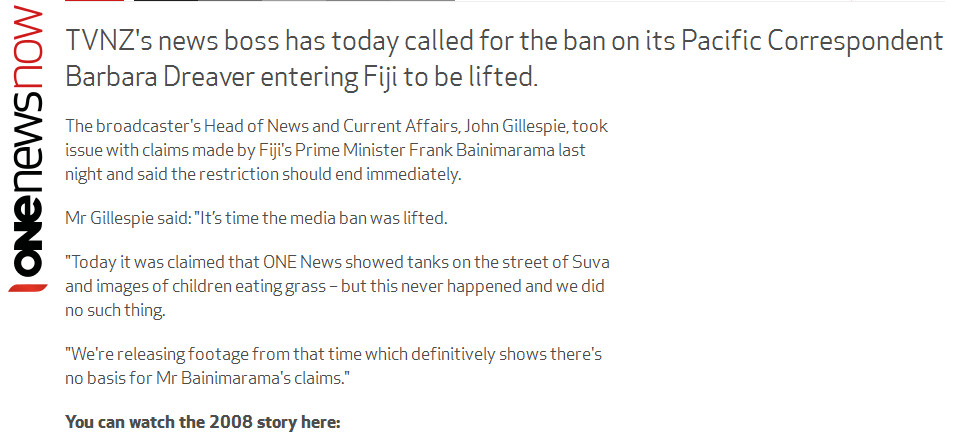
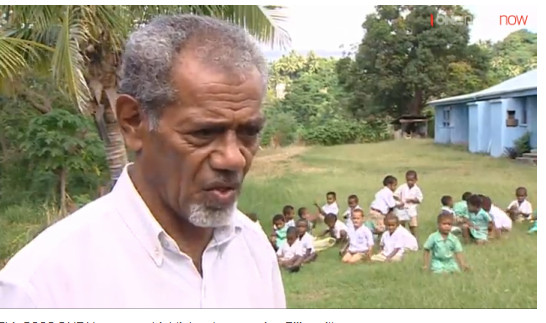
"Today it was claimed that ONE News showed tanks on Suva street and images of children eating grass. This never happened and we did no such thing. Look at the footage that disproves Bainimarama's claims." TVNZ

10/6/2016

22 Comments


In terms of the tanks accusation, TVNZ says it cannot find any instance where pictures of tanks from foreign sources have been put into stories on Fiji.


"Prime Minister [John Key], let me also confront head on the issue of media freedom and more particularly, the right of access to Fiji by certain of your journalists. No-one who reports on events in Fiji fairly and in a balanced manner is excluded...But we cannot allow the willful propagation of false information that damages the national interest and undermines our vulnerable economy. And that is what has happened in the case of certain New Zealand journalists... New Zealand television ran footage of tanks in the streets of Suva when our military does not own any tanks. They had been interposed from other sources. A claim was made that Fijian children were starving and were eating grass. These are egregious examples of willful bias and misreporting... And we are saying to the news organisations that employ them: send someone else. Someone who respects the facts and the right of people to know the truth. Not some twisted concoction." -

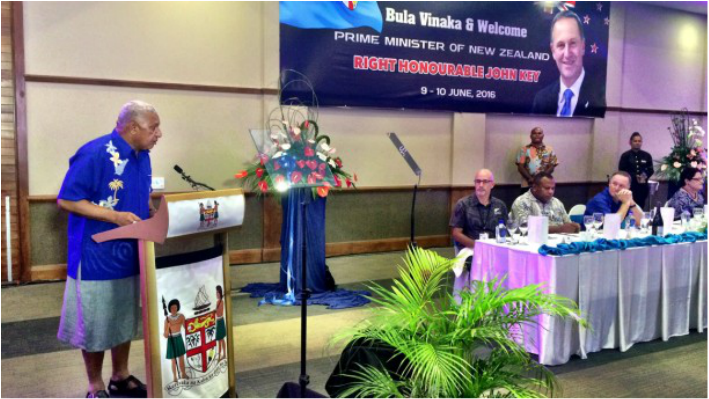
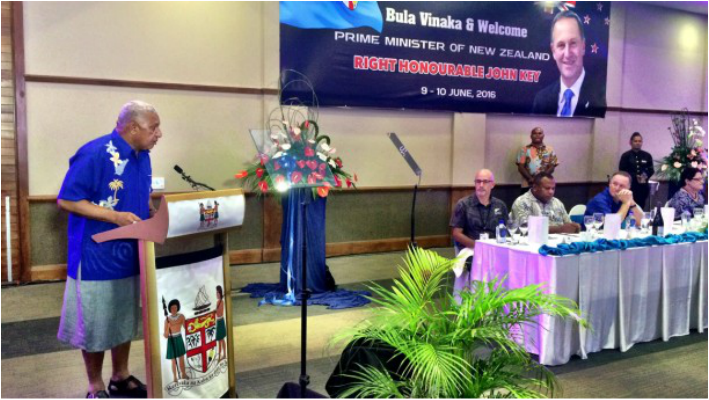
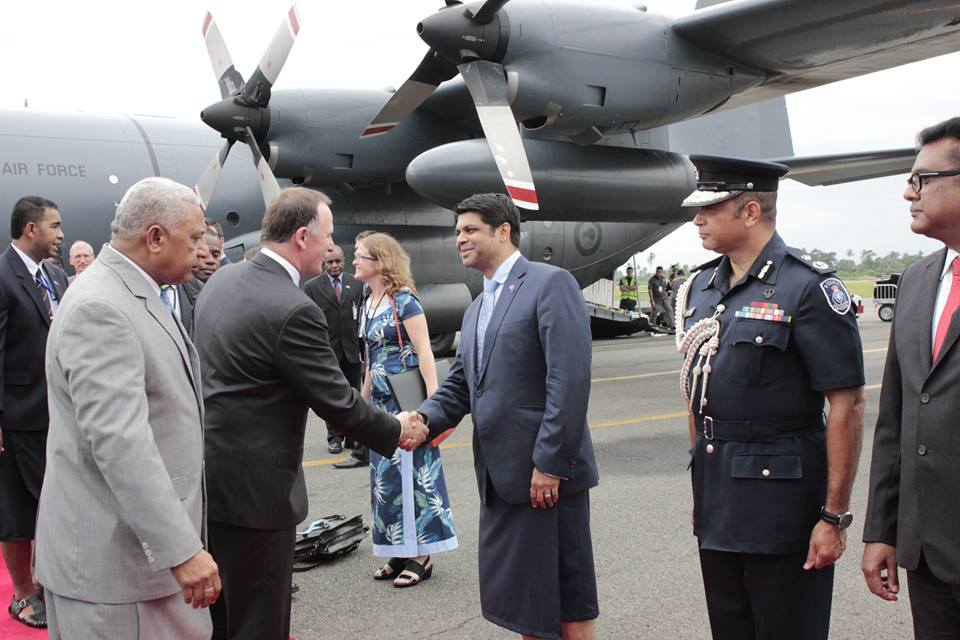
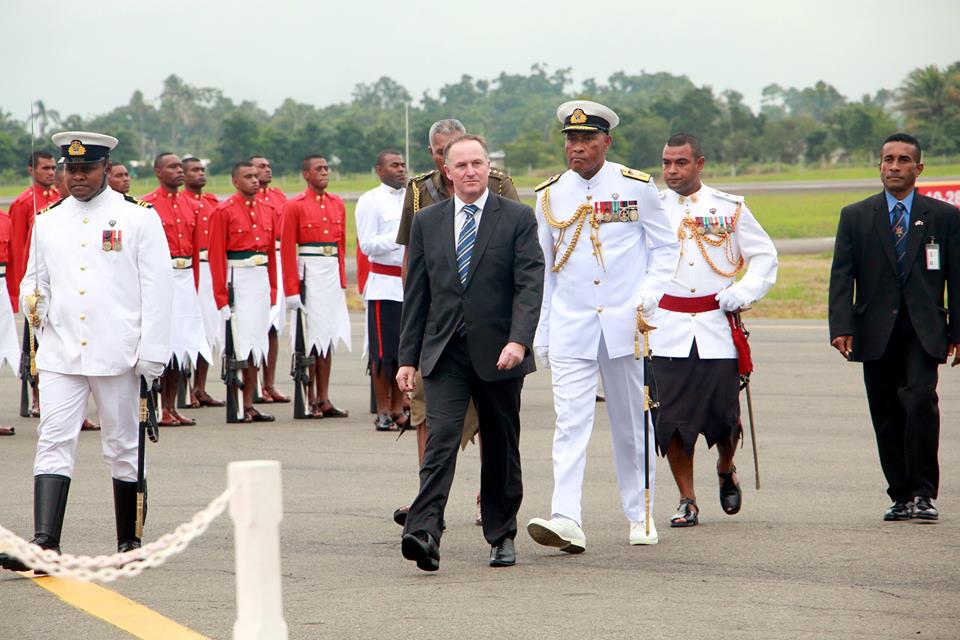
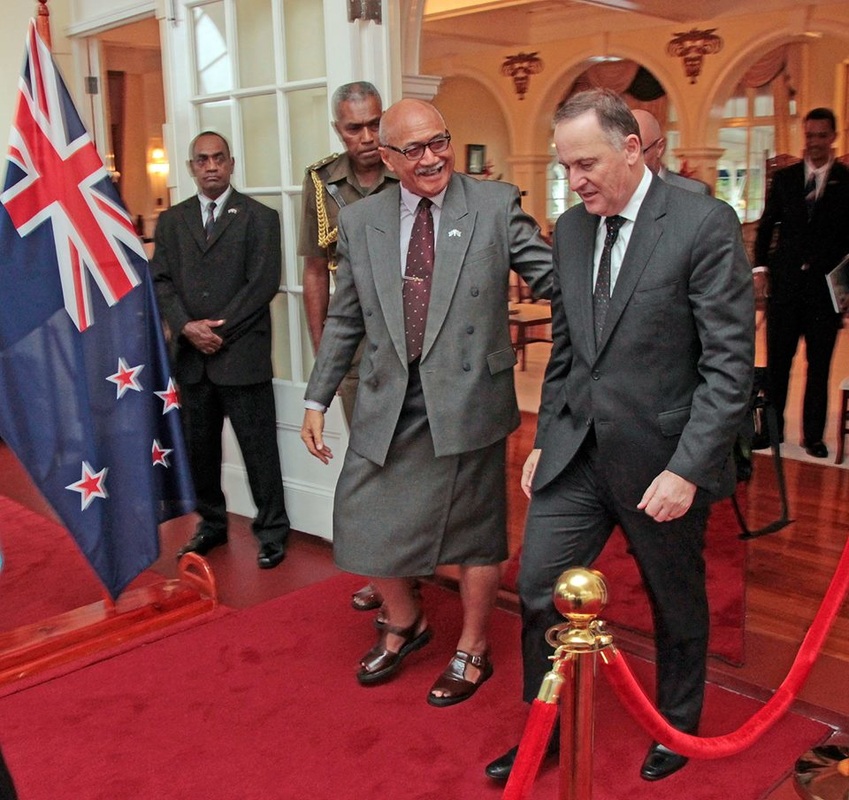
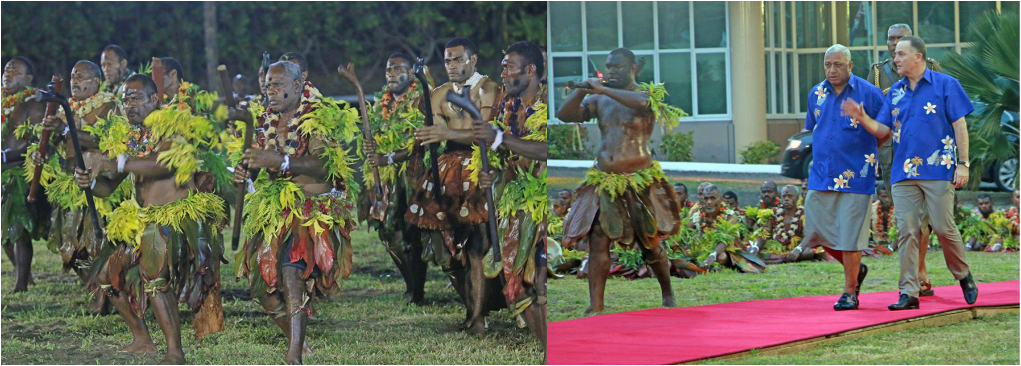
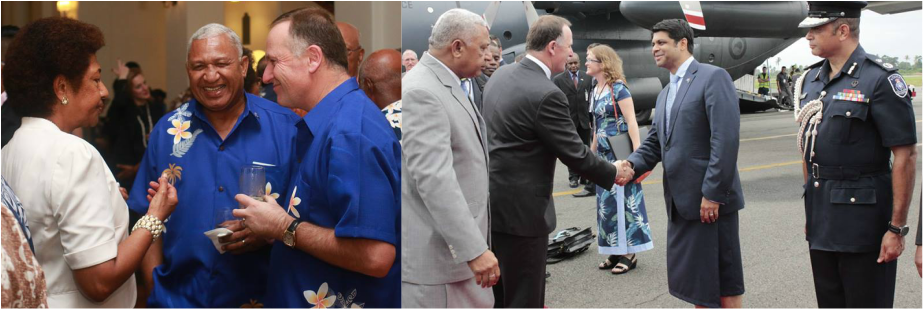
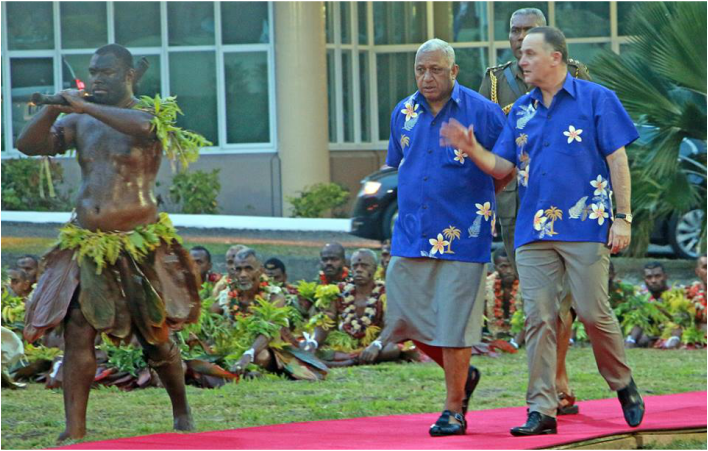
Frank Bainimarama at the State Banquet for PM John Key

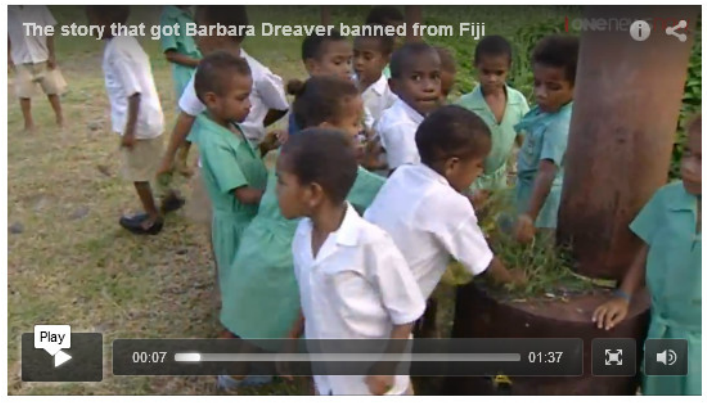
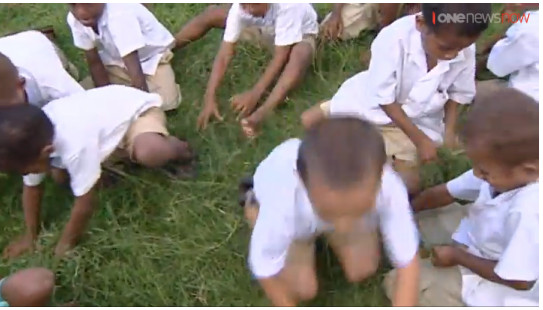
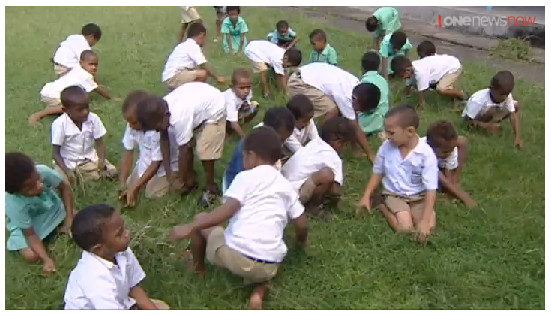
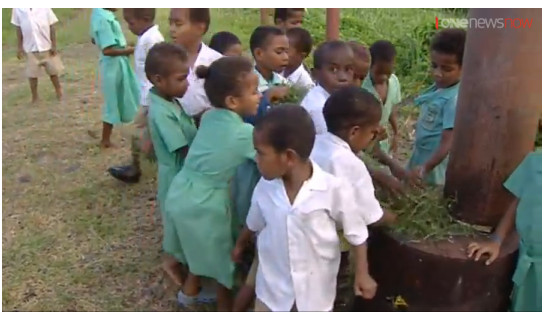
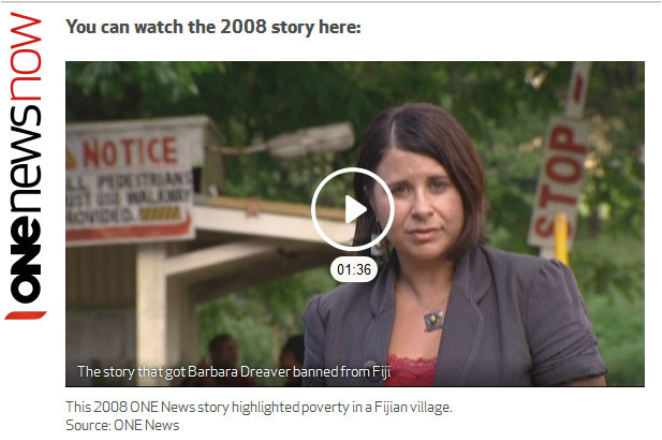
"This is an absolute nonsense. I did a story [in 2008] shortly before I was banned about how times were tough in one of the villages – the children had been told by their teachers to help pull out the grass with their hands as they couldn’t afford fuel for their motor mower. We even showed them putting the grass in the rubbish bin – not their tummies." -
TVNZ, Barbara Deaver

Picture
Picture
Picture
Picture
Picture

Dreaver said she has previously addressed this matter with the Fiji Government. In May 2014 she wrote an email to its Communications Manager Sharon Smith-Johns and included a copy of her script and background material.

Picture

BASICALLY, TVNZ is claiming that Bainimarama LIED in his speech during the banquet welcoming Prime Minister John Key of New Zealand.
WILL BAINIMARAMA be expelled from Parliament and stripped of the Prime Ministership, over the speech that has been widely reported on the social media, YOUTUBE, and has gone viral around the world? After all, he supported the expulsion of Draunidalo in that same speech saying she lied that his Education Minister Mahendra Reddy had called 'natives dumb':
"Prime Minister, no parliament in the world, no government in the world, can tolerate attempts to create ethnic discord, sow ethnic hatred. The sad fact is that one of our MPs did precisely that last week when she falsely stated on the floor of the House that our Education Minister had made a reference to “dumb natives”. It was a concoction, a lie. And it was clearly aimed at smearing an Indo-Fijian minister with an outrageous falsehood - that he had cast aspersions on the intellectual ability of our indigenous people...So a harsh penalty was recommended by our Parliamentary Privileges Committee last week and then endorsed by Parliament. And rightly so.

Picture

'Reputational Damage' to Reddy but does that apply to Barbara Dreaver?

Picture

"Barbara Dreaver is a highly respected journalist. She’s covered the region for 20 years and I can’t think of a journalist who knows it better. She should be immediately removed from the Fiji Government’s blacklist so she can do her job as our Pacific correspondent." TVNZ's Head of News and Current Affairs, John Gillespie

Picture

Click link below to see the whole video and TVNZ story :
https://www.tvnz.co.nz/one-news/new-zealand/tvnz-news-boss-demands-end-fiji-ban-barbara-dreaver

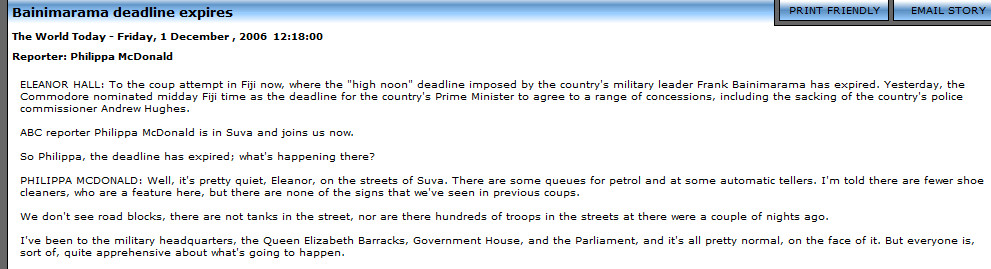
Fijileaks: We have not been able to locate any story or photo about tanks on the streets of Fiji. The closest match of the mention of tanks is an ABC news item from 1 December 2006 when the 'raging military bull' was threatening to takeover the Laisenia Qarase multi-party government by 5 December 2006: 'We don't see road blocks, there are not tanks in the street, nor are there hundreds of troops in the streets...I've been to the military headquarters, the Queen Elizabeth Barracks, Government House, and the Parliament, and it's all pretty normal, on the face of it. But everyone is, sort of, quite apprehensive about what's going to happen.'

Picture
http://www.abc.net.au/worldtoday/content/2006/s1802077.htm
Picture
Picture
Picture
Picture
Picture

“At the end of the day, I will stick by my men, by the police officers or anyone else that might be named in this investigation. We cannot discard them just because they’ve done their duty in looking after the security of this nation and making sure we sleep peacefully at night.” - Frank Bainimarama reacting to the video which captured the sexual assault and brutal beating of Iowane Benedito in 2012

Picture
22 Comments

Banned reporter Barbara Dreaver hits back at Bainimarama: 'He was MAKING UP FACTS FOR A SPEECH' says the TVNZ Pacific correspondent

10/6/2016

8 Comments


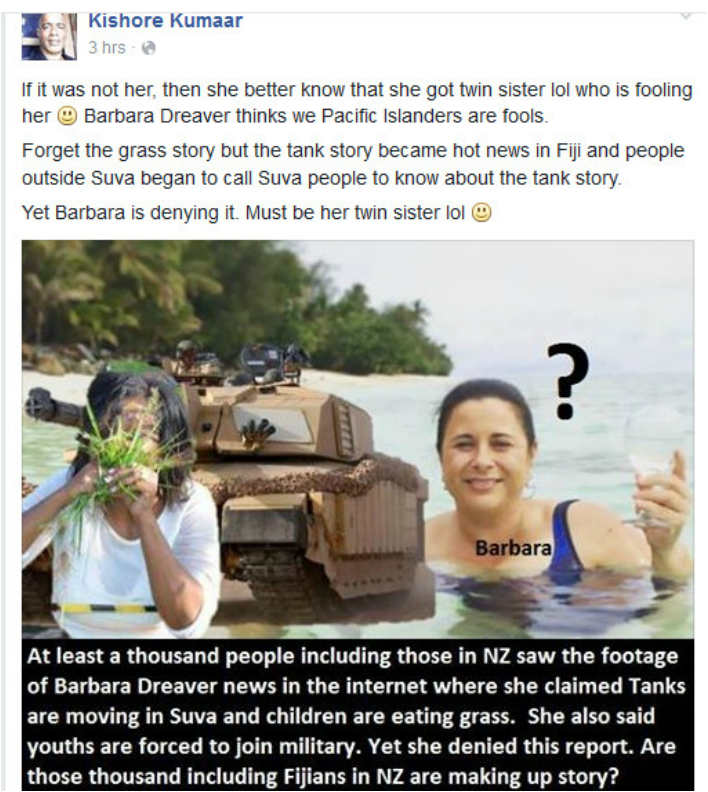
"To make up facts for a speech in front of an international audience is beyond me. My story showed children picking grass. Their teachers had told them to because there was no fuel for the motor mower. We didn't say they were eating grass. The story did feature a teacher saying children were turning up at school hungry. They objected to that story because it showed poverty, and that schools had not been receiving funding from government...TVNZ did not have any footage showing tanks in Fiji." - Barbara Dreaver

Picture
PictureDeaver
Fijian Prime Minister Frank Bainimarama was "making up facts for a speech" when criticising New Zealand media yesterday, says a journalist who has been banned from the island nation.

At a banquet to welcome New Zealand Prime Minister John Key, which was also attended by New Zealand reporters, Mr Bainimarama defended blacklisting some journalists and described New Zealand media as "generally hostile".

"Certain journalists in New Zealand and Australia and certain journalists in Fiji think nothing of dispensing with the facts if they get in the way of the politically-motivated narrative they want to tell. We are saying to the news organisations that employ them, send someone else," said Mr Bainimarama.

TVNZ Pacific correspondent Barbara Dreaver and long-time Pacific reporter Michael Field are among those banned from Fiji.

Mr Bainimarama cited TVNZ footage of military tanks in the streets of Suva, even though Fiji had no tanks. He also referred to a claim that Fijian children were starving and eating grass.

This referred to a story by Ms Dreaver in 2008, which was also screened in Fiji.

Ms Dreaver said Fijian media had been told this report was the reason she was expelled, deported and subsequently blacklisted.

"To make up facts for a speech in front of an international audience is beyond me," Ms Dreaver said today.

"My story showed children picking grass. Their teachers had told them to because there was no fuel for the motor mower. We didn't say they were eating grass."

The story did feature a teacher saying children were turning up at school hungry.

"They objected to that story because it showed poverty, and that schools had not been receiving funding from government," said Ms Dreaver.

"At that time, they were trying to win the hearts of people. Experienced Pacific correspondents like myself, Michael Field and (Australian reporter) Sean Dorney were going into villages and doing real stories."

Ms Dreaver said TVNZ did not have any footage showing tanks in Fiji.

Before he left for Fiji, Mr Key had said he planned to discuss the blacklist with Mr Bainimarama.

"I think it's an important step from their point of view to take these journalists off the banned list. I can't force them to do that but I do think it would be the right thing to do," he told reporters.


At Thursday night's banquet, Mr Bainimarama said he wanted to "confront the issue head on".

"No one who reports on events in Fiji fairly and in a balanced manner is excluded. Any journalist is free to criticise my government or me in an opinion piece or report criticism by others in their news stories," said Mr Bainimarama.

But Ms Dreaver said the prime minister and other officials effectively had the right of veto over such stories.

"If you're doing a critical piece (about him), you have to get his comment. If you don't get his comment, it doesn't happen."

"There have been critical stories about Fiji by foreign reporters who have not been banned," says Ms Dreaver.
Ms Dreaver visited Fiji for the first time in eight years as a reporter last weekend - but not for long.

She was given special permission to land for just one hour to change planes for a trip to Kiribati alongside Climate Change Minister Paula Bennett. Source: Radio New Zealand

Picture
Picture
Picture
Picture
Picture
Picture
Picture
Picture
Picture
Picture
Picture
Picture
Picture
Picture
Picture
Picture
Picture
Picture
Picture
Picture
Picture
Picture

"Prime Minister [John Key], history records that in December 2006, a group of us decided that the steady marginalisation of not just one ethnic group but many ordinary and everyday Fijians had to stop. The repeated attempts at nation building in Fiji were constantly being eroded by sectional interests and the elite, who sowed ethnic, provincial and religious division to maintain their grip on power. We had lost tens of thousands of our best and brightest people, who had given up hope in Fiji after the coups of 1987 and 2000. The same elites - with their potent mix of ethnicity, religious chauvinism and provincialism – had coalesced again and were posing another grave threat to national unity. And so we embarked on a revolution to create Year Zero in Fiji. To finally provide every citizen, irrespective of ethnicity, gender, province or social status, with a level playing field. To create a common and equal citizenry. A common identity. Everyone a Fijian. And the constitutional, political and social framework for every citizen to move forward together as you have done in New Zealand and which every country is entitled to do. One nation. One people." - Bainimarama

Picture
Picture
Picture
Picture
Picture
Picture
Picture
8 Comments

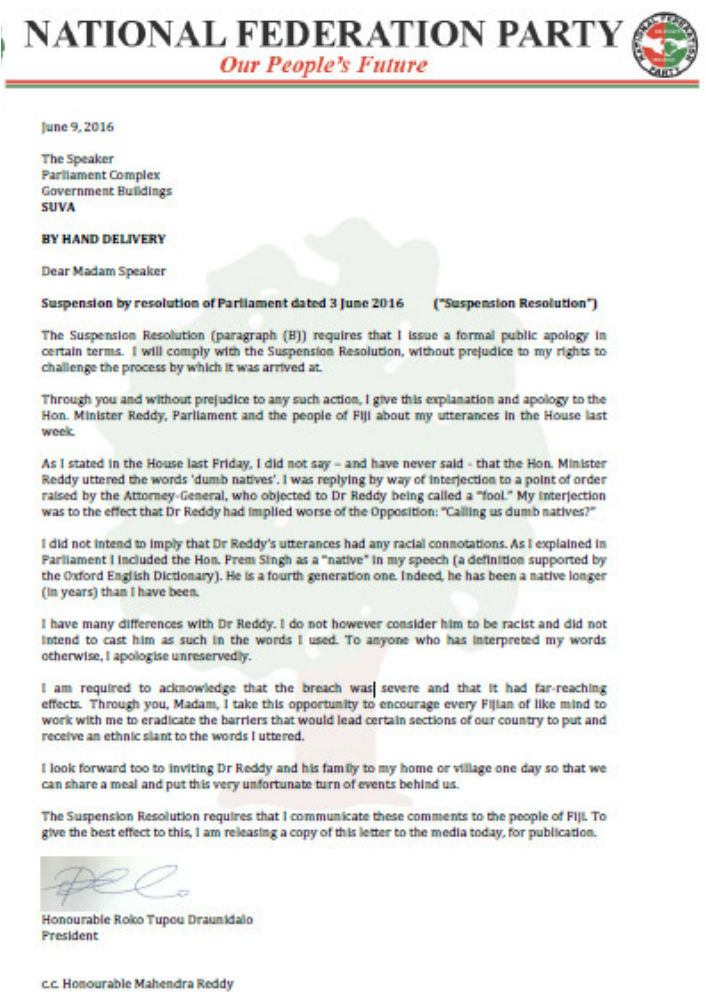
APOLOGY! NFP president Tupou Draunidalo to Speaker: "I do not  consider [Reddy] to be racist and did not intend to cast him as such in the words I used... I apologise unreservedly to [Reddy] as ordered..."

10/6/2016

4 Comments

 
Picture
4 Comments

ISA LEI: It was not Fijian Way but Bainimarama Way when he delivered a diplomatic slapdown on John Key - a host on Fijian soil and PM of New Zealand. Is John Key a FOOL who needed a lesson about the 2006 coup? 

9/6/2016

7 Comments

 
Picture

"Prime Minister [John Key], history records that in December 2006, a group of us decided that the steady marginalisation of not just one ethnic group but many ordinary and everyday Fijians had to stop. And so we embarked on a revolution to create Year Zero in Fiji."

Revolution: "a forcible overthrow of a government or social order,
in favour of a new system"

Picture
Picture
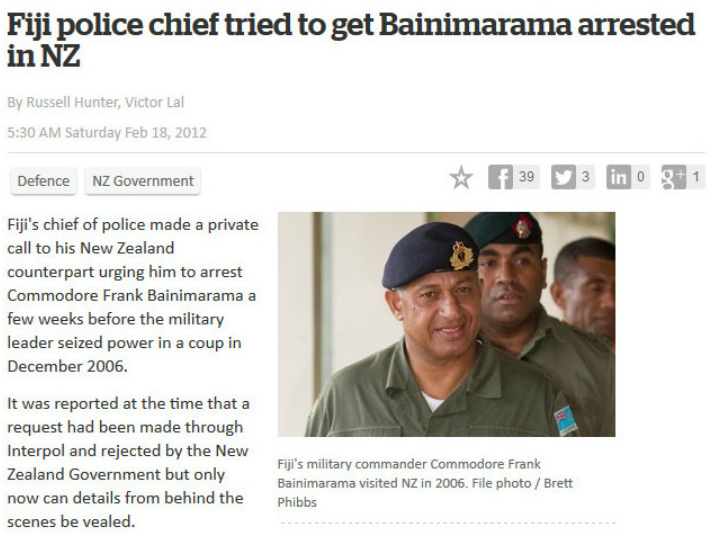
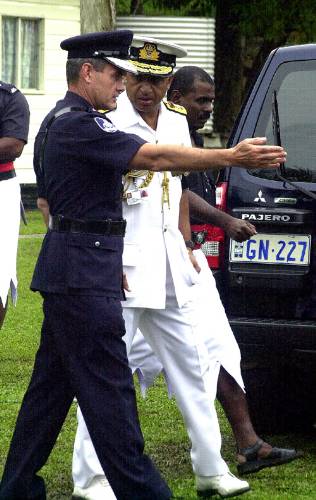
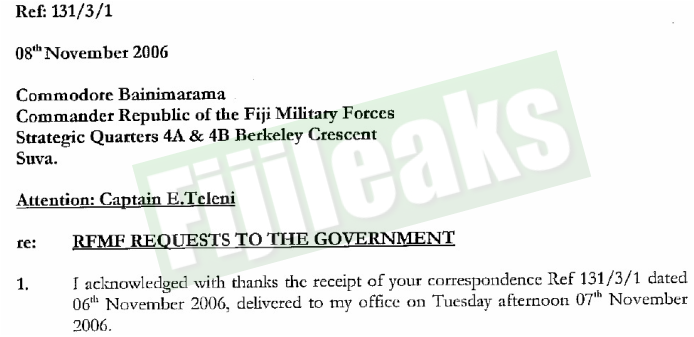
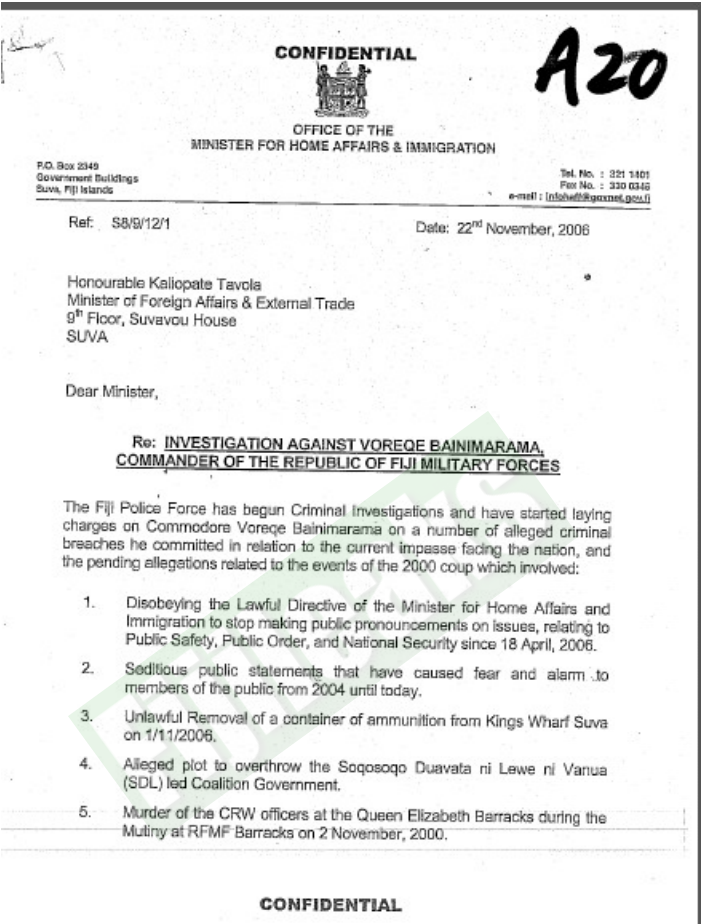
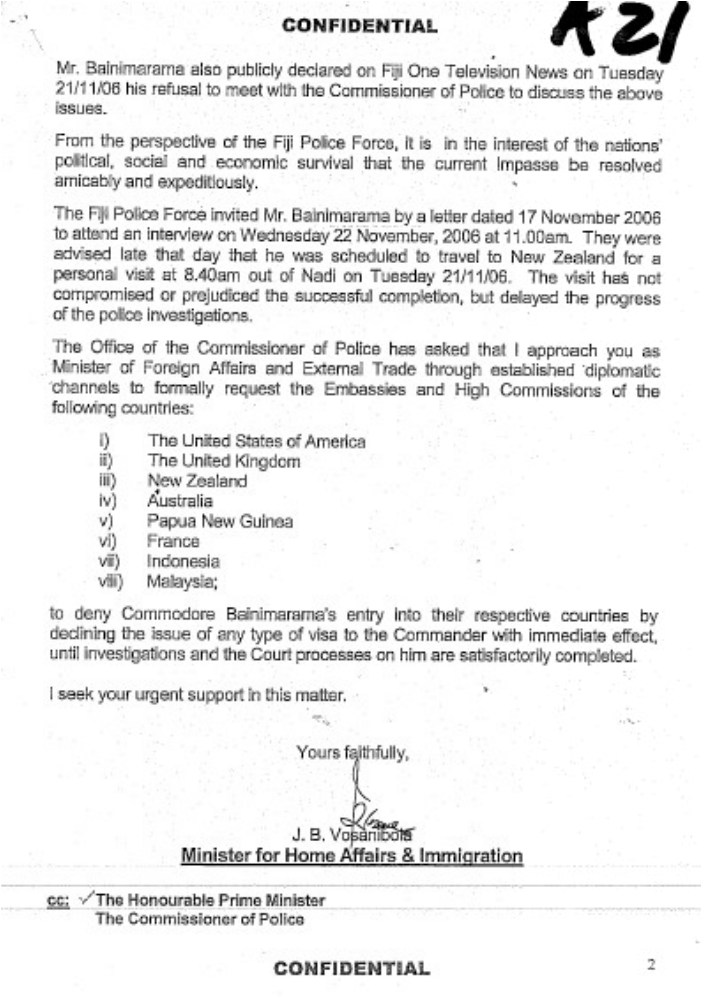
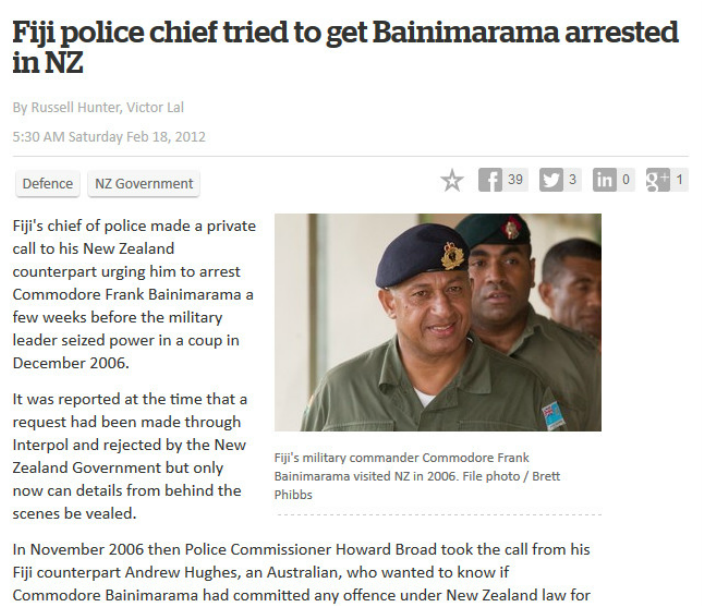
In November 2006 then Police Commissioner Howard Broad took the call from his Fiji counterpart Andrew Hughes, an Australian, who wanted to know if Commodore Bainimarama had committed any offence under New Zealand law for which he could be arrested.

Teams of police officers from both forces worked over a weekend and agreed the future dictator could be charged in New Zealand with perverting the course of justice in a foreign jurisdiction.

The planned charge related to remarks made by Commodore Bainimarama in New Zealand regarding an investigation into his alleged sedition in Fiji.

Mr Hughes sent two senior officers - an assistant commissioner and a senior detective - to New Zealand to liaise in the planned arrest.

"Then Howard Broad had a change of heart," said Mr Hughes. "He said New Zealand Foreign Affairs preferred a political solution.

"I argued it was his decision as Police Commissioner as to who should be charged in New Zealand."

At the time Commodore Bainimarama was in New Zealand for his granddaughter's christening and the Foreign Minister at the time, Winston Peters, had taken the opportunity to broker talks between him and elected Prime Minister Laisenia Qarase aimed at diverting Fiji's lurch towards a military takeover.

A day later, Mr Hughes received a call from Mr Broad.

"He sought my assurance that no NZ citizen would be endangered in Fiji as result of an arrest," said Mr Hughes.

"Of course I would do all in my power to protect all the people in Fiji but a blanket assurance of that kind was not possible. It would be like me asking him for a similar assurance covering all Fiji people in New Zealand. It wasn't possible to give him that.

"In the end, Mr Broad told me, 'Well, we're not going to arrest him."'

Mr Broad, now retired, told the Weekend Herald yesterday in a written statement that he remembered the call well.

"I remember it as a highly unusual request to consider an allegation against the Chief of Defence Force of a neighbouring country's properly constituted Government.

"I remember giving this decision a lot of consideration because it contained complex operational, legal and policy issues. I made the decision but I took a lot of advice. I remain comfortable with it."

He said some aspects of Mr Hughes' explanation did not accord with his recollection but he did not specify what they were.

In Suva, the Fiji police force had been awaiting an opportunity to arrest the commodore on the sedition charge but were unable to penetrate his heavily armed personal security detail - rarely less than 12-strong at any given time.

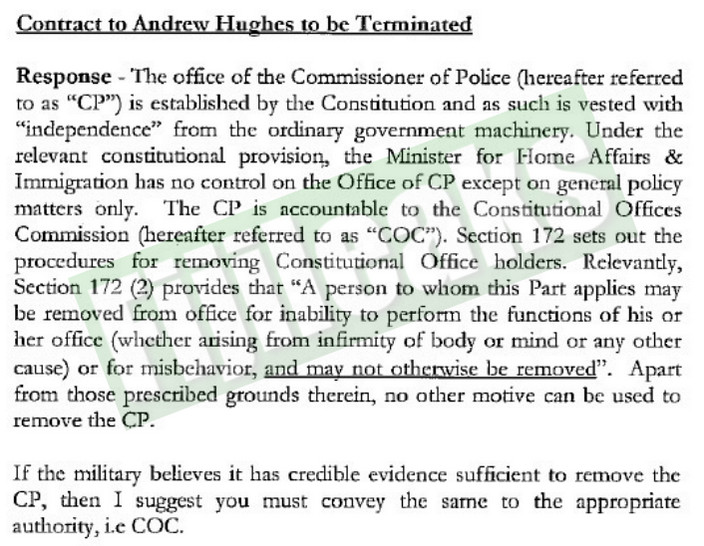
"I had earlier taken a brief of evidence to the DPP," said Mr Hughes, "and it was agreed that there was a case to answer on a sedition charge.

"We wanted to arrest and charge Commodore Bainimarama but he was permanently covered by heavy security. I was very keen to avoid an armed confrontation between the police and the military. So we waited."

As Prime Minister Qarase waited at Suva's Nausori airport to board a New Zealand Air Force VIP jet to take him to the Peters-brokered talks in Wellington, he was surprised to be joined by Mr Hughes, who then explained that the arrest plan was unlikely to come to fruition. Mr Qarase was shocked.

The Fiji Police Commissioner boarded the flight and in Wellington he met a deputy secretary for foreign affairs but was again told the New Zealand Government's position was that a political or diplomatic solution was preferred.

Aware that the police were ready to arrest him in Suva, Commodore Bainimarama had made it one of his many conditions for any settlement that the police commissioner would have to go.

Mr Hughes had, a week previously, sent his wife and sons to Australia having received credible information that they could be targeted by a military snatch squad.

In Wellington, he sought consular advice which was that he should not return to Fiji. He never did.

Mr Hughes also considered the safety of his own loyal officers who would try to protect him from military arrest.
The 2006 coup was the commodore's fourth attempt.

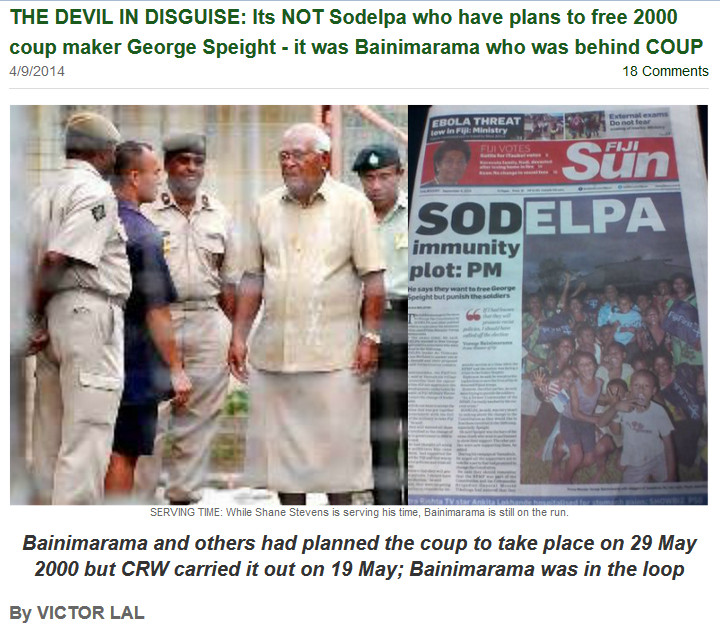
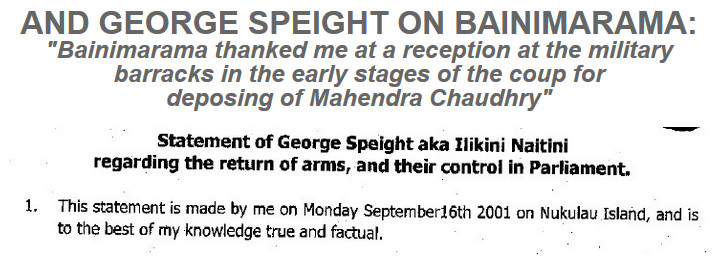
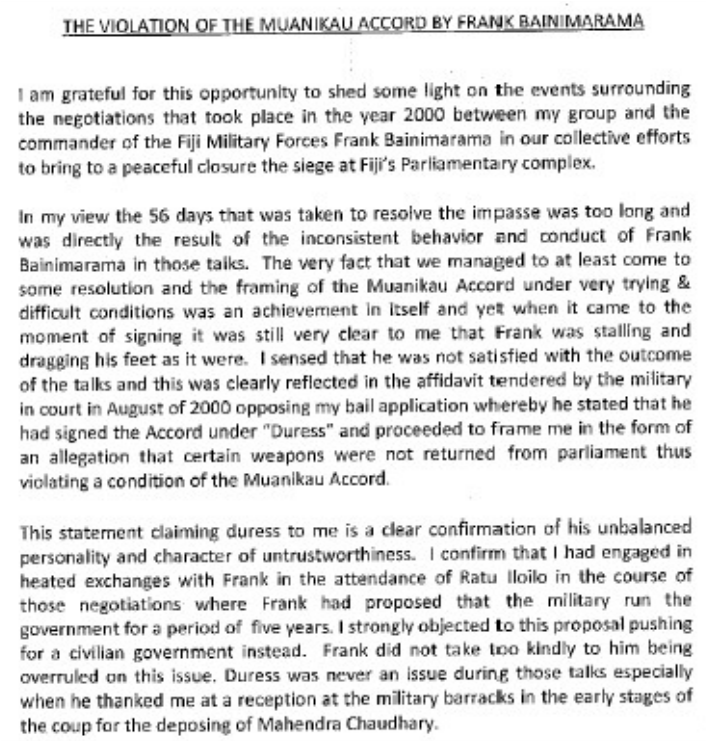
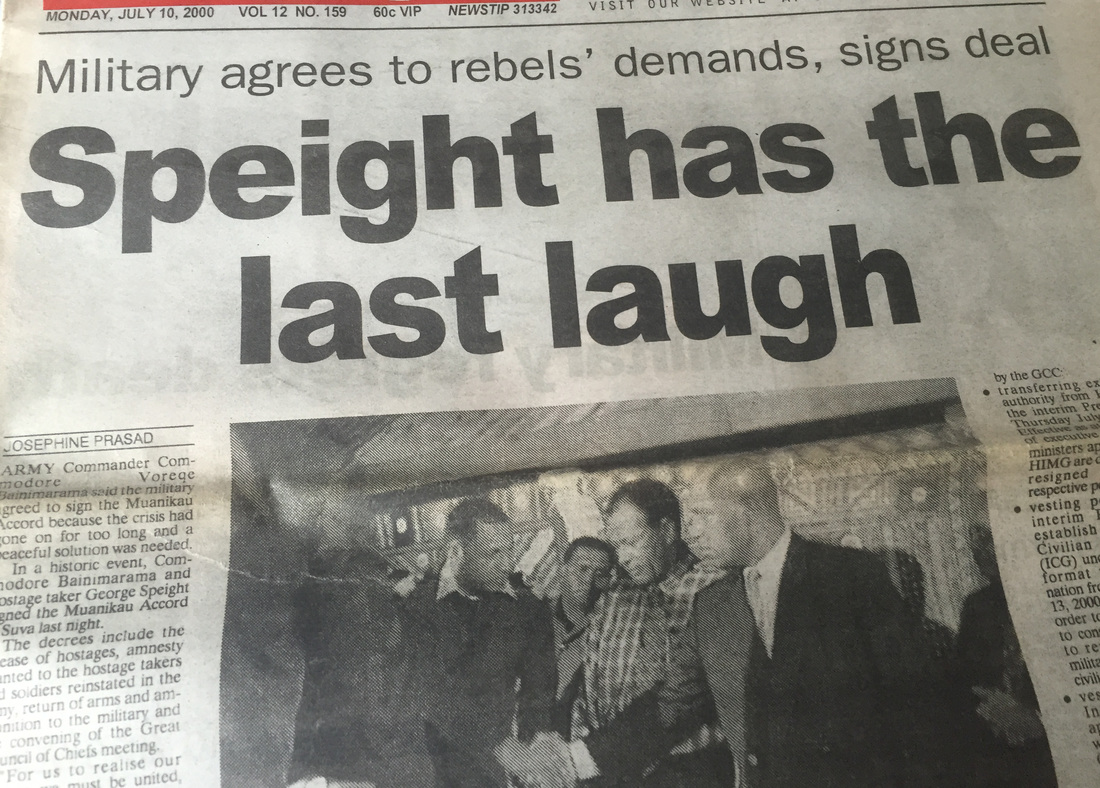
In 2000 during the negotiations that ended the Speight hostage crisis he suggested that the military should run the country for up to 50 years but Speight - and the president - would have none of it. In 2004 and again in 2005 he planned to take over the Government but his senior officers refused to commit treason.

All were sacked.

By December 2006 it was now or never for Commodore Bainimarama. It was widely agreed amongst informed observers of the events of 2006 in Fiji, including the diplomatic community, that without Commodore Bainimarama the RFMF would be rudderless.

Had Commodore Bainimarama been arrested in New Zealand the Fiji military would have been unable and unwilling to proceed with the removal of the Qarase Government.

The then US ambassador to Fiji, Larry Dinger, summed it up when he told his masters in Washington in a cable leaked by WikiLeaks regarding the New Zealand arrest plan.

"Being passive with bullies only encourages them. An arrest abroad might be the only way to enforce a criminal charge and remove the Bainimarama thorn," he reported.

Labour's foreign affairs spokesman Phil Goff, who did not deal with the issue, could not confirm Mr Hughes' account.

However, he could understand why no arrest was made, saying such a course of action would mean a country lost its credibility as a mediator for dealing with crises.

"I scarcely think you were going to lure a person here under false pretences only to arrest him. That would be seen as an ambush and bad faith and it wouldn't have resolved the situation within Fiji. "


Picture
Picture
Picture
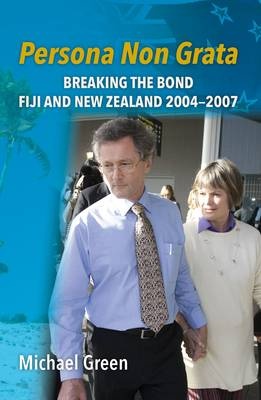
The late former New Zealand High Commissioner to Fiji, Michael Green, in his memoir Persona Non Grata,  writes that he heard from credible sources that the Fiji Police were planning to arrest Bainimarama for sedition and disobeying lawful orders. Bainimarama instead made a series of demands and threatened a coup. He went to New Zealand on a private visit for the first communion of a grand child but “got it into his head” that New Zealand would arrest him. “He phoned (Defence Attache) Al MacKinnon to him that that, if he should be arrested, his ‘boys’ would be sent over the fence into the Residence to ‘get me’. The threats were taken seriously and mission families were sent home. Then Foreign Minister Winston Peters told Bainimarama would not be arrested in Wellington."

Picture
Picture
Picture
Picture
7 Comments

SLAPDOWN WELCOME! Bainimarama: 'History records that in December 2006, a group of us decided that the steady marginalisation of not just one ethnic group but many ordinary and everyday Fijians had to stop.'

9/6/2016

14 Comments

 
Picture

"Prime Minister [John Key], history records that in December 2006, a group of us decided that the steady marginalisation of not just one ethnic group but many ordinary and everyday Fijians had to stop. The repeated attempts at nation building in Fiji were constantly being eroded by sectional interests and the elite, who sowed ethnic, provincial and religious division to maintain their grip on power. We had lost tens of thousands of our best and brightest people, who had given up hope in Fiji after the coups of 1987 and 2000. The same elites - with their potent mix of ethnicity, religious chauvinism and provincialism – had coalesced again and were posing another grave threat to national unity. And so we embarked on a revolution to create Year Zero in Fiji. To finally provide every citizen, irrespective of ethnicity, gender, province or social status, with a level playing field. To create a common and equal citizenry. A common identity. Everyone a Fijian. And the constitutional, political and social framework for every citizen to move forward together as you have done in New Zealand and which every country is entitled to do. One nation. One people."

Picture
HON PM BAINIMARAMA SPEECH AT THE WELCOME BANQUET FOR NZ PRIME MINISTER JOHN KEY6/9/2016

The Right Honourable Prime Minister of New Zealand,
The Honourable New Zealand Minister for Foreign Affairs,
Honourable cabinet ministers,
Your Excellencies, members of the Diplomatic Corps,
Distinguished Guests,
Ladies and Gentlemen,


Bula vinaka and a very good evening to you all.

Any visit to Fiji by a New Zealand leader is always going to be an important occasion. But never more so than yours, Prime Minister, at a time when our official relationship is being reinvigorated and redefined after a period of estrangement.

I intend to work with you to strengthen that relationship to match the friendship that has always existed between our peoples. And so I’m delighted - on behalf of every Fijian - to welcome you and your delegation to Suva. You are among friends as long as you choose your words carefully when it comes to rugby.

But seriously. Our mutual love of “the game they play in heaven” is just one of the things that binds our nations together. And our people-to-people ties have never been stronger than in the wake of Tropical Cyclone Winston.

Vinaka, for NZ's help in the wake of Tropical Cyclone Winston

Prime Minister, I want to begin by expressing the heartfelt thanks of the Fijian people for the way in which hundreds of your servicemen and women came to our aid during those dark days three and a half months ago. Amid all of the heartbreaking destruction - on Vanuabalavu in particular - the arrival of your warship Canterbury gave our people hope. And the smiling faces and “can do” attitude of your men and women in uniform lifted their spirits and gave them both the will and the means to begin the task of rebuilding their homes and their lives.

The prompt response of our Kiwi friends across the seas – along with those of other nations – gave Fiji the helping hand it needed at one of the most critical points in our history. The goodwill - the affection - that ordinary Fijians have for New Zealanders has never been greater. And as we work together to rebuild our nation, the Fijian Government also wants to rebuild our official relationship. And that means recasting it to match the changes that have taken place in Fiji in recent years and our relations with the rest of the world. Redefining Fiji’s ties with New Zealand.

Fiji when Helen Clark visited in 2006 and Fiji in 2016: 'Indigenous rights chant was running riot'

Prime Minister, the Fiji that you come to in 2016 is a vastly different place compared to the Fiji that the last New Zealand leader to visit us, Helen Clark, found in 2006. Ten years ago, some Fijians were more equal than others. Their votes carried more weight than others. They enjoyed a range of privileges that others didn’t share – such as special access to jobs and to education.

When the last New Zealand prime minister was here in 2006, the term Fijian – an English word – was reserved for one ethnic group and other citizens were deprived of a common identity and equal citizenry.

When the last New Zealand prime minister was here in 2006, the then government wanted to inappropriately exaggerate the ambit of indigenous rights to absurd proportions by introducing laws that would have undermined our tourism industry and turned us into an economic basket case.

When the last New Zealand prime minister was here in 2006, the then government did not want to address or even recognise systemic corruption. They refused to ratify the international anti-corruption convention.

When the last New Zealand prime minister was here in 2006, the then government wanted to undermine the independence of the judiciary, the Office of the Director of Public Prosecutions and other independent institutions so that it could free those responsible for bringing our nation to its knees in the rebellion of 2000 and the subsequent mutiny in the military.

When the last New Zealand prime minister was here in 2006, we had higher levels of poverty and the gap between the rich and the poor was wider, than what it is today.

The December 2006 Coup: Revolution was necessary to correct undemocratic institutions

Prime Minister, history records that in December 2006, a group of us decided that the steady marginalisation of not just one ethnic group but many ordinary and everyday Fijians had to stop. The repeated attempts at nation building in Fiji were constantly being eroded by sectional interests and the elite, who sowed ethnic, provincial and religious division to maintain their grip on power.

We had lost tens of thousands of our best and brightest people, who had given up hope in Fiji after the coups of 1987 and 2000.

The same elites - with their potent mix of ethnicity, religious chauvinism and provincialism – had coalesced again and were posing another grave threat to national unity. And so we embarked on a revolution to create Year Zero in Fiji. To finally provide every citizen, irrespective of ethnicity, gender, province or social status, with a level playing field. To create a common and equal citizenry. A common identity. Everyone a Fijian. And the constitutional, political and social framework for every citizen to move forward together as you have done in New Zealand and which every country is entitled to do. One nation. One people.

Prime Minister, history also records that New Zealand and certain other nations objected to that revolution because it was achieved by undemocratic means. Yet they ignored the indisputable fact that Fiji’s institutions at the time were already inherently undemocratic, including a parliament chosen not on the basis of equal votes of equal value but an ethnic and provincial gerrymander. The basis of which was against all internationally accepted principles of fairness and equal suffrage.

This parliament- elected on the enforcement of ethnic categorisation and provincialism - was never going to evolve into a truly democratic institution. And only by decisive and radical action – a revolution - could equal opportunity be finally achieved and the national compass reset. The introduction of a genuine democracy, not the sham democracy that existed in Fiji at that time.

Prime Minister, the rest is also history. We introduced a constitution that for the first time, established a common and equal citizenry, guaranteed equal opportunity under the law and provided every Fijian with an unprecedented array of social and economic rights. And then on the basis of that constitution, we fulfilled our promise to return Fiji to parliamentary rule – true democracy – at a national election in September 2014 that was also the first in Fijian history to be conducted on the basis of equal votes of equal value.

Prime Minister, on the basis of that vote – endorsed as credible and free by an observer group of 20 nations – the FijiFirst party that I lead gained just under 60 per cent of the vote. And it is on that basis that I stand before you tonight. Not as a coup maker or dictator – as some in your country would still have it - but as the popularly elected, freely chosen leader of Fiji. Our revolution, our constitution and our political movement all having gained the endorsement of the Fijian people in an act of free will.

Prime Minister, I say all this because there appears to be a substantial body of opinion in New Zealand – led by your generally hostile media – that what has happened in Fiji somehow lacks legitimacy. That somehow, I lack legitimacy and my government lacks legitimacy. This is simply not borne out by the facts. We have moved on but it would appear that the New Zealand media has not.

By finally creating an electoral system based on equal votes of equal value, democracy in Fiji has never been stronger. And permit me to confront head on any suggestion that the events in our Parliament last week indicate otherwise.

The booting of NFP leader Tupou Draunidalo from Parliament: 'She can't be allowed to sow discord'

Prime Minister, no parliament in the world, no government in the world, can tolerate attempts to create ethnic discord, sow ethnic hatred. The sad fact is that one of our MPs did precisely that last week when she falsely stated on the floor of the House that our Education Minister had made a reference to “dumb natives”. It was a concoction, a lie. And it was clearly aimed at smearing an Indo-Fijian minister with an outrageous falsehood - that he had cast aspersions on the intellectual ability of our indigenous people.

It would not have been tolerated in the New Zealand Parliament. Indeed no one in your Parliament would have said such hateful, divisive and inflammatory words. Let alone attributed them to someone who had never uttered those words.

Well we did not tolerate it either. The stakes in Fiji are arguably much higher given our history. Because the entire stability of our nation, its prosperity and direction, and economic well-being requires zero tolerance for any attempt to again sow ethnic and communal discord.

For decades, we have been held hostage in Fiji to such attitudes. Our national development has been retarded. Tens of thousands of our people have been forced to find new homes elsewhere, including New Zealand. They left in many instances because they weren’t given jobs or positions simply because they didn’t belong to the right group.

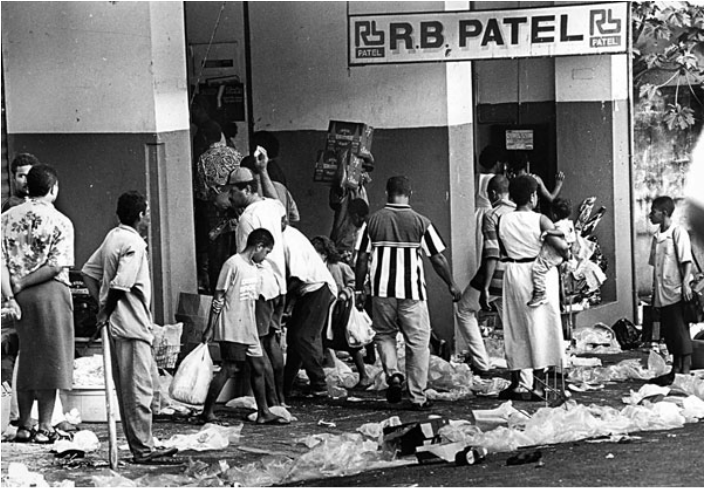
Many innocent people have also been beaten or had their homes invaded; our capital city was looted and burned.

We cannot allow this to ever happen again. So in common with countries such as New Zealand and Australia, we will not tolerate any attempt to divide us along ethnic or religious lines. We will not allow anyone to incite hatred against any person on the basis of ethnicity or religion. So a harsh penalty was recommended by our Parliamentary Privileges Committee last week and then endorsed by Parliament. And rightly so. Because in Fiji, the stakes are too high to be lenient and we make no apology for it.

Media Freedom: 'We will not allow Aussie and Kiwi journalists to distort the reality on the ground'

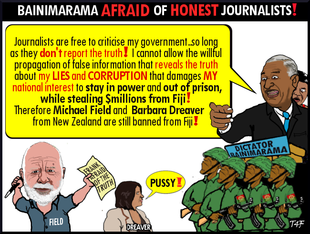
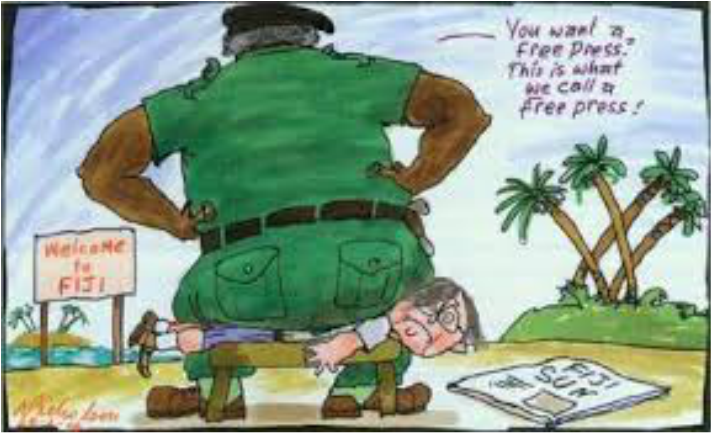
Prime Minister, let me also confront head on the issue of media freedom and more particularly, the right of access to Fiji by certain of your journalists. No-one who reports on events in Fiji fairly and in a balanced manner is excluded. Any journalist is free to criticise my government or me in an opinion piece or report criticism made by others in their news stories. But we cannot allow the willful propagation of false information that damages the national interest and undermines our vulnerable economy. And that is what has happened in the case of certain New Zealand journalists and others from Australia. Incidentally, no journalist from any other country has been banned from Fiji.

New Zealand television ran footage of tanks in the streets of Suva when our military does not own any tanks. They had been interposed from other sources. A claim was made that Fijian children were starving and were eating grass. These are egregious examples of willful bias and misreporting. As a great British newspaper editor once said, comment is free but facts are sacred. Yet certain journalists in New Zealand and Australia – along with certain journalists in Fiji – think nothing of dispensing with the facts if they get in the way of the politically weighted narrative they want to tell. And we are saying to the news organisations that employ them: send someone else. Someone who respects the facts and the right of people to know the truth. Not some twisted concoction.

Prime Minister, I am coming to our talks tomorrow in a genuine spirit of engagement. Of letting bygones be bygones and setting our relationship and that of our nations on a new course.

You have said that what has happened in the past is ancient history and you are looking for a more positive engagement yourself. It is a sentiment I welcome. Because Fiji and New Zealand have had far too long a friendship and we are far too close geographically to allow this opportunity to pass. Friends can also say things to each other that others can’t. So I hope you will excuse me if I close by saying this:

For all our closeness at a people-to-people level, Fiji seeks a new political relationship with New Zealand that is more equal. More rooted in mutual respect. More understanding on New Zealand’s part of our own priorities – whether it is on the trade front with the PACER Plus negotiations or our desire to reform our regional architecture to give Pacific Islanders a bigger voice.

The strains and irritants that have marked our political relationship in recent years are a textbook lesson on how not to conduct friendly relations between neighbouring governments. They must be replaced by genuine cooperation and understanding. And I ask you and your government to work with us to create a better framework in which to conduct our affairs. Less prescriptive. More consultative. More understanding of the challenges we face.

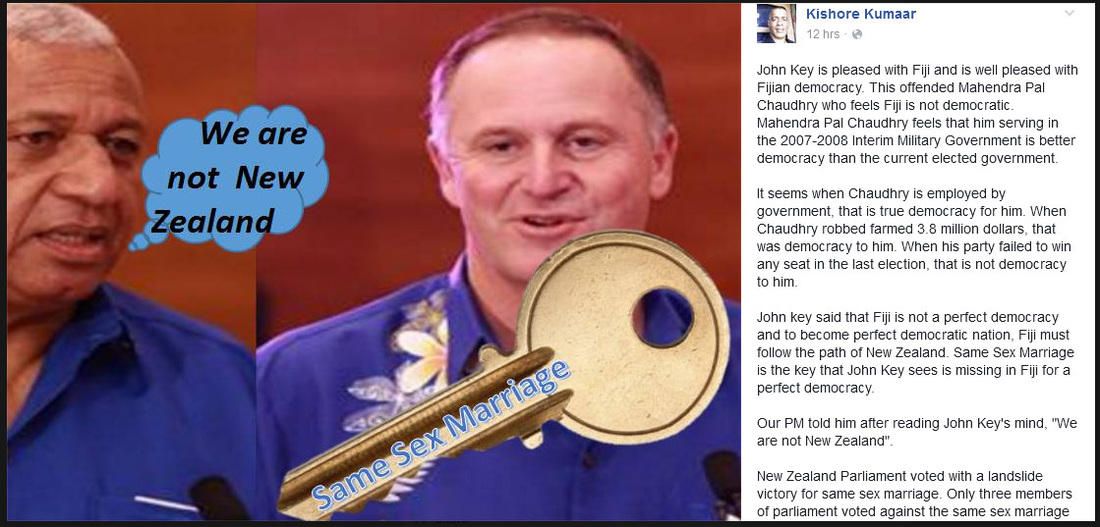
We are not New Zealand. We have different challenges and priorities. We are not the New Zealand democracy. Evolved and robust. We are the Fijian democracy. Finally genuine yet still in its relative infancy and with institutions that need to be strengthened. And we are not the New Zealand economy. Our economy needs to have its fundamentals protected and strengthened to empower all Fijians.

I appeal to you to work with us to build those institutions, strengthen our democracy, work with us to improve the lives of Fijians and other Pacific islands. Help us build strong institutions without political bias or interference. Help us build our resilience to climate change and access financial facilities we need to do so.

Your aid must complement the implementation of our policy agenda, not undermine it. After all, we don’t always want to be dependent on aid. And this can only be achieved if we work in a collaborative manner. Work with us because there are many lucrative business opportunities for New Zealand companies given the liberalisation and modernisation of the Fijian economy under my Government.

Prime Minister, a great partnership is possible, one based on mutual confidence and trust. So I look forward to our talks tomorrow and once again, welcome to Fiji. It’s been a long time between drinks, as they say - 10 years since we last had a New Zealand Prime Minister here, even though we now welcome over 100,000 Kiwis every year. We hope that like them, Fiji will be where happiness finds you. But just don’t talk about the rugby.

Vinaka vakalevu. Thank you.

14 Comments

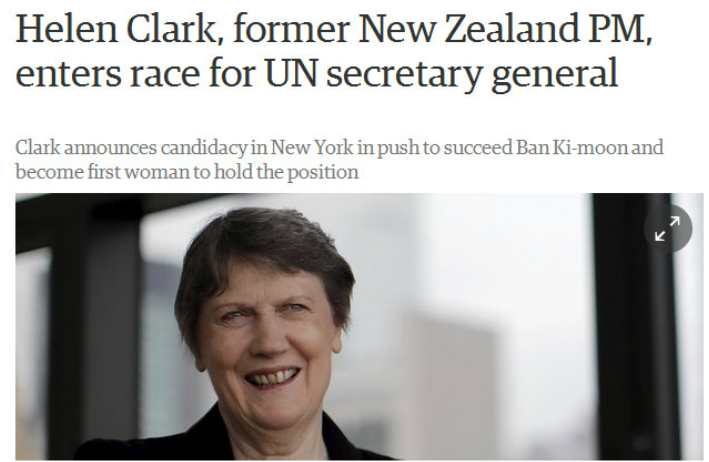
KEY TO KEEPING DICTATORS IN POWER: A leaf out of New Zealand Prime Minister John Key's visit: 'We ask Fiji to forgive and forget that Helen Clark stood up to 2006 coup. Please vote for her for UN top job'

9/6/2016

12 Comments

 
Picture

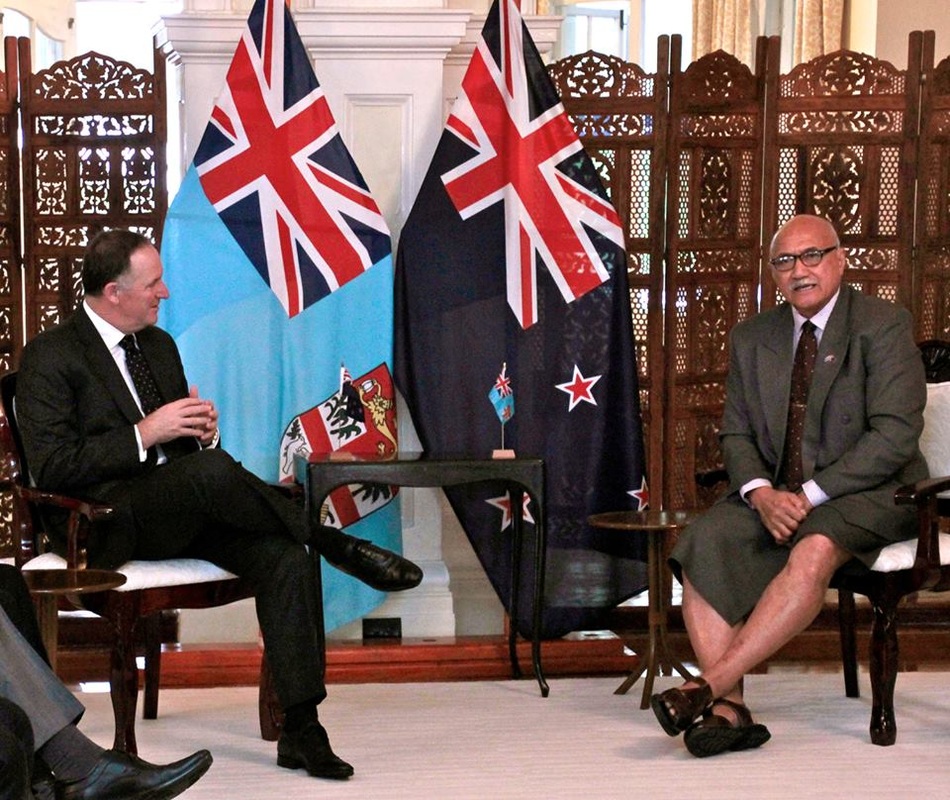
New Zealand is supporting Fiji's bid for Peter Thomson, Fiji's Ambassador to the UN, to be the next President of the General Assembly and Key said he was hoping Fiji would support Helen Clark. "Frank [Bainimarama] may not be her No1 cheerleader, but I don't think he'll go out of his way to
try to undermine her."


"Frank Bainimarama could be looking for an exit strategy [to become President] because he is GUILTY OF TREASON" - Helen Clark, July 2008

“She (Clark) never understood what is happening in Fiji, and she will never want to understand what’s happening in Fiji. All she wants is this grand idea of being Lady of the Pacific and she has been very vocal against Fiji and what we have been trying to fight for, which is equality for everyone in Fiji.” -
Frank Bainimarama, calling on Indo-Fijians living in New Zealand not to vote for Clark, or the Trade Minister, Phil Goff, in the then upcoming 2008 New Zealand general election

"Well, I amused really because he is quick to complain when anyone says anything about politics in Fiji and then gets on a local radio station [Radio Tarana] and blasts away about our politics. I think we just got to have a chuckle." - Helen Clark, October 2008

Picture

* Helen Clark had said she had her doubts when Bainimarama made his promise to hold elections by March 2009. “I must say I wasn’t convinced by the assurances he gave the Forum leaders, so I wrote everything down.”

* Responding, Mahendra Chaudhry had said: “Ms Clark should just worry about her party winning the elections next November instead of worrying about Fiji”

“We condemn the unlawful detention and thuggish treatment of Prime Minister Chaudhry and other members of his Government. We are particularly concerned at the physical treatment and threats that have been made against the Prime Minister and the other hostages. Mr Chaudhry and his Ministers have been subjected to severe psychological pressure and in some cases physical abuse." - Helen Clark, May 2000

Bainimarama had also taken a swipe at Clark in July 2008 when she said he might become the President and elect Chaudhry as Prime Minister. Clark said Bainimarama could be looking for an exit strategy because, she claimed, he was GUILTY OF TREASON

"Bainimarama is wrong. Clark always understood Fiji. Her unwavering response to the 2006 coup had been consistent with her opposition to the Speight coup. Long live the championing “Queen of Democracy in the South Pacific” – Helen Elizabeth Clark. We hope your fight for democracy and human rights will continue to ring aloud worldwide. Thank you for standing up against the coup culture in Fiji."  - VICTOR LAL, 2008

"It is not surprising that when the 2006 coup happened, Clark resorted to the position she took after the 2000 Speight coup, except that this time she stood up to Bainimarama and his pro coup supporters. Earlier, she had made one last ditch attempt to bring Qarase and Bainimarama together at the meeting in Wellington on 30 November 2006. When the coup happened, she had no option but to impose sanctions and strongly denounce Bainimarama. Meanwhile, while Clark remained true to her position on the coup culture in Fiji, her former counterpart Chaudhry, went on to join Bainimarama’s interim cabinet, and later claimed that the 2006 coup was necessary to save the ailing economy." VICTOR LAL, 2008

Picture
From Fiji Sun Archive
11 November 2008


HELEN CLARK – SOUTH PACIFIC QUEEN OF DEMOCRACY


By VICTOR LAL


Cometh the hour, cometh the woman! When we were uncontrollably crying out in 2000 for democracy, human rights, constitutionalism, non-racism, sanctions, the rule of law and the re-instatement of the deposed Chaudhry government, one woman bravely stepped forward to answer our call.

Yes, she was Helen Elizabeth Clark, who had a year before, in December 1999, become the second female Prime Minister of New Zealand, and six months after Mahendra Chaudhry had won a landslide victory in the Fiji 1999 general elections.

She had, as one analyst noted, placed considerable emphasis on the promotion of human rights internationally; she had strongly supported the role of the United Nations; she had championed nuclear disarmament and restructured the New Zealand armed forces to prioritise peacekeeping; and she had vigorously promoted free trade.

At the 1999 election, the NZ Labour Party came to power as the dominant party in a minority coalition formed with the Alliance Party. No other New Zealand government, according to the analyst, has been as consistently strong in human rights.

Shortly after the Labour government came to power, its Foreign Minister Phil Goff announced that the change in government would mean a change of priorities and emphases in foreign policy, and a month later Prime Minister Helen Clark was to state that one of the new priorities would be human rights issues.

Her declaration was put to test almost immediately when George Speight and his group of Counter-Revolutionary Forces seized the year-old Chaudhry government. New Zealand responded diplomatically by cutting military ties with Fiji and banned people associated with Speight from entering New Zealand.

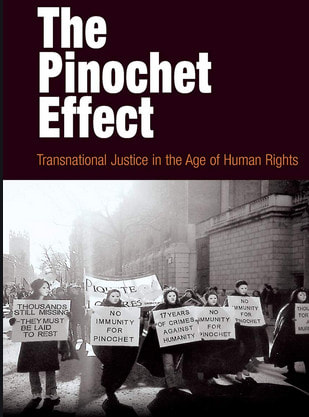
Meanwhile, as international condemnation of the armed takeover of Parliament continued, Clark ruled out military intervention. But her Deputy Prime Minister Jim Anderton said he wanted an examination of any bank accounts held in New Zealand by any of the perpetrators and for “Pinochet-style” prosecutions in New Zealand against those accused of human rights violations.

Clark also decided that, unlike 1987 when the South Pacific Forum, had washed its hands off Fiji, her government would not accept foreign inaction. In conjunction with Samoa, Goff initiated a Forum Foreign Ministers’ meeting in Apia to draw up a blueprint for future Forum action in similar circumstances. At the subsequent Pacific Forum meeting in October 2000, Clark led the charge for the Forum to commit itself to upholding democratic principles.

As the analyst quoted above has pointed out, unlike her Labour predecessor, she was unwilling to defer to the preference of Forum members to not interfere in the internal affairs of neighbouring states and to refrain from criticising them publicly: the so-called “Pacific Way”.

On 22 May 2000, Clark released an official statement on behalf of the New Zealand government in which she expressed concern and outrage, and deplored the “criminal actions of Speight’s group”.

“We condemn the unlawful detention and thuggish treatment of Prime Minister Chaudhry and other members of his Government. We are particularly concerned at the physical treatment and threats that have been made against the Prime Minister and the other hostages. Mr Chaudhry and his Ministers have been subjected to severe psychological pressure and in some cases physical abuse. Mr Chaudhry at one point collapsed. He has now been seen by a doctor. Mr Speight has repeatedly declared that any attempt to release the hostages by force would result in casualties and that Mr Chaudhry and Koila Mara, Minister of Tourism and Ratu Mara’s daughter, would be the first to be killed,” said Clark.

Clark sent a message to President Ratu Mara conveying the support of all New Zealanders, adding, “The New Zealand Government strongly believes that it is within [1997 Constitution] that the current political crisis must be resolved. No-one in the international community is prepared to endorse a takeover coming from the barrel of a gun.”

While recognising that it was purely a hostage crisis, she declared that if the situation degenerated to the extent that the lives of New Zealanders (some 3000 visitors and 400 residents) were threatened, she had contingency plans in place using both civilian and military aircraft and ships.

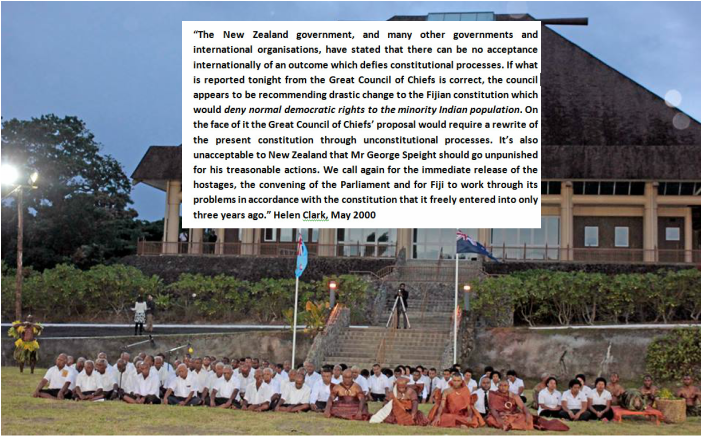
Three days later, on 25 May 2000, on learning of the Great Council Chief’s proposal for resolving the hostage crisis, she condemned it outright, claiming the GCC’s proposal appeared to be unconstitutional. “The New Zealand government, and many other governments and international organisations, have stated that there can be no acceptance internationally of an outcome which defies constitutional processes. If what is reported tonight from the Great Council of Chiefs is correct, the council appears to be recommending drastic change to the Fijian constitution which would deny normal democratic rights to the minority Indian population,” the official statement said.

“On the face of it the Great Council of Chiefs’ proposal would require a rewrite of the present constitution through unconstitutional processes. It’s also unacceptable to New Zealand that Mr George Speight should go unpunished for his treasonable actions. We call again for the immediate release of the hostages, the convening of the Parliament and for Fiji to work through its problems in accordance with the constitution that it freely entered into only three years ago,” Clark said.

After Chaudhry was released from Parliament, Clark announced that New Zealand would continue to exert pressure on Fiji. She reassured deposed Prime Minster Chaudhry in Wellington that her country would maintain its pressure for a return to democracy in Fiji. The reassurance was made when she was meeting with Chaudhry at the Beehive, the headquarters of the New Zealand government. During the Wellington meeting in 2000, Chaudhry gave Clark a full briefing about Fiji’s situation.

He told her that he was pleased with the sanctions against Fiji which New Zealand had put in place so far, but firmer actions may be needed if the Fijian authorities did not set an acceptable timetable for a return to democratic rule. Clark later said Chaudhry’s message was that international pressure was vital.

Before the meeting, Clark told local reporters that it would be helpful if legal action was taken against the coup leader George Speight, who was being held by the Fijian military. But, she added, the situation there was still worrying. She said the sanctions New Zealand had in place would remain, and wider trade sanctions would be considered only if the situation in Fiji deteriorated substantially.

Clark called on Fiji to return to democracy as soon as possible, saying her country would give “the strongest support to those who support the restoration of democracy”. “We have drawn the line under our relationship with Fiji, which is now cool, distant and formal,” she said. On his arrival in Wellington, Chaudhry had told the waiting reporters that Speight would be charged with treason. Chaudhry said he was grateful for New Zealand’s tough stance and smart sanctions against Fiji. He said he would urge New Zealand to toughen its sanctions against his coup-torn country if it failed to return to democracy swiftly.

As already noted, at that time New Zealand sanctions against Fiji included cutting military ties, cutting aid and banning the 2000 coup plotters from travelling to New Zealand.

And when, in August 2000, Speight was finally charged with treason, Clark welcomed the treason charges. “Charging Speight and his supporters with treason is a necessary step on the long road back to restoring Fiji’s international reputation,” she told reporters.

Moreover, when in 2001, Justice Anthony Gates ruled that the government of the deposed Prime Minister should be reinstated because the interim government set up by the military after the coup was unlawful and unconstitutional, Clark again spoke saying the judgment was a signal to Fiji to hasten its return to democracy. “The sooner the government, unconstitutional as it is in Fiji, comes up with a clear timetable to return to constitutional democracy, the better,” she said.

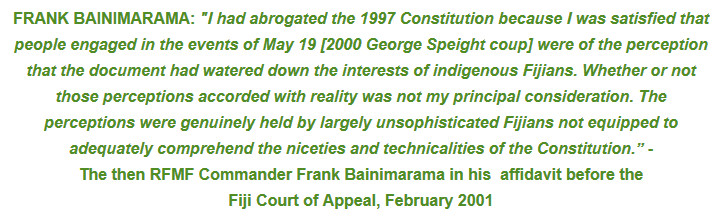
As we are acutely aware, Commodore Frank Bainimarama refused to restore Chaudhry as Prime Minister. In his High Court affidavit, Bainimarama, as a witness in support of the Interim Qarase government, stated that he had abrogated the 1997 Constitution because he was satisfied that people engaged in the events of May 2000 were of the perception that the [1997] Constitution had watered down the interests of taukei Fijians.

Meanwhile Chaudhry, whom President Ratu Josefa Iloilo had dismissed after the end of the hostage crisis, berated the President: “The constitution requires the President to be appointed by the Great Council of Chiefs in consultation with the Prime Minister. In the next questionable move Ratu Josefa Iloilo, placed in office after the coup and who the Appeals Court declared to be in an acting capacity only, convened a meeting of the Great Council of Chiefs, and got himself appointed President.”

What all these events clearly meant, he claimed, was that Fiji’s post-coup authorities had no respect for the rule of law.

It is not surprising that when the 2006 coup happened, Clark resorted to the position she took after the 2000 Speight coup, except that this time she stood up to Bainimarama and his pro coup supporters. Earlier, she had made one last ditch attempt to bring Qarase and Bainimarama together at the meeting in Wellington on 30 November 2006. When the coup happened, she had no option but to impose sanctions and strongly denounce Bainimarama.

Meanwhile, while Clark remained true to her position on the coup culture in Fiji, her former counterpart Chaudhry, went on to join Bainimarama’s interim cabinet, and later claimed that the 2006 coup was necessary to save the ailing economy. He also took a swipe at Clark in July when she said Bainimarama might become the President and elect Chaudhry as Prime Minister. Clark said Bainimarama could be looking for an exit strategy because, she claimed, he was guilty of treason.

She said it was possible he might try and seize the presidency. “There’s someone in that position at the moment, perhaps that is the next stage of the coup,” she said.

Clark said she had her doubts when Commodore Bainimarama made his promise last year to hold elections by March 2009. “I must say I wasn’t convinced by the assurances he gave the Forum leaders, so I wrote everything down,”” she said. Responding, Chaudhry said, “Ms Clark should just worry about her party winning the elections next November instead of worrying about Fiji”.

In August, Clark said if Fiji carried through with its threats to walk out of the Forum, it risked losing significant aid and development funding. However, Chaudhry who had resigned as finance minister in the interim government said the Forum would suffer more than Fiji if it was suspended and said it was time island states took an “assertive position” to ensure they were not “pushed around” by New Zealand and Australia. “I don’t think in the long term Fiji has much to lose if it’s not a member of the forum. I myself had reservations about the usefulness of the forum,” he said.

Although Clark lost the recent election, her dignified exit as leader of her losing party should be a lesson for Chaudhry who declined to step down despite losing two consecutive general elections. And to those Indo-Fijians in New Zealand who might have responded to Bainimarama’s call to vote against Clark, whom he accused of wanting to be the “Queen of the Pacific”, they forgot that it was not Bainimarama but Clark who stood up for Indo-Fijian and Chaudhry’s birth and democratic right to govern Fiji after the High Court had ruled in 2001 in favour of the Chaudhry government.

In his message to NZ Indo-Fijians, Bainimarama told them recently: “She (Clark) never understood what is happening in Fiji, and she will never want to understand what’s happening in Fiji. All she wants is this grand idea of being lady of the Pacific and she has been very vocal against Fiji and what we have been trying to fight for, which is equality for everyone in Fiji.”

Bainimarama is wrong. Clark always understood Fiji. Her unwavering response to the 2006 coup had been consistent with her opposition to the Speight coup. Even Chaudhry had pointed out in the FLP’s “Activities Report 1999-2001: “New Zealand Prime Minister Helen Clarke denounced Speight as a failed businessman, crook and fraud who was to have appeared in court that day to answer to charges of fraud.”

In a cruel twist of irony, although Clark had failed to restore Chaudhry as Prime Minister of Fiji after the 2001 High Court judgment, she supported another descendant of Indian indentured labourer, the New Zealand born Anand Satyanand, become the Governor-General of New Zealand in August 2006. He was appointed by Elizabeth 11, Queen of England and New Zealand, on the advice of Prime Minister Clark.

Long live the championing “Queen of Democracy in the South Pacific” – Helen Elizabeth Clark. We hope your fight for democracy and human rights will continue to ring aloud worldwide. Thank you for standing up against the coup culture in Fiji.

The views expressed are those of Victor Lal and not that of Fiji Sun. E-mail: [email protected], 11 November 2008


Picture
John Key mustn’t wear rose tinted glasses in Fiji:
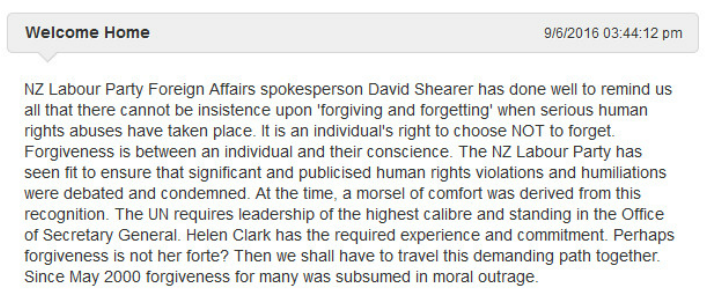
NZ Labour Party's Foreign Affairs spokesman David Shearer


June 08, 2016

When Prime Minister John Key visits Fiji this week, polite but firm messages need to be delivered, says Labour’s Foreign Affairs spokesperson David Shearer.

“Fiji has clamped down on its own media, several New Zealand journalists are banned from visiting the country and there have been issues with the functioning of its parliament.

“Just last Friday a prominent opposition MP was banned from parliament for two years by the Privileges Committee – dominated by the governing party – for simply calling a minister a ‘fool’, a disproportionate penalty.

“All of these factors point to a Fiji that still has some way to go before we can call it a healthy democracy.
“John Key has reportedly described the aftermath of the 2006 military coup as ‘ancient history’. But it was less than two years ago they finally had democratic elections. This smacks of him sweeping eight years of military rule endured by the people of Fiji under the carpet.

“New Zealand has always stood side by side with Fiji and has a warm, close friendship with its people. We sent aid flights, a supply ship and our service people to Fiji in response to Cyclone Winston. In emergencies such as these, it’s important to stand by our friends.

“That’s all the more reason to speak up when things aren’t right, rather than looking the other way.

“New Zealanders need to be assured that John Key’s trip will include meetings with human rights organisations, media representatives and opposition parties.

“If the Prime Minister visits Fiji pretending nothing’s happened and everything’s fine, he will be doing a huge disservice to all the people working to bring a free media, democracy and human rights to Fiji,” David Shearer says.

Picture
Picture
Picture
Picture
Picture
Picture
Picture
Picture
Picture
Picture
Picture

 “Charging Speight and his supporters with treason is a necessary step on the long road back to restoring Fiji’s international reputation,”
Helen Clark, August 2008, welcoming the treason charges against Speight

"Long live the championing “Queen of Democracy in the South Pacific” – Helen Elizabeth Clark. We hope your fight for democracy and human rights will continue to ring aloud worldwide. Thank you for standing up against the coup culture in Fiji." VICTOR LAL, 2008, Fiji Sun

Picture
Picture
Picture
12 Comments

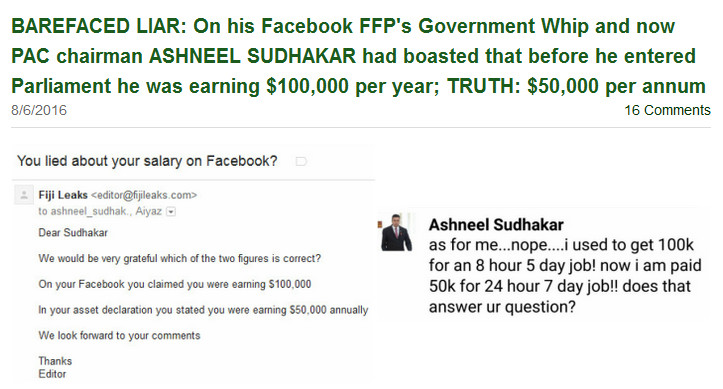
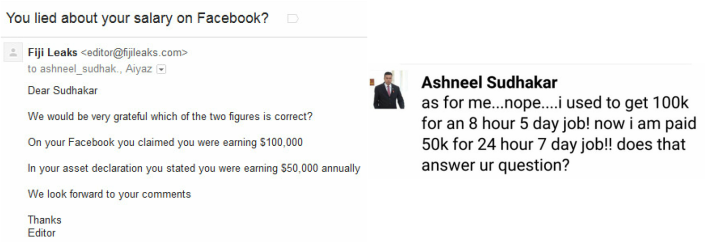
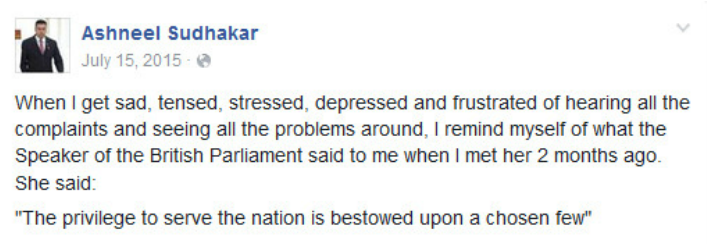
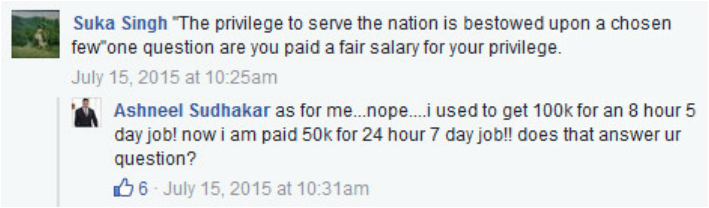
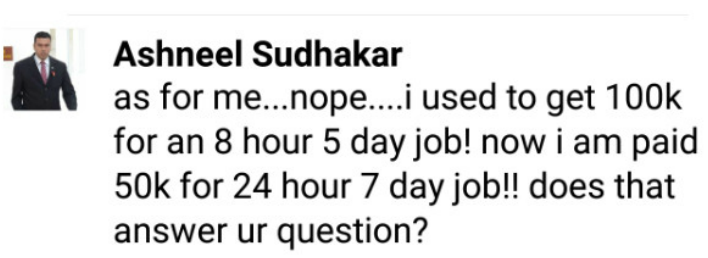
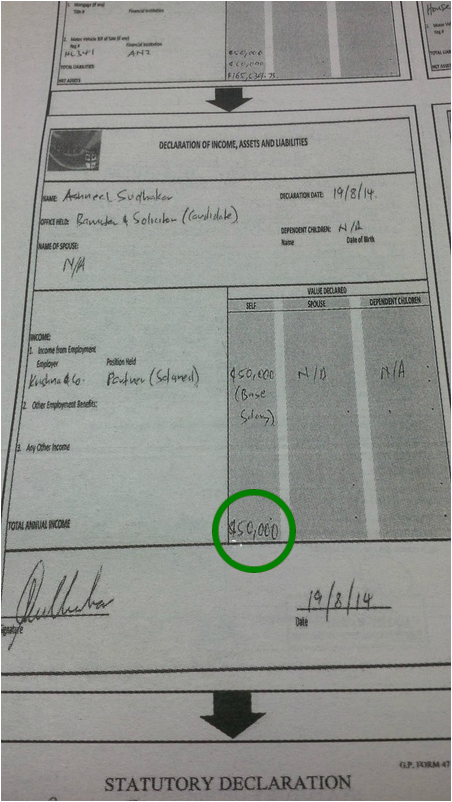
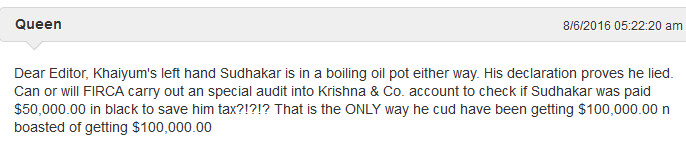
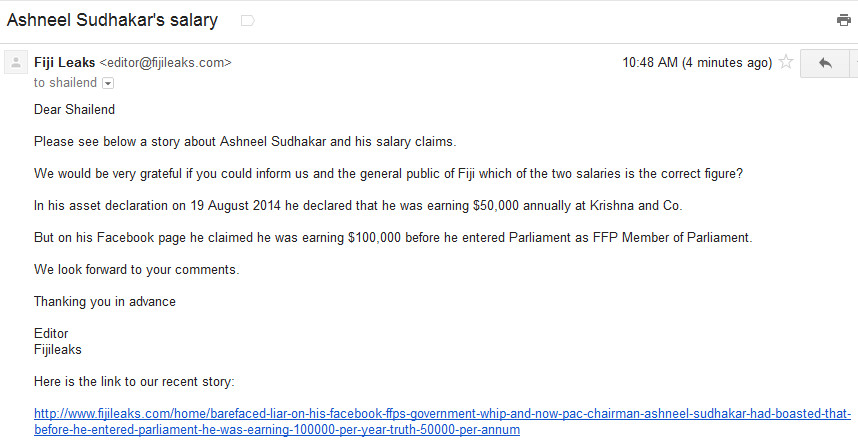
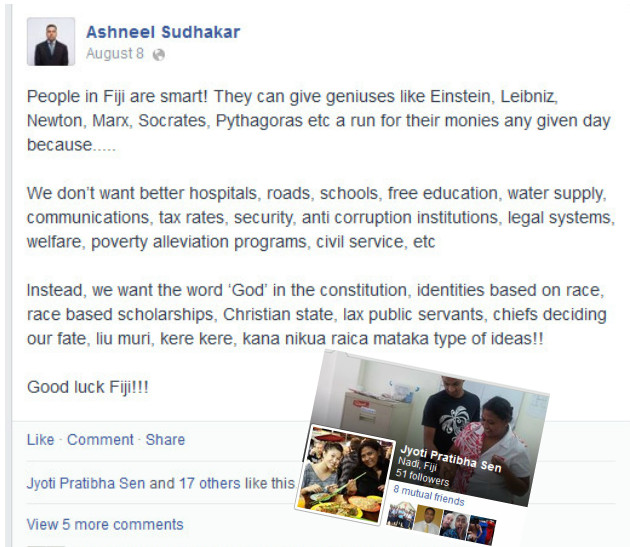
BAREFACED LIAR: On his Facebook FFP's Government Whip and now PAC chairman ASHNEEL SUDHAKAR had boasted that before he entered Parliament he was earning $100,000 per year; TRUTH: $50,000 per annum

8/6/2016

16 Comments

 
Picture

Picture

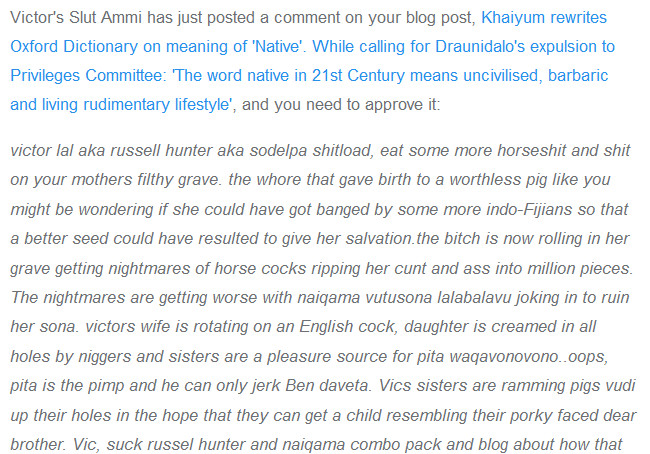
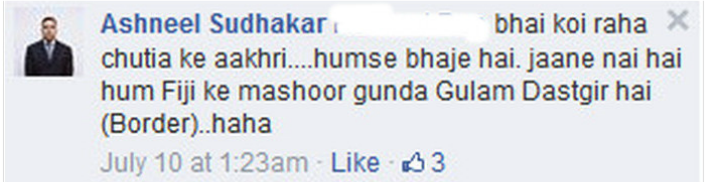
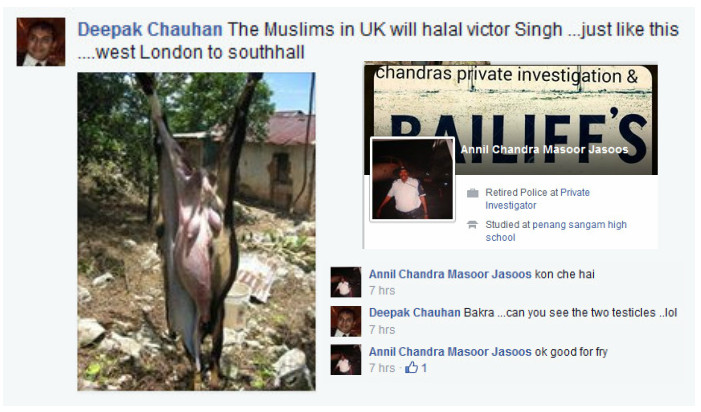
Fijileaks: Let us see if Fijian journalists will confront Sudhakar about his salary claims on his Facebook page; Fijileaks to Aiyaz Khaiyum's Indo-Fijian goondas threatening and abusing Victor Lal: 'We will not be intimidated into silence, for we have been able to establish your identities and from what parts of Fiji you are posting your vile comments'

Picture

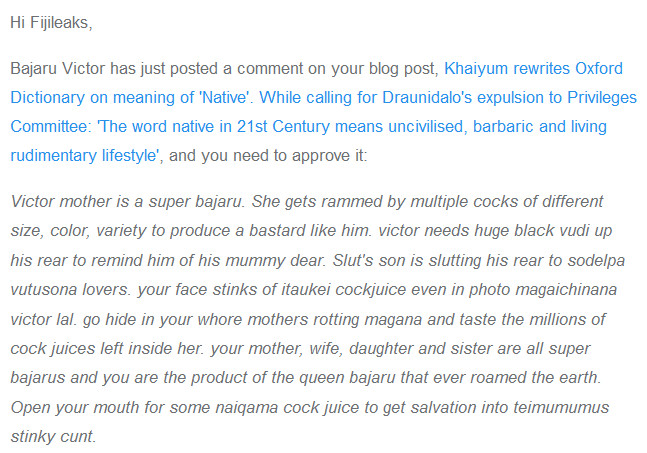
Aiyaz Khaiyum and Mahendra Reddy's Indo-Fijians let loose against Victor Lal: Maro Pito, 'Someone give him one. I would have but am straight. Wont mind putting it in his daughter or wife though. What say pimp Victor lal? How much to screw the cunt and ass of daughter and wife and for spewing my seed all over them? Suck an Indo-Fijian cock ASAP to get the hangover from teimumus stinking cunt off your brain. Madarchod harami randi ke aulad.'

Picture
Picture
Picture
Picture

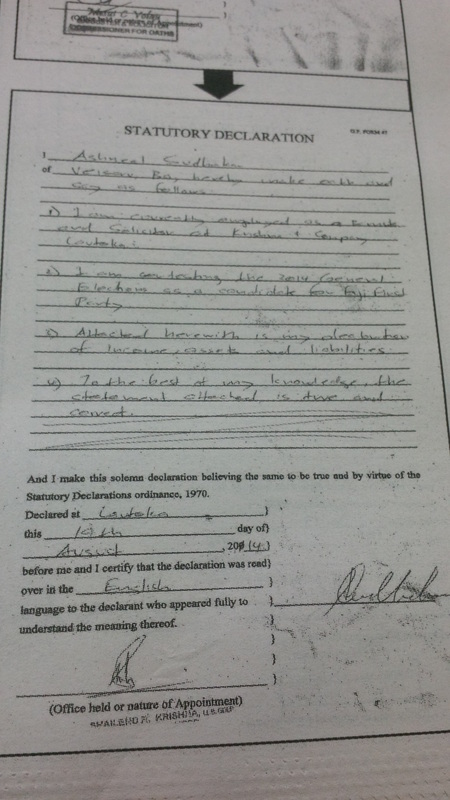
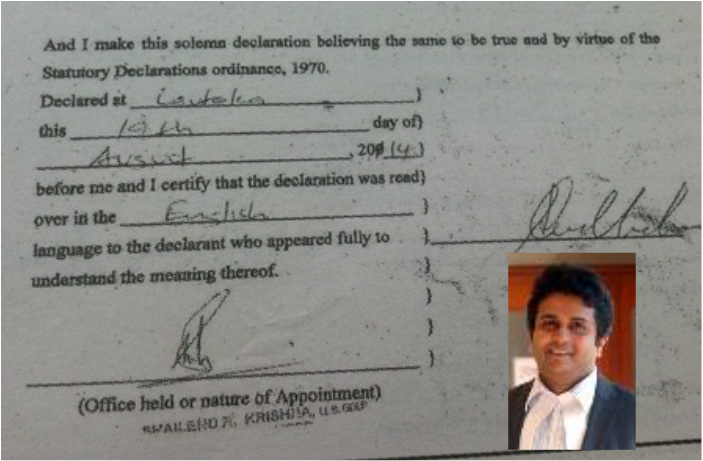
THE BAREFACED LIAR: In his Statutory Declaration of Assets under Khaiyum's Decree Ashneel Sudhakar declared that his total annual income as a Barrister and Solicitor with Krishna and Co was $50,000, and Shailend Krishna certified that it was 'the true sum'.

Picture
Picture
Picture
Picture
Picture
Picture
Picture
Picture

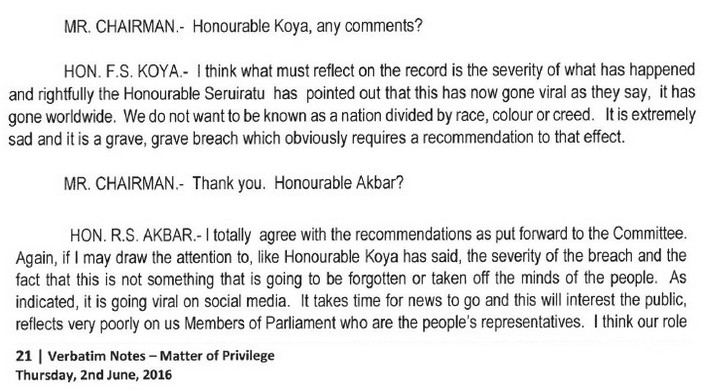
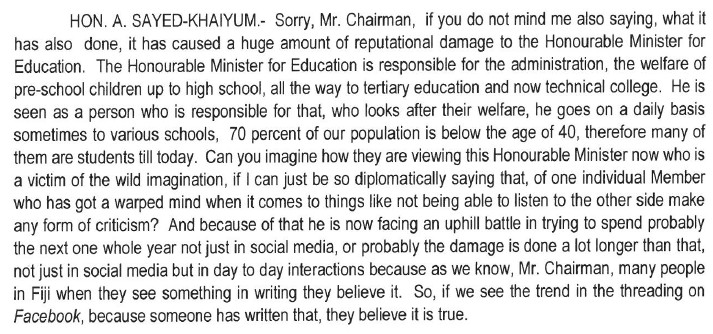
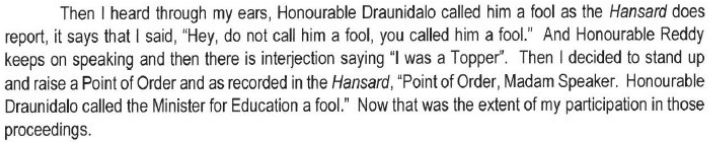
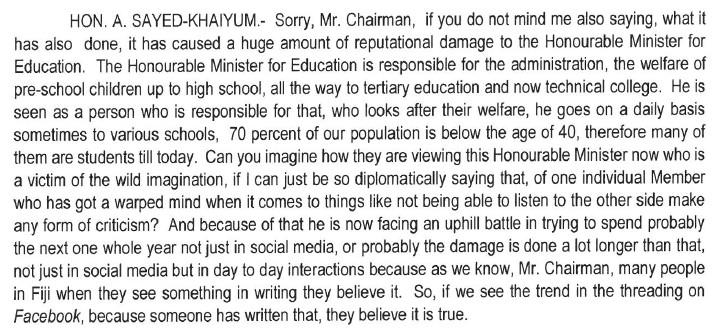
Aiyaz Khaiyum, while calling for Tupou Draunidalo's expulsion from Parliament over the 'REDDYGATE' told the Privileges Committee: 'Mr Chairman, many people in Fiji when they see something in writing they believe it. So, if we see the trend in the threading on Facebook, because someone has written that, they believe it is true.'

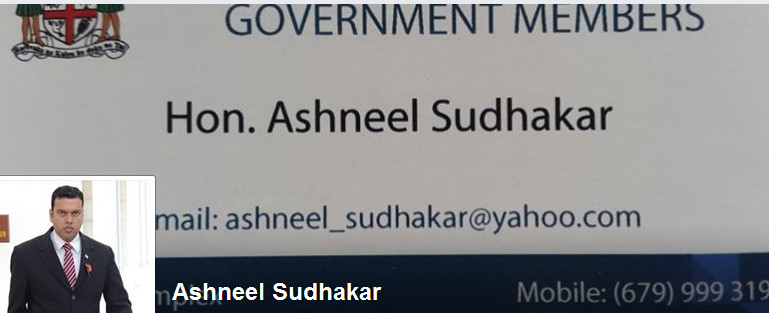
Fijileaks to Khaiyum: What about Sudhakar who FALSELY wrote on his Facebook on 15 July 2015, nearly a year ago, and it is still up there, that he was earning $100,000 a year before becoming
a FFP Member of Parliament?

Picture

Again, to quote Khaiyum:
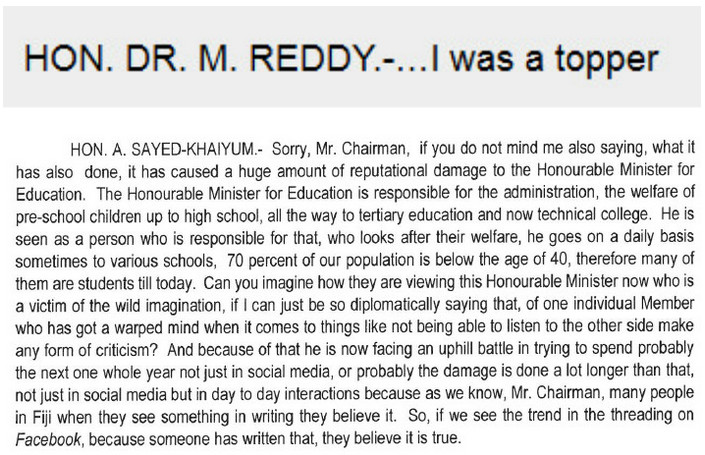
"Sorry, Mr Chairman, it has caused a huge amount of reputational damage to the Honourable Minister for Education. The Honourable Minister for Education is responsible for the administration, the welfare of pre-school children, all the way to tertiary education and now technical college...he is now facing an uphill battle in trying to spend probably the next one whole year not just in social media...to [repair the reputational damage] to his character."

Fijileaks
to Khaiyum: "You demanded and got Draunidalo expelled from Parliament, claiming she lied about the comments attributed to Reddy. What about Sudhakar who blatantly LIED about his SALARY on social media. Like Reddy, you have assigned Sudhakar key positions: chairman of the Public Accounts Committee to scrutinize government spending and to review the Auditor Generals reports, and as chairman of Law, Justice and Human Rights Committee. We say with the Public of FIJI:

Picture

AND BOOT THE LYING FFP GOVERNMENT WHIP OUT OF PARLIAMENT FOR GOOD!

Picture

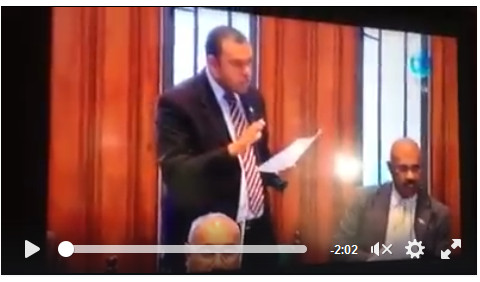
CLICK BELOW TO HEAR HIM NAMING FACEBOOK USERS IN PARLIAMENT AND ATTACKING THEM WHILE DEFENDING FFP MINISTER MAHENDRA REDDY AGAINT TUPOU DRAUNIDALO:
https://www.facebook.com/100009656979579/videos/o.1629795947246909/301642760167621/?type=3&theater

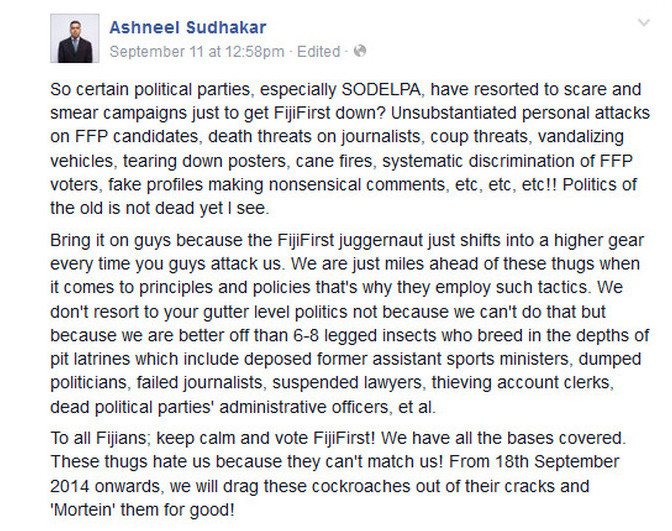
Fijileaks: We have finally traced the true identity of "AMIT SINGH" and we will expose him very soon! He is related to Ashneel Sudhakar

Picture
Picture
Picture
Picture
Picture
Picture
Picture
16 Comments

Khaiyum rewrites Oxford Dictionary on meaning of 'Native'. While calling for Draunidalo's expulsion to Privileges Committee: 'The word native in 21st Century means uncivilised, barbaric and living rudimentary lifestyle'

7/6/2016

15 Comments


The word 'native' according to Aiyaz Sayed Khaiyum:

Picture

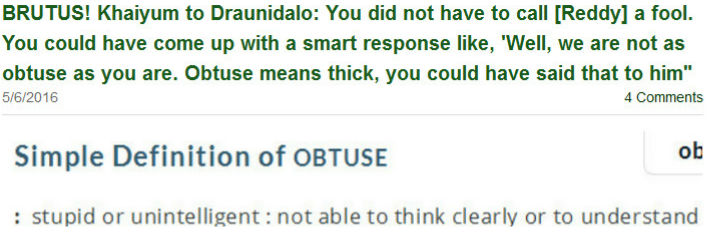
Fijileaks: By the way, remember not to call Aiyaz Khaiyum a FOOL in his Parliament. But you can call him OBTUSE - meaning he is a stupid fool!

Picture
Picture

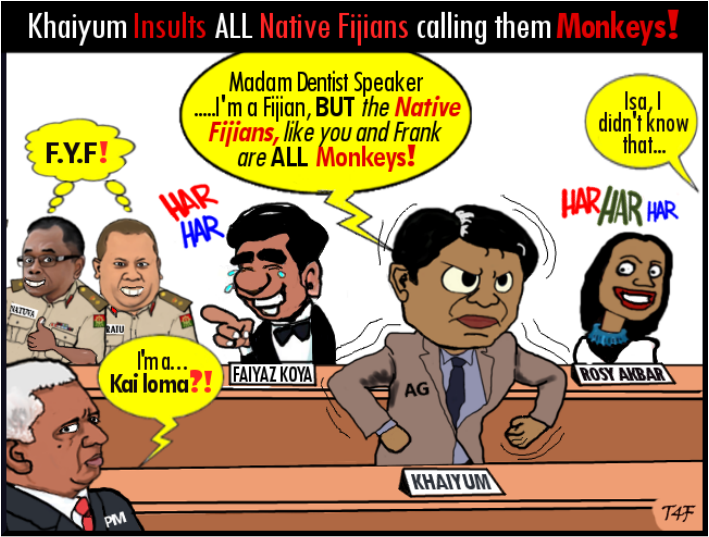
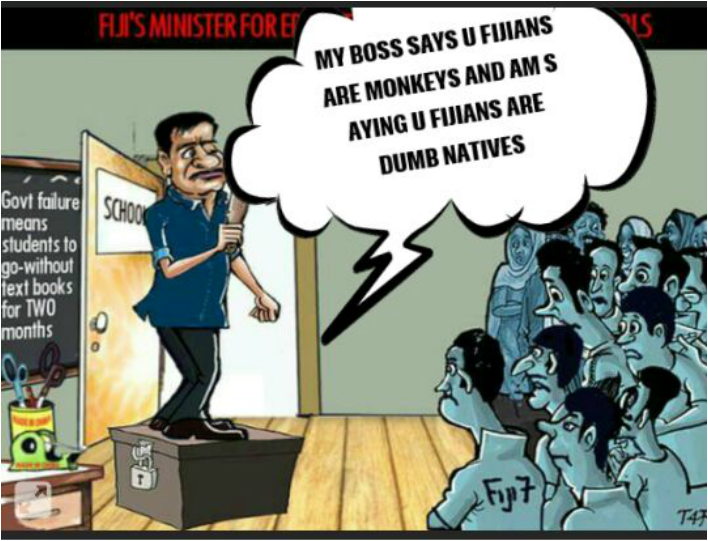
Khaiyum: "Mr Chairman, We now have pictures of me saying
'Fijians are Monkeys'":

Picture
Picture

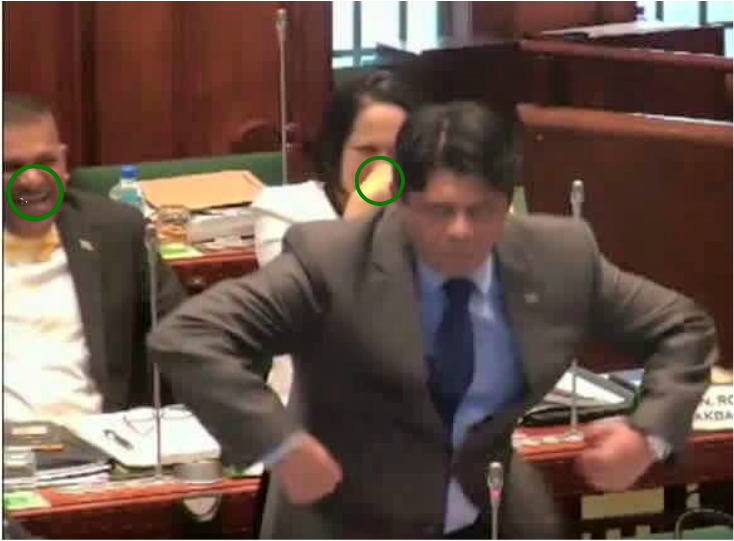
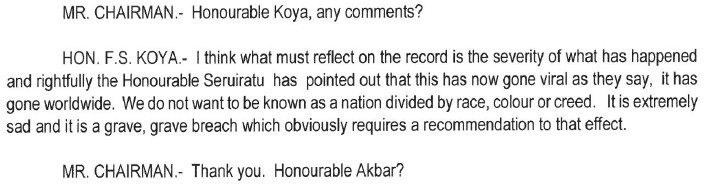
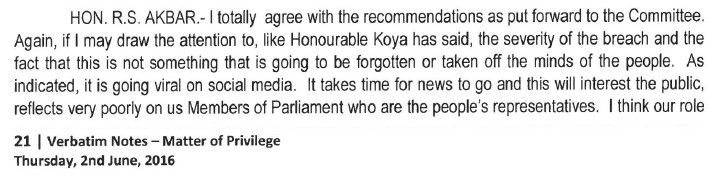
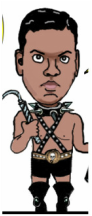
SITTING IN JUDGEMENT: Here are Faiyaz Koya and Rosy Akbar hysterically laughing to Aiyaz Khaiyum's monkey-gorilla-buffoon dance in Parliament. They were two of the Privileges Committee members who ruled for NFP president Tupou Draunidalo's expulsion from Parliament. One rule for Draunidalo, and another for the Big Monkey and his Giggling FFP 'Imitating Monkeys' in Fiji's Parliament

Picture
Picture
Picture
Picture

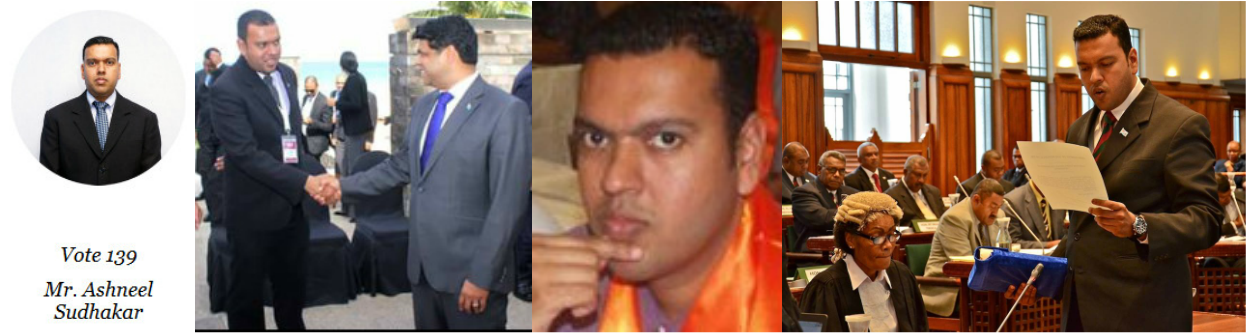
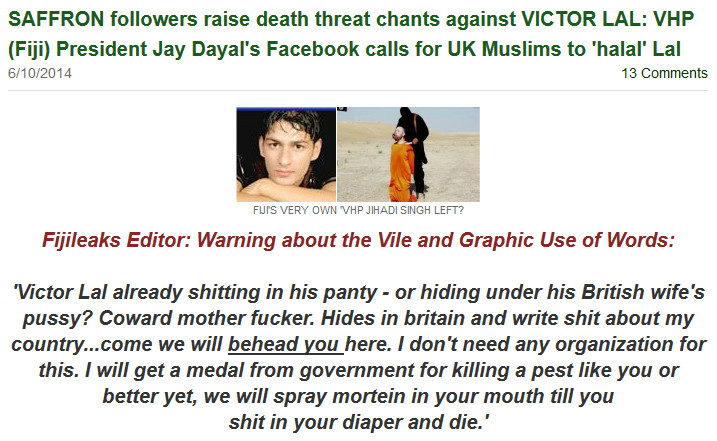
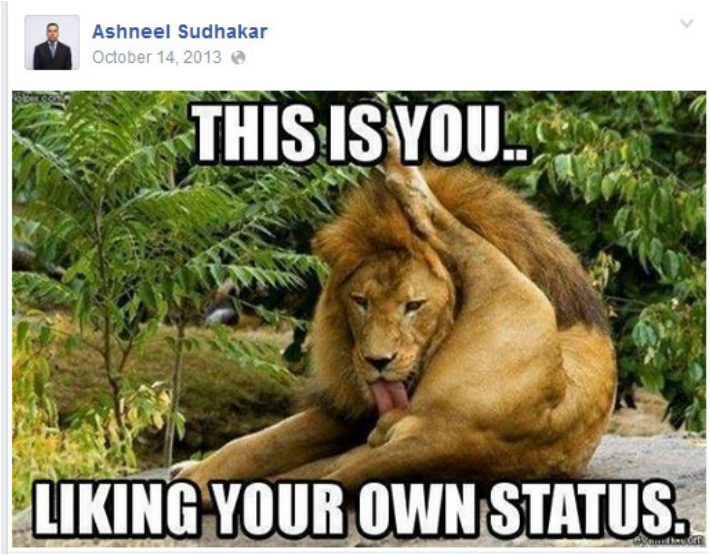
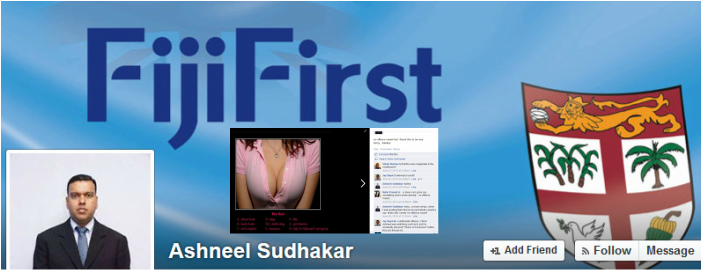
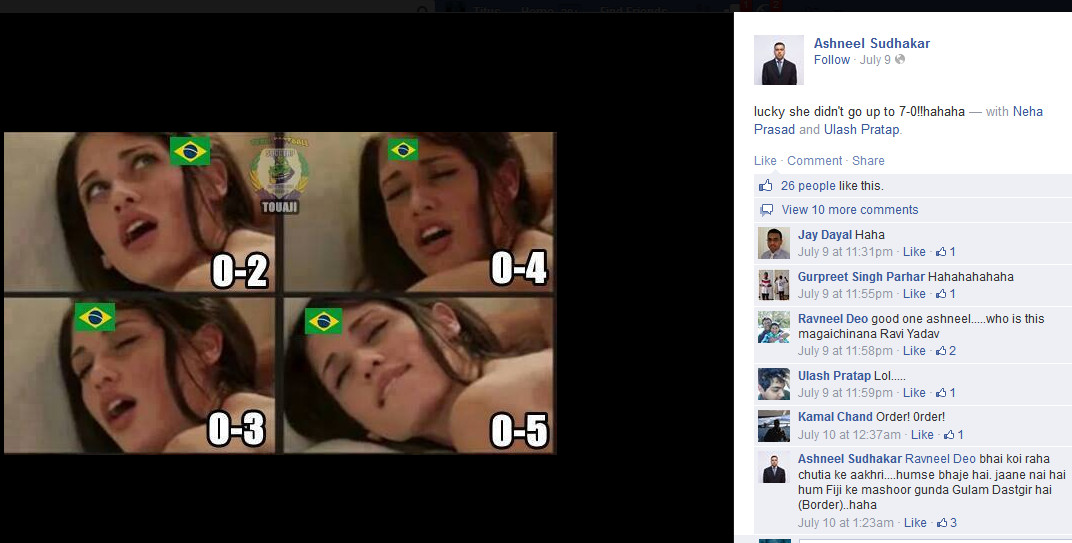
What about Government Whip and self-proclaimed goonda Ashneel Sudhakar whose Facebook postings also went viral on social media where he was ogling over naked women, abusing his political opponents, the native Fijian chiefs and calling for the beheading of Fijileaks founding editor-in-chief VICTOR LAL in London or in Oxford? And was ready to 'mortein' all of his opponents after the September 2014 general election, describing them as 'cockroaches'. And yet Rosy Akbar, as Minister for Women and Children, is accepting orders from her 'Government Whip Sudhakar' - the porno fetish enthusiast - who has no respect for women. What about Fiji's 'Stool Pigeon' and other journalists - they never approached this Goonda for comments or confronted Khaiyum with the social media postings. Why should they?
They were cheering with Khaiyum's Goonda Boy:

Picture
Picture

'LUCKY SHE DIDN'T GO UP TO 7-0!!!HAHAHA'

Picture
Picture
Picture
Picture
Picture
Picture

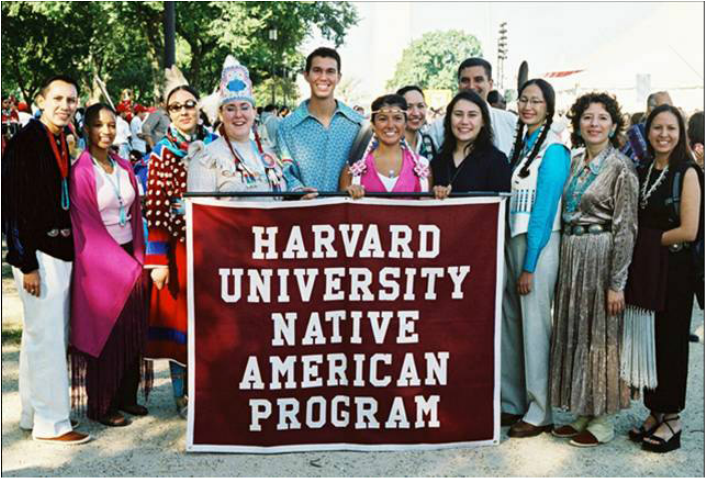
So, Khaiyum is calling on Harvard University to change the name of its Harvard University Native Program to Harvard I-Taukei Program?

Picture

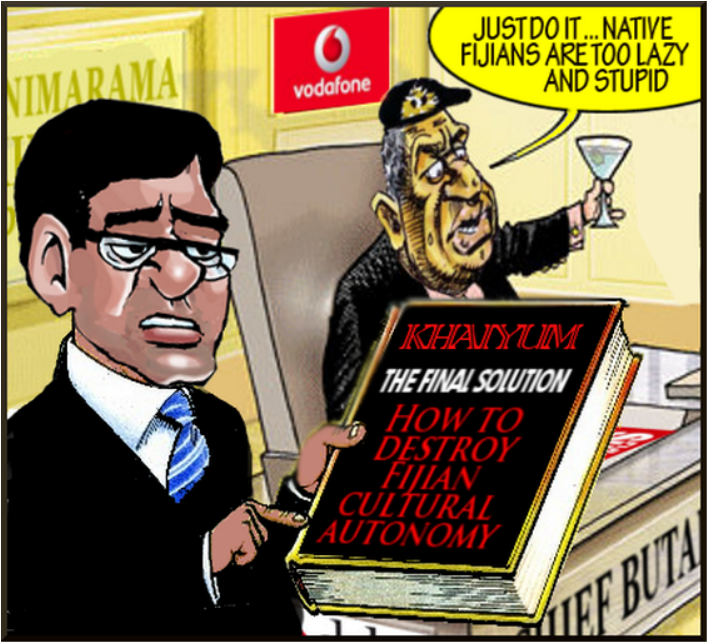
Here you can read Khaiyum's University of Hong Kong thesis on how to destroy NATIVE Fijian culture - with the introduction of 'Sunset Clause'

Picture
Picture
15 Comments

Tara Chetty: “We call on Privileges Committee and Government Members to reconsider [Draunidalo suspension], which we feel is disproportionate and unnecessarily deprives voters of engaged and active representative”

6/6/2016

7 Comments

 
Picture
Picture
The NGO Coalition on Human Rights is calling on the Parliamentary Privileges Committee and Government members to reconsider the suspension of NFP President and Opposition MP Tupou Draunidalo for the remaining term of the current Fiji Parliament.

MP Draunidalo was suspended based on the recommendation of the Committee, which reported contravention of Standing Order 62 (4) (a) and (d). NGOCHR Chair, Tara Chetty said the Coalition considers the lengthy suspension to be a direct injustice to the 2,966 voters who cast their vote for Ms Draunidalo in the 2014 elections, as well as further worsening the gender balance in Parliament. With Draunidalo’s suspension, there are now just 7 women in Fiji’s 50-member Parliament, a ratio of only 14% women to 86% men.

“We call on the Privileges Committee and Government Members to reconsider this decision, which we feel is disproportionate and unnecessarily deprives voters of an engaged and active representative,” she said.

“It is the Coalition’s understanding that the incident could more appropriately have been raised as a Point of Order during the debate on 2 June 2016, allowing the Speaker to immediately rule on the issue as outlined in the Standing Orders. Instead, the matter was raised much later on the basis of an audio clip that was then referred to the Privileges Committee.”

“Removing a Member of Parliament in this way is likely to dissuade other Parliamentarians from thoroughly debating national issues. Yet democracy is all about debate, a diversity of views, and vigorous but productive disagreement.”

“This incident is significant because it undermines the perception of Fiji’s democracy and our Parliamentary process. It is not just about those who voted for Ms Draunidalo, but for all voters - will our issues be debated robustly in Parliament or is it going to become an increasingly hollow process?,” Ms Chetty added. Source: Fijilive

7 Comments
<<Previous
Forward>>
    Contact Email
    ​[email protected]
    Picture
    Picture
    Picture

    Archives

    August 2026
    July 2026
    June 2026
    May 2026
    April 2026
    March 2026
    February 2026
    January 2026
    December 2025
    November 2025
    October 2025
    September 2025
    August 2025
    July 2025
    June 2025
    May 2025
    April 2025
    March 2025
    February 2025
    January 2025
    December 2024
    November 2024
    October 2024
    September 2024
    August 2024
    July 2024
    June 2024
    May 2024
    April 2024
    March 2024
    February 2024
    January 2024
    December 2023
    November 2023
    October 2023
    September 2023
    August 2023
    July 2023
    June 2023
    May 2023
    April 2023
    March 2023
    February 2023
    January 2023
    December 2022
    November 2022
    October 2022
    September 2022
    August 2022
    July 2022
    June 2022
    May 2022
    April 2022
    March 2022
    February 2022
    January 2022
    December 2021
    November 2021
    October 2021
    September 2021
    August 2021
    July 2021
    June 2021
    May 2021
    April 2021
    March 2021
    February 2021
    January 2021
    December 2020
    November 2020
    October 2020
    September 2020
    August 2020
    July 2020
    June 2020
    December 2018
    November 2018
    October 2018
    January 2018
    December 2017
    November 2017
    October 2017
    September 2017
    August 2017
    July 2017
    June 2017
    May 2017
    April 2017
    March 2017
    February 2017
    January 2017
    December 2016
    November 2016
    October 2016
    September 2016
    August 2016
    July 2016
    June 2016
    May 2016
    April 2016
    March 2016
    February 2016
    January 2016
    December 2015
    November 2015
    October 2015
    September 2015
    August 2015
    July 2015
    June 2015
    May 2015
    April 2015
    March 2015
    February 2015
    January 2015
    December 2014
    November 2014
    October 2014
    September 2014
    August 2014
    July 2014
    June 2014
    May 2014
    April 2014
    March 2014
    February 2014
    January 2014
    December 2013
    November 2013
    October 2013
    September 2013
    August 2013
    July 2013
    June 2013
    May 2013
    April 2013
    March 2013
    February 2013
    January 2013
    December 2012
    October 2012
    September 2012