Part III
By Wadan Narsey
A Personal View
“You hypocrite! First remove the beam from your own eye, and then you will see clearly enough to remove the speck from your brother’s eye.” (Mathew 7:5)
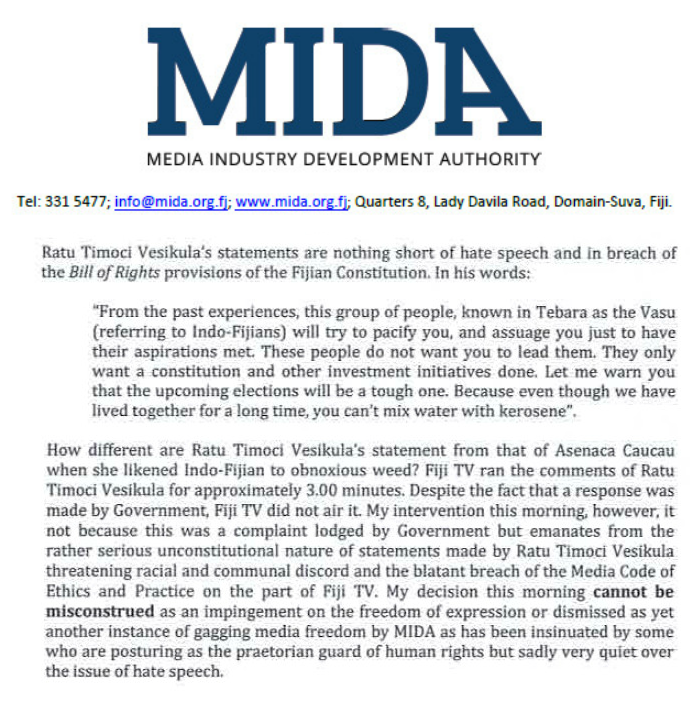
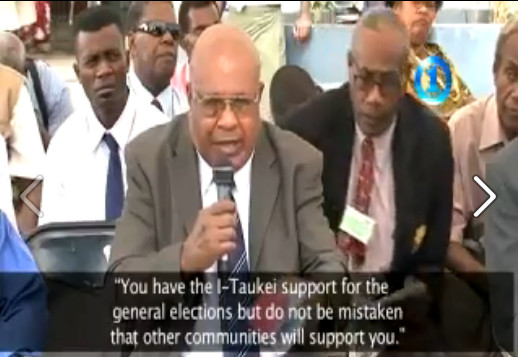
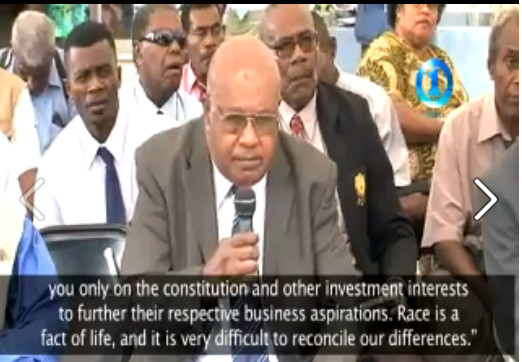
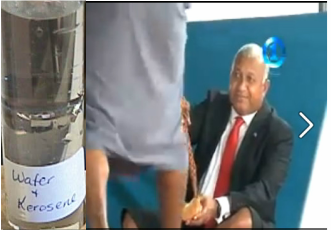
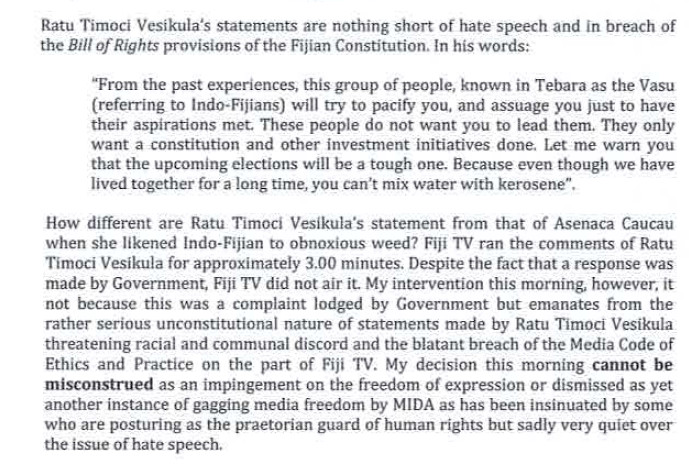
This is the third part of an article which began with the MIDA incident, premised on the allegation that Vesikula’s “kerosene and water don’t mix” statement was an expression of racism or “hate speech” against Indo-Fijians.
[Part I of the article pointed out that raising concerns about indigenous people lagging behind systematically, such as in education and commerce, and calling for Affirmative Action was not racism. Part II of the earlier article focused on the mutual prejudices or racism of Indo-Fijians and Fijians.]
This article, drawing on my own personal experience over the years, focuses on the many internal racisms, which might equally be described by Vesikula’s metaphor “kerosene does not mix with water” and his statement “race is a fact of life”.
I suggest, that on the contrary, both are being eroded as Fiji moves towards a multi-racial society, pushed along by the young folk especially, and the forces of globalization.
I conclude by suggesting that Fiji’s political leaders can either destructively perceive our multicultural diversity as “forces that divide us” (as our political dinosaurs have in the past), or they can constructively use the diversity as a wonderful asset that can enrich our lives, both spiritually and materially (as in the tourism industry).
I first cast stones in my own family glass house, which not only illustrates the racism of Gujarati against Hindustani (i.e. “non-Gujarati Indo-Fijians”), but also the great progress made within just one generation, of racial barriers breaking down, holding much hope for Fiji’s future.
Gujarati racism: a personal journey
Gujarati are the descendants of an exclusive group of Indians from Gujarat, who migrated freely to Fiji, in contrast to most other Indians who came as indentured laborers for the colonial sugar industry.
Parental attitudes to inter-ethnic marriages are an interesting barometer of racial prejudices and how they have changed in just thirty years.
Gujarati children, especially girls, were discouraged from marrying Hindustani, with the occasional elopements scandalizing the Gujarati society.
My dhobi community (originally laundry people) are but one of the many “castes” within Gujarati who previously did not intermarry – i.e. not even with other Gujarati groups like the sonars, kshatriyas, darjis, patels, mochis, etc.
Forty years ago, my parents were very happy when one of my sisters (No.2 out of 4) married another Gujarati boy from our own dhobi community.
But my Hindu parents expressed strong opposition to my marrying a Chinese girl. While they may have had the usual Indian prejudices (“don’t Chinese eat beef, cats, and dogs”?) their plea to me was: “Who will marry your sisters if you marry a Chinese girl?” So this marriage was postponed, eventually for a decade.
Then Sister No. 1 caused great parental alarm by insisting on marrying a Hindustani boy from a Labasa cane farming family, a bright USP graduate, who would later achieve academic and constitutional fame.
My parents reluctantly agreed, but the marriage conveniently took place in Vancouver where the groom was studying for his Masters Degree (and my older brother was available to fill in on my parents behalf).
But very soon after, when Sister No.3 decided to marry a Canadian Punjabi, my parents’ attitudes had changed enough to host this wedding in Fiji, with the full Gujarati rituals and celebrations, stoically putting up with the expected snide remarks from their community.
Yet another barrier was broken when my parents did not object to Sister No. 4 marrying a British/Australian kaivalagi fellow student at Cambridge, with the wedding taking place in Canada.
My two brothers obligingly married two Gujarati girls from India, the weddings occurring in Fiji with the usual grand expensive Gujarati celebrations.
Eventually, with my sisters “out of the way”, my parents also agreed to my marrying my Chinese lady, conveniently and very cheaply for them, occurring in a British registry office (thereby also denying my dhobi community an early taste of the Chinese feasts they appreciate so much today). My parents got along fine with their Chinese daughter-in-law, and my mother began adding soya sauce to some of her recipes.
But an indicator of the positive future of multiracialism in my own family, was that my parents adored all the grandchildren and great grandchildren who came along, whatever their Gujarati, Hindustani, Punjabi, Chinese, white Australian, Jewish, German components. The extended mataqali of all the families associated with my wife and I are even more international in character, all happening in one generation.
My children have had the good fortune to grown up in a lovely rich environment of doting Chinese and Gujarati grandmothers, uncles and aunts. With double-barreled Indian and Chinese names, they are ready for the new world order, dominated by China and/or India.
I am comfortable with multiculturalism because I grew up in multi-racial Toorak, attended the then multi-racial schools like Marist Primary and Marist Secondary, had many multiracial friends amongst USP colleagues and students, YWCA and Fiji Civil service, my university studies in NZ, Jamaica, and UK, and my extended mataqali coming with the families of my wife, and hers and my siblings.
I point out that similar multicultural environments are being replicated through most schools and workplaces in Fiji which are now becoming racially integrated, despite lingering pockets of racial concentration (Indian College is now 80% Fijian).
There are dozens of Gujarati families in Fiji who have made the same transition as mine, over the last few decades. More and more Gujarati families are accepting non-Gujarati marriage partners for their children. Some of these marriages work, and some don’t, just like any other marriage.
Of course, Gujarati racism against Hindustani has not disappeared: Gujarati still privately look down on the Hindustani and call them “kakka” (not to be confused with kaaka or uncle).
Hindustani racism against Gujarati
But there is also reverse Hindustani racism against Gujarati, once again rearing its ugly head on anonymous blogs.
Fiji Hindustani have contemptuously referred to Gujarati as “Bombaiya khitchdri“, a soft rice and dhal dish that is a favorite of the allegedly cowardly (“soft”) Gujaratis.
To growth up in Toorak, a Gujararati “Bombaiya Khitchdri) boy had to be prepared to fight back against bullying by Hindustani (and other) boys not just in the protection of one’s dignity, but the more valuable footballs, kites, tops, marbles, and pocket money which used to be easy targets for the bullies of the time. A Gujarati mother used to be quite fed up with her son frequently coming home with blood on his face.
Fiji’s Hindustani politicians have long played the “race card” against Gujarati, usually alleging that the Fijian political parties were being supported by prominent Gujarati business houses (Punjas, Patels, Tappoos, etc.) and who allegedly also made their fortunes by commercially exploiting the descendants of the girmitiya (the original indentured laborers) in the cane belt.
These allegations conveniently ignored that the majority of Gujarati immigrants, including the current business giants, originally came to Fiji as poor service people who were laborers in all but name: small traders, barbers, tailors, shoe makers, and laundry people (like my parent’s dhobi community).
The descendants of the original Gujarati (and certainly the children of the dhobi) have grown up with the same kinds of opportunities and tough times, as have the descendants of the girmitiya and they also diversified from their original “caste” work, as have the descendants of the girmitiya.
The Gujarati have done extremely well in Fiji as a group, not because of any affirmative action by the colonial government or banks, but due to their work ethic, commercial acumen, and frugality (which latter trait, so useful for capitalist accumulation is contemptuously labeled by the Hindustani as kanjoosai (being miserly with money or mamaagi).
Some of the Hindustani racism against Gujarati is no doubt a reverse reaction against the exclusivity of the Gujarati community, while some is probably driven by sheer envy of a successful minority group, who are successful everywhere in the world (like the Jews).
But urban Fiji stands out among the other Pacific Island countries because of the quality products, services, corporations and business complexes built by many Gujarati families- such as Punjas, Motibhais, Kasabias, the numerous Patels, Jacks, Tappoos, Damodars, Narseys (no relation) and many others. But the majority of Gujarati today are NOT businessmen.
Of course, a few Gujarati tycoons have exercised significant political influence (some very unethically indeed for their own business interests) on ALL Prime Ministers, whether Ratu Mara, Rabuka, Chaudhry, Qarase or Bainimarama.
But so also have the business tycoons of all other races- North Indians, South Indians, white, kailoma, Chinese or even a few indigenous Fijians, as indicated by prominent business names in Fiji: Hedstroms, Stinson, Cupit, Lee, Seeto, Maharaj, Prasad, Narayan, Reddy, Weleilakeba, to mention just a few.
While racism against Gujarati business interests is obvious today from the anonymous posts on blogs, not so the Hindustani racism against Gujarati that has crept into academia and affected me personally.
Making Gujarati economists invisible
It amazes me that so many Hindustani academics, writers and historians have succeeded in making prominent Gujarati economists invisible in their writings on Fiji and Fiji’s Indo-Fijians. The problem may have started with my brief three year stint in politics.
From 1996 to 1999, I was a National Federation Party (NFP) representative and Shadow Finance Minister in the Fiji Parliament, where on common issues, I used to co-operate with all parties, including the Fiji Labour Party and SVT. So it was a total shock to me in the 1999 Elections, when a few FLP candidates (including some former USP colleagues, friends and even my former students), merely to obtain Hindustani votes, callously labeled me as a “Gujarati anti-worker economist in the pockets of Gujarati businessmen”. Many Indo-Fijian voters believed these spurious allegations and not only lost me votes, but also many golfing friends throughout Fiji.
This labeling was grossly unfair. I had been a founding member of the Fiji Labour Party in 1985. I had consistently supported workers and farmers interests in my academic work over the decades, continuing through to current times with my support of Father Kevin Barr’s efforts in the Wages Councils through my Just Wages study. Ironically, many Gujarati employers even saw me as a “traitor” to “the Gujarati community” (of which I have never been exclusively part of).
The 2004 celebration of the 125th anniversary of the arrival of the first girmitiyas saw the creation of a special website focused on the indenture/girmitiya experience, launched with the hope that it would be, according to the Chief Guest, a “useful source of information on the history of Indo-Fijians in Fiji”. (http://www.fijigirmit.org/articles.htm).
The website did have many useful more recent writings about the girmitiya experience and the sugar industry. But it totally omitted any reference to one of the earliest articles commemorating the centenary of the arrival of indentured laborers in Fiji (Wadan Narsey “Monopoly Capital, White Racism and Super‑profits in Fiji: a Case Study of the Colonial Sugar Refining Company”, Journal of Pacific Studies, Vol.5, 1979. pp. 66‑146).
I initially thought that exclusion of references to my writing was due to my brief political role as an NFP parliamentarian, but the Fijigirmit website also excluded the writings of another prominent Gujarati economist (Dr Padma Narsey Lal) (my sister), who has been a prolific and solid analyst of the sugar industry in recent years, with major publications. She has also been a senior research colleague to many of Fiji’s Indo-Fijian economists, including those who set up the girmitiya website. She is a pioneering graduate of USP, and through marriage, solidly integrated into her husband’s Hindustani family. But evidently all these were not good enough to get her extensive works on the sugar industry mentioned.
Similar exclusions were obvious in a book launched for the 125th anniversary of the arrival of the girmitiya in Fiji: “Children of the Indus, 1879-2004: a history of Indians in Fiji portraying the struggles of an immigrant community for justice, equality and acceptance“. This book, like the several others that have been published since, also make no references to the writings of the two Gujarati economists.
[I thank another website (and editor Ms Vanita Nair) on the girmitiya http://girmitunited.org/index.html) which readily published my writings on the girmitiya and the sugar industry when they were made aware.]
It is sad that the quite legitimate acknowledgement of the great girmitiya contribution to the development of Fiji, is also used to deliberately exclude, for political or other reasons, the valuable contributions to Fiji by the Gujarati and their descendants, whether academics, professionals, businessmen or ordinary responsible citizens.
It will be interesting to see whether some former FLP stalwarts who are currently in the Bainimarama camp, will continue their anti-Gujarati speeches in their campaigns, given not just Bainimarama’s friendship with prominent Gujarati business interests, but also the public statements by the MIDA Chairman against “hate speech” of any kind against any ethnic community. The irony is that we continue our friendships and our developmental work in Fiji, regardless of our ideological or ethnic differences.
North Indians and South Indians
Another largely ignored internal Indo-Fijian racism is that by North Indians against South Indians (called “Madraasis” in Fiji), also exhibited in discouragement of marriages across this divide.
I very belatedly noticed the resurgence of South Indian identity when I became part of the “Tata Golf Club” with their greetings of “namaskaaram” (not the usual “Ram Ram“) and in which a Gujarati golfer was renamed “Wardana Narsaiya”.
Some of my South Indian friends engaged in heated discourses about North Indian cultural imperialism against South Indians in India and Fiji, one dear departed friend even going back to India to trace his South Indian roots.
I also became aware that some inverted the famous Rama and Sita mythology in Hinduism, in which the “good” northern Hindu God, Rama battles the evil rakshas king Ravan from southern India (Lanka). In the inverted South Indian version, Ravan becomes the “Good Guy” battling the northern Aryan invaders.
The resurgence of the South Indian identity also took root amongst USP South Indian academics, some of whom took prominent roles in South Indian organizations, such as the various Sangams which ran schools and cultural events.
While the North Indians at USP joked about the USP “Madraasi mafia” and “khatta paani” (the sour tamarind taste loved by South Indians), the South Indian gatherings made equally contemptuous references to the North Indian “kurvi“.
For the older generations, the North Indian prejudices against South Indians continue in full force, despite the respect for South Indian fire walking, and their unique curries.
Thankfully, the young North Indians and South Indians, could not care less about this divide.
Castes, Color, Muslims, and Hindu Sects
Then there are the historical complexities and continuing pervasive racism by the Indo-Fijian upper castes (Brahmins) against the lower castes, expressing itself in all kinds of exclusiveness, including marriage and religious barriers (all too complex to treat here).
Thankfully, these “caste” distinctions are also becoming less important to the younger Indo-Fijians, although they prevail in many families.
Also continuing strongly today is the pervasive racism by light skinned Indo-Fijians against dark-skinned Indo-Fijians, very visible in the dominance of Bollywood images by fair Indians who could be virtually Caucasians. I addressed this topic in a 2002 article:
https://narseyonfiji.wordpress.com/2012/03/28/fair-and-foul-the-racist-skin-whitening-ads-the-fiji-times-19-march-2002/
At a religious level, there is a huge gulf between the supporters of Sanatan Dharam and the Arya Samaj (the main Hindu sects) who have done great service to Fiji and students of all racese through the quality schools they manage. Ironically, the leading lights of both sects have been prominent Bainimarama supporters.
A sad development since 2006 is the worsening of the gulf between Muslims and Hindus (and indigenous Fijians), largely contributed by extraordinary “in-your-face” media presence of one Bainimarama supporter. Of course, there are Muslims beating a path to the Regime’s door with money-making schemes, just as businessmen of all other races are also doing. Of course, there are a number of prominent Muslim appointments being made to high places, some good, some weak.
Yet for every prominent Muslim being appointed, there are three times as many Hindus or ten times as many Christian Fijians, also being appointed by the Bainimarama Regime without any comment from the diehard Regime critics. Just as there always were appointments of “friends and colleagues”, some good and some weak, in the days of other Prime Ministers like Ratu Mara, Rabuka, Chaudhry and Qarase.
It is a tragedy that many anonymous cowardly bloggers are inciting anti-Muslim sentiments with outrageous claims that the “Taliban are taking over Fiji” when the ordinary Muslims have no particular role in the Bainimarama coup as Muslims. I remind that there will be no winners from strife caused by religious bigotry.
It is unfortunate also that all our coups have encouraged other religious divides. The Methodists supported the coups in 1987 and 2000, while the Catholics, Sanatan Dharam, Arya Pratinidhi, and the Islamic organizations, by association of their leaders, are perceived to have supported Bainimarama’s coup.
In the last few years, the Bainimarama Regime has come down quite unfairly on the Methodists, while the other religious organizations have looked on with indifference (and some with vengeful delight). But two “wrongs” will never make a right. The failure of our religious organizations to take the opportunities to end the cycles of religious intolerance is quite sad.(https://narseyonfiji.wordpress.com/2012/03/18/ending-the-cycles-of-religious-intolerance-pacific-scoop-aut-3-september-2011/).
There are many PhDs waiting to be written about the changing nature of the religious divides in Fiji.
What of the kaivalagi and kailoma?
There has been more than enough written about the historical racism against both Fijians and Indo-Fijians by Fiji’s kaivalagi (mixed white and Fijian parentage) and kailoma (whites), many of whom for decades after independence in 1970, were still hankering for the “good old days when the natives knew their place in the world”.
One only has to read The Fiji Times in the Len Usher era when the colonial whites under the guise of “noble defenders of Fijian paramountcy”, used to freely rant against Indo-Fijians, effectively dividing and ruling both.
But the kailoma, often derogatively referred to as “half-castes”, also faced discrimination from kaivalagi and Indo-Fijians. Even the Fijian term vasu, while used by kailoma as implying a complimentary “special” relationship with the indigenous Fijians, can also be seen as derogatory (according to one doubtful interpretation of the word in Vesikula’s statement).
So what explains the quite widespread support of Bainimarama by prominent kaivalagi and kailoma (the Thompsons are not unique)?
I suspect that one factor is that many old colonial kaivalagi and kailoma have been quite resentful of being marginalized during the Rabuka and Qarase eras by the Fijian ethno-nationalists, with their services not being called upon as they were for the previous decades.
Many kaivalagi and kailoma, like many Indo-Fijians, support Bainimarama precisely because they feel that the Bainimarama Regime willingly accepts their services which they offer Fiji, although part of his strategy may well be to have some white faces (citizens or non-citizens) fronting up to the world media.
Internal Fijian “isms”?
With all the above discussions of internal Indo-Fijian racisms, it is natural to ask: what about the internal Fijian racisms? I offer the following brief comments on a subject deserving a real expert.
We all know that there is the yawning gap between Fijian chiefs and commoners, and the strong limitations that the commoners feel in the presence of chiefs, even if they are being materially disadvantaged by chiefly decisions (cf the Monosavu landowners’ claims).
Fijian commoners of merit have long silently faced discrimination with the appointment of chiefs (men and women) over them, whether in the Fiji Military Forces or civil service.
We are all aware of the social pressures that children of chiefs face in their marriage choices, some ending in much pain for individuals.
It is generally perceived that fairer Eastern Fijians (with their traces of Tongan blood) have looked down on the generally darker hill tribes, who were the last fiercely independent Fijians to be conquered by the British colonials with the assistance of Eastern Fijians- hence the contemptuous term “kai colo” (uncivilized).
Another aspect of this “racism” is that the written history of early Fiji and Fijians is largely a history written from the point of view of Eastern Fijians, not of the western Fijians or the hill tribes, while historical icons of the Fijians in the interior (like the Nacule fort) are largely ignored by successive governments dominated by Eastern Fijians, while the first government headed by a western Fijian (Dr Bavadra) was quickly removed in the 1987 coup.
One of Fiji’s historians used to claim that the current history of Fijian politics is exactly the same as pre-Cession, as if the British colonial era had never been. Some have even claimed that once the Indo-Fijians are gone, the Fijians will be “at each other again” as they were in pre-Cession Fiji.
But I suggest to serious researchers that this can be serious challenged by solid totally original data from the 2007 Census, which sadly have still not been fully published and pertinent results fully discussed. One of the very new datasets (resulting from questions not asked in previous Censuses) is not just the current location of Fijians, but their origins elsewhere in Fiji. This will indicate the extent to which different Fijian tribes have inter-married and relocated within Fiji, I believe, significantly diluting the old tribal tensions which in my opinion, are not going to be as strong as before.
An external expression of Fijian racism (or “prejudices”, according to one of my critics) could be seen in regional politics with most Fijian leaders post Independence, having a proclivity towards the Eastern Polynesian countries, while having a clear sense of superiority to the less-developed Melanesian countries and people.
It is only recently that the Melanesian Spearhead grouping has assumed greater political importance to Fiji bringing Fijians closer to Melanesians, partly because of the MSG countries’ unqualified support for the Bainimarama Regime, but also because of the solid material incentives emanating from the new-found minerals and LNG wealth in PNG, and PNG’s central role in today’s Super Power Rivalry in the Pacific,
https://narseyonfiji.wordpress.com/2012/04/27/pacific-tilting-west-to-png/
Lessons for future leaders: using diversity to unite rather than divide
Our people, and Fiji’s political and social leaders, continue to face the enormous challenge of breaking down the all pervasive racial compartments, stereotypes, and prejudices, that have plagued us for decades, and build a genuine united nation.
It would help if we did not sweep expressions of our ethnic and cultural difference under the carpet or into shadowy corners.
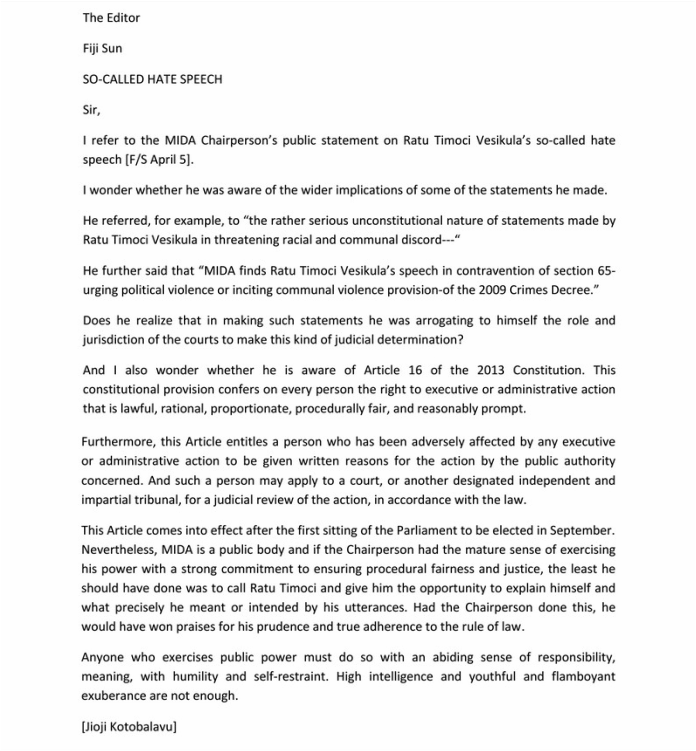
It would help if the media were not prevented from reporting such dissonance, by a pugnacious MIDA Chairman.
It would help if there was a cleansing national acknowledgement by our leaders, of ALL the racial prejudices within ALL our ethnic communities, and not just a targeted few.
It would help if we continued to strengthen the trend towards the greater appreciation of each others’ cultures and religions. This is clearly happening to a greater extent with national celebrations of Christmas, Easter, Eid, Ram Naumi, Holi, Deepawali, and other rich cultural events.
One may disagree with Bainimarama’s strategy of trying to create a national identity and unity by decreeing that everyone should be called “Fijians”.
But all indigenous Fijian leaders could learn from the wily Bainimarama that continuously telling Indo-Fijians, kaivalagi and kailomas that the State is going to treat them as equal to the indigenous Fijians, is likely to get their votes.
Of course, this does not preclude Fijian political leaders from also calling for affirmative action for indigenous Fijians where they systematically lag behind others, such as in education and commerce, and nothing precludes the State form legitimately implementing such affirmative actions.
Note also that Bainimarama has not actually ensured even a semblance of racial equality in numbers of Indo-Fijian Ministers in his Cabinet, or numbers of senior civil servants or the Fiji Military Forces (or gender balance).
It is unfortunate that Fiji has also not explored fully how we can gain economically from our rich cultural diversity. For instance, our tourism industry still does not project the many Indo-Fijian cultures and cuisines that our tourists might like to pay to be exposed to, as suggested in this 2004 article here:https://narseyonfiji.wordpress.com/2012/03/28/why-no-indo-fijians-in-the-tourism-imagefiji-times-26-september-2004/
Most major communities in Fiji do not fully appreciate the wonderful contributions that kailoma have made to the history of Fiji, the music, the food, the bridge between indigenous Fijians and kaivalagi. There are also other interesting cultures in Fiji such as Rotuman, Banaban, and increasingly, Tuvaluan, Kiribati and Nauruan, which could all be given greater national prominence, just as the minority Chinese are quite prominent now.
One of these days, some Fiji government will put their money behind their frequent but generally empty rhetoric of wanting to preserve and strengthen Fijian culture, by ensuring that there are national venues and events which bring out the great diversity of indigenous Fijian cultures- such as mekes, songs, and dialects. (Note that the foremost authority on Fijian language and culture continues to be a non-indigenous Fijian, Dr Paul Geraghty, who occasionally suffers resentment from some Fijians, precisely because of that fact).
Political leaders have a choice. They can keep emphasizing our multi-cultural diversity as a divisive force with “kerosene won’t mix with water” speeches; or they can build a rich nation with our multi-cultural diversity as a unique asset.
Politicians could do worse than emulate one of Fiji’s foremost Fijian musicians, Saimone Vuatalevu, who not only has popularized Indian songs among Fijians, but also composed wonderful music that tries to unite our people, such as the lead song in his newly released album “Healthy Multicultural Fiji”
Source:
https://narseyonfiji.wordpress.com/2014/04/11/kerosene-and-water-mixing-slowly-the-internal-racisms-a-personal-view-part-iii-11-april-2014/
By Wadan Narsey
A Personal View
“You hypocrite! First remove the beam from your own eye, and then you will see clearly enough to remove the speck from your brother’s eye.” (Mathew 7:5)
This is the third part of an article which began with the MIDA incident, premised on the allegation that Vesikula’s “kerosene and water don’t mix” statement was an expression of racism or “hate speech” against Indo-Fijians.
[Part I of the article pointed out that raising concerns about indigenous people lagging behind systematically, such as in education and commerce, and calling for Affirmative Action was not racism. Part II of the earlier article focused on the mutual prejudices or racism of Indo-Fijians and Fijians.]
This article, drawing on my own personal experience over the years, focuses on the many internal racisms, which might equally be described by Vesikula’s metaphor “kerosene does not mix with water” and his statement “race is a fact of life”.
I suggest, that on the contrary, both are being eroded as Fiji moves towards a multi-racial society, pushed along by the young folk especially, and the forces of globalization.
I conclude by suggesting that Fiji’s political leaders can either destructively perceive our multicultural diversity as “forces that divide us” (as our political dinosaurs have in the past), or they can constructively use the diversity as a wonderful asset that can enrich our lives, both spiritually and materially (as in the tourism industry).
I first cast stones in my own family glass house, which not only illustrates the racism of Gujarati against Hindustani (i.e. “non-Gujarati Indo-Fijians”), but also the great progress made within just one generation, of racial barriers breaking down, holding much hope for Fiji’s future.
Gujarati racism: a personal journey
Gujarati are the descendants of an exclusive group of Indians from Gujarat, who migrated freely to Fiji, in contrast to most other Indians who came as indentured laborers for the colonial sugar industry.
Parental attitudes to inter-ethnic marriages are an interesting barometer of racial prejudices and how they have changed in just thirty years.
Gujarati children, especially girls, were discouraged from marrying Hindustani, with the occasional elopements scandalizing the Gujarati society.
My dhobi community (originally laundry people) are but one of the many “castes” within Gujarati who previously did not intermarry – i.e. not even with other Gujarati groups like the sonars, kshatriyas, darjis, patels, mochis, etc.
Forty years ago, my parents were very happy when one of my sisters (No.2 out of 4) married another Gujarati boy from our own dhobi community.
But my Hindu parents expressed strong opposition to my marrying a Chinese girl. While they may have had the usual Indian prejudices (“don’t Chinese eat beef, cats, and dogs”?) their plea to me was: “Who will marry your sisters if you marry a Chinese girl?” So this marriage was postponed, eventually for a decade.
Then Sister No. 1 caused great parental alarm by insisting on marrying a Hindustani boy from a Labasa cane farming family, a bright USP graduate, who would later achieve academic and constitutional fame.
My parents reluctantly agreed, but the marriage conveniently took place in Vancouver where the groom was studying for his Masters Degree (and my older brother was available to fill in on my parents behalf).
But very soon after, when Sister No.3 decided to marry a Canadian Punjabi, my parents’ attitudes had changed enough to host this wedding in Fiji, with the full Gujarati rituals and celebrations, stoically putting up with the expected snide remarks from their community.
Yet another barrier was broken when my parents did not object to Sister No. 4 marrying a British/Australian kaivalagi fellow student at Cambridge, with the wedding taking place in Canada.
My two brothers obligingly married two Gujarati girls from India, the weddings occurring in Fiji with the usual grand expensive Gujarati celebrations.
Eventually, with my sisters “out of the way”, my parents also agreed to my marrying my Chinese lady, conveniently and very cheaply for them, occurring in a British registry office (thereby also denying my dhobi community an early taste of the Chinese feasts they appreciate so much today). My parents got along fine with their Chinese daughter-in-law, and my mother began adding soya sauce to some of her recipes.
But an indicator of the positive future of multiracialism in my own family, was that my parents adored all the grandchildren and great grandchildren who came along, whatever their Gujarati, Hindustani, Punjabi, Chinese, white Australian, Jewish, German components. The extended mataqali of all the families associated with my wife and I are even more international in character, all happening in one generation.
My children have had the good fortune to grown up in a lovely rich environment of doting Chinese and Gujarati grandmothers, uncles and aunts. With double-barreled Indian and Chinese names, they are ready for the new world order, dominated by China and/or India.
I am comfortable with multiculturalism because I grew up in multi-racial Toorak, attended the then multi-racial schools like Marist Primary and Marist Secondary, had many multiracial friends amongst USP colleagues and students, YWCA and Fiji Civil service, my university studies in NZ, Jamaica, and UK, and my extended mataqali coming with the families of my wife, and hers and my siblings.
I point out that similar multicultural environments are being replicated through most schools and workplaces in Fiji which are now becoming racially integrated, despite lingering pockets of racial concentration (Indian College is now 80% Fijian).
There are dozens of Gujarati families in Fiji who have made the same transition as mine, over the last few decades. More and more Gujarati families are accepting non-Gujarati marriage partners for their children. Some of these marriages work, and some don’t, just like any other marriage.
Of course, Gujarati racism against Hindustani has not disappeared: Gujarati still privately look down on the Hindustani and call them “kakka” (not to be confused with kaaka or uncle).
Hindustani racism against Gujarati
But there is also reverse Hindustani racism against Gujarati, once again rearing its ugly head on anonymous blogs.
Fiji Hindustani have contemptuously referred to Gujarati as “Bombaiya khitchdri“, a soft rice and dhal dish that is a favorite of the allegedly cowardly (“soft”) Gujaratis.
To growth up in Toorak, a Gujararati “Bombaiya Khitchdri) boy had to be prepared to fight back against bullying by Hindustani (and other) boys not just in the protection of one’s dignity, but the more valuable footballs, kites, tops, marbles, and pocket money which used to be easy targets for the bullies of the time. A Gujarati mother used to be quite fed up with her son frequently coming home with blood on his face.
Fiji’s Hindustani politicians have long played the “race card” against Gujarati, usually alleging that the Fijian political parties were being supported by prominent Gujarati business houses (Punjas, Patels, Tappoos, etc.) and who allegedly also made their fortunes by commercially exploiting the descendants of the girmitiya (the original indentured laborers) in the cane belt.
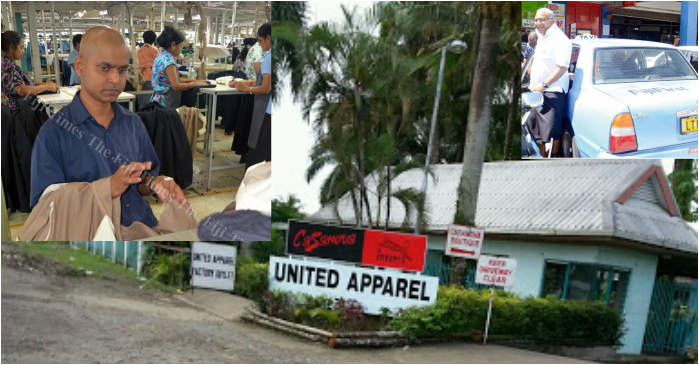
These allegations conveniently ignored that the majority of Gujarati immigrants, including the current business giants, originally came to Fiji as poor service people who were laborers in all but name: small traders, barbers, tailors, shoe makers, and laundry people (like my parent’s dhobi community).
The descendants of the original Gujarati (and certainly the children of the dhobi) have grown up with the same kinds of opportunities and tough times, as have the descendants of the girmitiya and they also diversified from their original “caste” work, as have the descendants of the girmitiya.
The Gujarati have done extremely well in Fiji as a group, not because of any affirmative action by the colonial government or banks, but due to their work ethic, commercial acumen, and frugality (which latter trait, so useful for capitalist accumulation is contemptuously labeled by the Hindustani as kanjoosai (being miserly with money or mamaagi).
Some of the Hindustani racism against Gujarati is no doubt a reverse reaction against the exclusivity of the Gujarati community, while some is probably driven by sheer envy of a successful minority group, who are successful everywhere in the world (like the Jews).
But urban Fiji stands out among the other Pacific Island countries because of the quality products, services, corporations and business complexes built by many Gujarati families- such as Punjas, Motibhais, Kasabias, the numerous Patels, Jacks, Tappoos, Damodars, Narseys (no relation) and many others. But the majority of Gujarati today are NOT businessmen.
Of course, a few Gujarati tycoons have exercised significant political influence (some very unethically indeed for their own business interests) on ALL Prime Ministers, whether Ratu Mara, Rabuka, Chaudhry, Qarase or Bainimarama.
But so also have the business tycoons of all other races- North Indians, South Indians, white, kailoma, Chinese or even a few indigenous Fijians, as indicated by prominent business names in Fiji: Hedstroms, Stinson, Cupit, Lee, Seeto, Maharaj, Prasad, Narayan, Reddy, Weleilakeba, to mention just a few.
While racism against Gujarati business interests is obvious today from the anonymous posts on blogs, not so the Hindustani racism against Gujarati that has crept into academia and affected me personally.
Making Gujarati economists invisible
It amazes me that so many Hindustani academics, writers and historians have succeeded in making prominent Gujarati economists invisible in their writings on Fiji and Fiji’s Indo-Fijians. The problem may have started with my brief three year stint in politics.
From 1996 to 1999, I was a National Federation Party (NFP) representative and Shadow Finance Minister in the Fiji Parliament, where on common issues, I used to co-operate with all parties, including the Fiji Labour Party and SVT. So it was a total shock to me in the 1999 Elections, when a few FLP candidates (including some former USP colleagues, friends and even my former students), merely to obtain Hindustani votes, callously labeled me as a “Gujarati anti-worker economist in the pockets of Gujarati businessmen”. Many Indo-Fijian voters believed these spurious allegations and not only lost me votes, but also many golfing friends throughout Fiji.
This labeling was grossly unfair. I had been a founding member of the Fiji Labour Party in 1985. I had consistently supported workers and farmers interests in my academic work over the decades, continuing through to current times with my support of Father Kevin Barr’s efforts in the Wages Councils through my Just Wages study. Ironically, many Gujarati employers even saw me as a “traitor” to “the Gujarati community” (of which I have never been exclusively part of).
The 2004 celebration of the 125th anniversary of the arrival of the first girmitiyas saw the creation of a special website focused on the indenture/girmitiya experience, launched with the hope that it would be, according to the Chief Guest, a “useful source of information on the history of Indo-Fijians in Fiji”. (http://www.fijigirmit.org/articles.htm).
The website did have many useful more recent writings about the girmitiya experience and the sugar industry. But it totally omitted any reference to one of the earliest articles commemorating the centenary of the arrival of indentured laborers in Fiji (Wadan Narsey “Monopoly Capital, White Racism and Super‑profits in Fiji: a Case Study of the Colonial Sugar Refining Company”, Journal of Pacific Studies, Vol.5, 1979. pp. 66‑146).
I initially thought that exclusion of references to my writing was due to my brief political role as an NFP parliamentarian, but the Fijigirmit website also excluded the writings of another prominent Gujarati economist (Dr Padma Narsey Lal) (my sister), who has been a prolific and solid analyst of the sugar industry in recent years, with major publications. She has also been a senior research colleague to many of Fiji’s Indo-Fijian economists, including those who set up the girmitiya website. She is a pioneering graduate of USP, and through marriage, solidly integrated into her husband’s Hindustani family. But evidently all these were not good enough to get her extensive works on the sugar industry mentioned.
Similar exclusions were obvious in a book launched for the 125th anniversary of the arrival of the girmitiya in Fiji: “Children of the Indus, 1879-2004: a history of Indians in Fiji portraying the struggles of an immigrant community for justice, equality and acceptance“. This book, like the several others that have been published since, also make no references to the writings of the two Gujarati economists.
[I thank another website (and editor Ms Vanita Nair) on the girmitiya http://girmitunited.org/index.html) which readily published my writings on the girmitiya and the sugar industry when they were made aware.]
It is sad that the quite legitimate acknowledgement of the great girmitiya contribution to the development of Fiji, is also used to deliberately exclude, for political or other reasons, the valuable contributions to Fiji by the Gujarati and their descendants, whether academics, professionals, businessmen or ordinary responsible citizens.
It will be interesting to see whether some former FLP stalwarts who are currently in the Bainimarama camp, will continue their anti-Gujarati speeches in their campaigns, given not just Bainimarama’s friendship with prominent Gujarati business interests, but also the public statements by the MIDA Chairman against “hate speech” of any kind against any ethnic community. The irony is that we continue our friendships and our developmental work in Fiji, regardless of our ideological or ethnic differences.
North Indians and South Indians
Another largely ignored internal Indo-Fijian racism is that by North Indians against South Indians (called “Madraasis” in Fiji), also exhibited in discouragement of marriages across this divide.
I very belatedly noticed the resurgence of South Indian identity when I became part of the “Tata Golf Club” with their greetings of “namaskaaram” (not the usual “Ram Ram“) and in which a Gujarati golfer was renamed “Wardana Narsaiya”.
Some of my South Indian friends engaged in heated discourses about North Indian cultural imperialism against South Indians in India and Fiji, one dear departed friend even going back to India to trace his South Indian roots.
I also became aware that some inverted the famous Rama and Sita mythology in Hinduism, in which the “good” northern Hindu God, Rama battles the evil rakshas king Ravan from southern India (Lanka). In the inverted South Indian version, Ravan becomes the “Good Guy” battling the northern Aryan invaders.
The resurgence of the South Indian identity also took root amongst USP South Indian academics, some of whom took prominent roles in South Indian organizations, such as the various Sangams which ran schools and cultural events.
While the North Indians at USP joked about the USP “Madraasi mafia” and “khatta paani” (the sour tamarind taste loved by South Indians), the South Indian gatherings made equally contemptuous references to the North Indian “kurvi“.
For the older generations, the North Indian prejudices against South Indians continue in full force, despite the respect for South Indian fire walking, and their unique curries.
Thankfully, the young North Indians and South Indians, could not care less about this divide.
Castes, Color, Muslims, and Hindu Sects
Then there are the historical complexities and continuing pervasive racism by the Indo-Fijian upper castes (Brahmins) against the lower castes, expressing itself in all kinds of exclusiveness, including marriage and religious barriers (all too complex to treat here).
Thankfully, these “caste” distinctions are also becoming less important to the younger Indo-Fijians, although they prevail in many families.
Also continuing strongly today is the pervasive racism by light skinned Indo-Fijians against dark-skinned Indo-Fijians, very visible in the dominance of Bollywood images by fair Indians who could be virtually Caucasians. I addressed this topic in a 2002 article:
https://narseyonfiji.wordpress.com/2012/03/28/fair-and-foul-the-racist-skin-whitening-ads-the-fiji-times-19-march-2002/
At a religious level, there is a huge gulf between the supporters of Sanatan Dharam and the Arya Samaj (the main Hindu sects) who have done great service to Fiji and students of all racese through the quality schools they manage. Ironically, the leading lights of both sects have been prominent Bainimarama supporters.
A sad development since 2006 is the worsening of the gulf between Muslims and Hindus (and indigenous Fijians), largely contributed by extraordinary “in-your-face” media presence of one Bainimarama supporter. Of course, there are Muslims beating a path to the Regime’s door with money-making schemes, just as businessmen of all other races are also doing. Of course, there are a number of prominent Muslim appointments being made to high places, some good, some weak.
Yet for every prominent Muslim being appointed, there are three times as many Hindus or ten times as many Christian Fijians, also being appointed by the Bainimarama Regime without any comment from the diehard Regime critics. Just as there always were appointments of “friends and colleagues”, some good and some weak, in the days of other Prime Ministers like Ratu Mara, Rabuka, Chaudhry and Qarase.
It is a tragedy that many anonymous cowardly bloggers are inciting anti-Muslim sentiments with outrageous claims that the “Taliban are taking over Fiji” when the ordinary Muslims have no particular role in the Bainimarama coup as Muslims. I remind that there will be no winners from strife caused by religious bigotry.
It is unfortunate also that all our coups have encouraged other religious divides. The Methodists supported the coups in 1987 and 2000, while the Catholics, Sanatan Dharam, Arya Pratinidhi, and the Islamic organizations, by association of their leaders, are perceived to have supported Bainimarama’s coup.
In the last few years, the Bainimarama Regime has come down quite unfairly on the Methodists, while the other religious organizations have looked on with indifference (and some with vengeful delight). But two “wrongs” will never make a right. The failure of our religious organizations to take the opportunities to end the cycles of religious intolerance is quite sad.(https://narseyonfiji.wordpress.com/2012/03/18/ending-the-cycles-of-religious-intolerance-pacific-scoop-aut-3-september-2011/).
There are many PhDs waiting to be written about the changing nature of the religious divides in Fiji.
What of the kaivalagi and kailoma?
There has been more than enough written about the historical racism against both Fijians and Indo-Fijians by Fiji’s kaivalagi (mixed white and Fijian parentage) and kailoma (whites), many of whom for decades after independence in 1970, were still hankering for the “good old days when the natives knew their place in the world”.
One only has to read The Fiji Times in the Len Usher era when the colonial whites under the guise of “noble defenders of Fijian paramountcy”, used to freely rant against Indo-Fijians, effectively dividing and ruling both.
But the kailoma, often derogatively referred to as “half-castes”, also faced discrimination from kaivalagi and Indo-Fijians. Even the Fijian term vasu, while used by kailoma as implying a complimentary “special” relationship with the indigenous Fijians, can also be seen as derogatory (according to one doubtful interpretation of the word in Vesikula’s statement).
So what explains the quite widespread support of Bainimarama by prominent kaivalagi and kailoma (the Thompsons are not unique)?
I suspect that one factor is that many old colonial kaivalagi and kailoma have been quite resentful of being marginalized during the Rabuka and Qarase eras by the Fijian ethno-nationalists, with their services not being called upon as they were for the previous decades.
Many kaivalagi and kailoma, like many Indo-Fijians, support Bainimarama precisely because they feel that the Bainimarama Regime willingly accepts their services which they offer Fiji, although part of his strategy may well be to have some white faces (citizens or non-citizens) fronting up to the world media.
Internal Fijian “isms”?
With all the above discussions of internal Indo-Fijian racisms, it is natural to ask: what about the internal Fijian racisms? I offer the following brief comments on a subject deserving a real expert.
We all know that there is the yawning gap between Fijian chiefs and commoners, and the strong limitations that the commoners feel in the presence of chiefs, even if they are being materially disadvantaged by chiefly decisions (cf the Monosavu landowners’ claims).
Fijian commoners of merit have long silently faced discrimination with the appointment of chiefs (men and women) over them, whether in the Fiji Military Forces or civil service.
We are all aware of the social pressures that children of chiefs face in their marriage choices, some ending in much pain for individuals.
It is generally perceived that fairer Eastern Fijians (with their traces of Tongan blood) have looked down on the generally darker hill tribes, who were the last fiercely independent Fijians to be conquered by the British colonials with the assistance of Eastern Fijians- hence the contemptuous term “kai colo” (uncivilized).
Another aspect of this “racism” is that the written history of early Fiji and Fijians is largely a history written from the point of view of Eastern Fijians, not of the western Fijians or the hill tribes, while historical icons of the Fijians in the interior (like the Nacule fort) are largely ignored by successive governments dominated by Eastern Fijians, while the first government headed by a western Fijian (Dr Bavadra) was quickly removed in the 1987 coup.
One of Fiji’s historians used to claim that the current history of Fijian politics is exactly the same as pre-Cession, as if the British colonial era had never been. Some have even claimed that once the Indo-Fijians are gone, the Fijians will be “at each other again” as they were in pre-Cession Fiji.
But I suggest to serious researchers that this can be serious challenged by solid totally original data from the 2007 Census, which sadly have still not been fully published and pertinent results fully discussed. One of the very new datasets (resulting from questions not asked in previous Censuses) is not just the current location of Fijians, but their origins elsewhere in Fiji. This will indicate the extent to which different Fijian tribes have inter-married and relocated within Fiji, I believe, significantly diluting the old tribal tensions which in my opinion, are not going to be as strong as before.
An external expression of Fijian racism (or “prejudices”, according to one of my critics) could be seen in regional politics with most Fijian leaders post Independence, having a proclivity towards the Eastern Polynesian countries, while having a clear sense of superiority to the less-developed Melanesian countries and people.
It is only recently that the Melanesian Spearhead grouping has assumed greater political importance to Fiji bringing Fijians closer to Melanesians, partly because of the MSG countries’ unqualified support for the Bainimarama Regime, but also because of the solid material incentives emanating from the new-found minerals and LNG wealth in PNG, and PNG’s central role in today’s Super Power Rivalry in the Pacific,
https://narseyonfiji.wordpress.com/2012/04/27/pacific-tilting-west-to-png/
Lessons for future leaders: using diversity to unite rather than divide
Our people, and Fiji’s political and social leaders, continue to face the enormous challenge of breaking down the all pervasive racial compartments, stereotypes, and prejudices, that have plagued us for decades, and build a genuine united nation.
It would help if we did not sweep expressions of our ethnic and cultural difference under the carpet or into shadowy corners.
It would help if the media were not prevented from reporting such dissonance, by a pugnacious MIDA Chairman.
It would help if there was a cleansing national acknowledgement by our leaders, of ALL the racial prejudices within ALL our ethnic communities, and not just a targeted few.
It would help if we continued to strengthen the trend towards the greater appreciation of each others’ cultures and religions. This is clearly happening to a greater extent with national celebrations of Christmas, Easter, Eid, Ram Naumi, Holi, Deepawali, and other rich cultural events.
One may disagree with Bainimarama’s strategy of trying to create a national identity and unity by decreeing that everyone should be called “Fijians”.
But all indigenous Fijian leaders could learn from the wily Bainimarama that continuously telling Indo-Fijians, kaivalagi and kailomas that the State is going to treat them as equal to the indigenous Fijians, is likely to get their votes.
Of course, this does not preclude Fijian political leaders from also calling for affirmative action for indigenous Fijians where they systematically lag behind others, such as in education and commerce, and nothing precludes the State form legitimately implementing such affirmative actions.
Note also that Bainimarama has not actually ensured even a semblance of racial equality in numbers of Indo-Fijian Ministers in his Cabinet, or numbers of senior civil servants or the Fiji Military Forces (or gender balance).
It is unfortunate that Fiji has also not explored fully how we can gain economically from our rich cultural diversity. For instance, our tourism industry still does not project the many Indo-Fijian cultures and cuisines that our tourists might like to pay to be exposed to, as suggested in this 2004 article here:https://narseyonfiji.wordpress.com/2012/03/28/why-no-indo-fijians-in-the-tourism-imagefiji-times-26-september-2004/
Most major communities in Fiji do not fully appreciate the wonderful contributions that kailoma have made to the history of Fiji, the music, the food, the bridge between indigenous Fijians and kaivalagi. There are also other interesting cultures in Fiji such as Rotuman, Banaban, and increasingly, Tuvaluan, Kiribati and Nauruan, which could all be given greater national prominence, just as the minority Chinese are quite prominent now.
One of these days, some Fiji government will put their money behind their frequent but generally empty rhetoric of wanting to preserve and strengthen Fijian culture, by ensuring that there are national venues and events which bring out the great diversity of indigenous Fijian cultures- such as mekes, songs, and dialects. (Note that the foremost authority on Fijian language and culture continues to be a non-indigenous Fijian, Dr Paul Geraghty, who occasionally suffers resentment from some Fijians, precisely because of that fact).
Political leaders have a choice. They can keep emphasizing our multi-cultural diversity as a divisive force with “kerosene won’t mix with water” speeches; or they can build a rich nation with our multi-cultural diversity as a unique asset.
Politicians could do worse than emulate one of Fiji’s foremost Fijian musicians, Saimone Vuatalevu, who not only has popularized Indian songs among Fijians, but also composed wonderful music that tries to unite our people, such as the lead song in his newly released album “Healthy Multicultural Fiji”
Source:
https://narseyonfiji.wordpress.com/2014/04/11/kerosene-and-water-mixing-slowly-the-internal-racisms-a-personal-view-part-iii-11-april-2014/