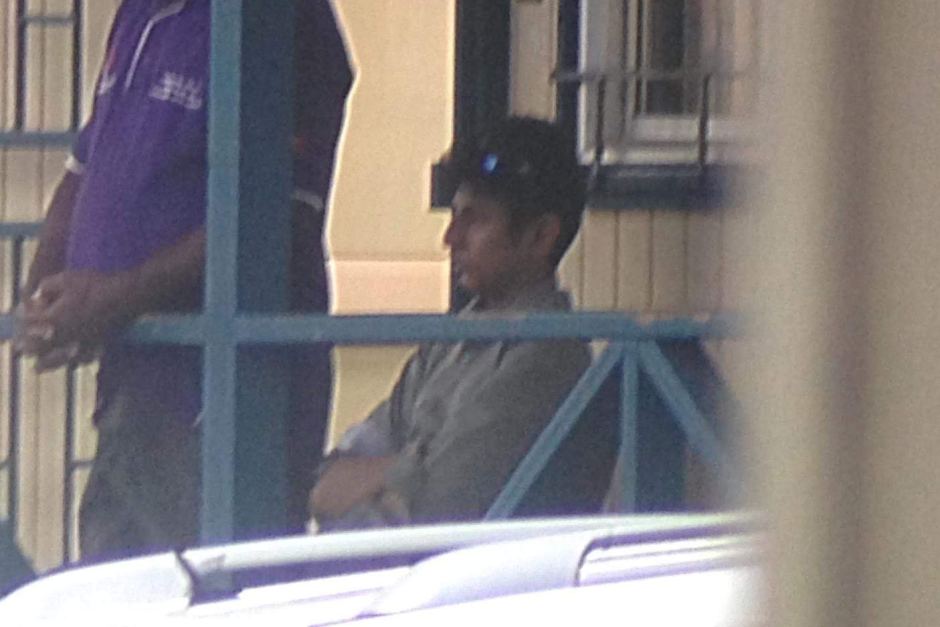
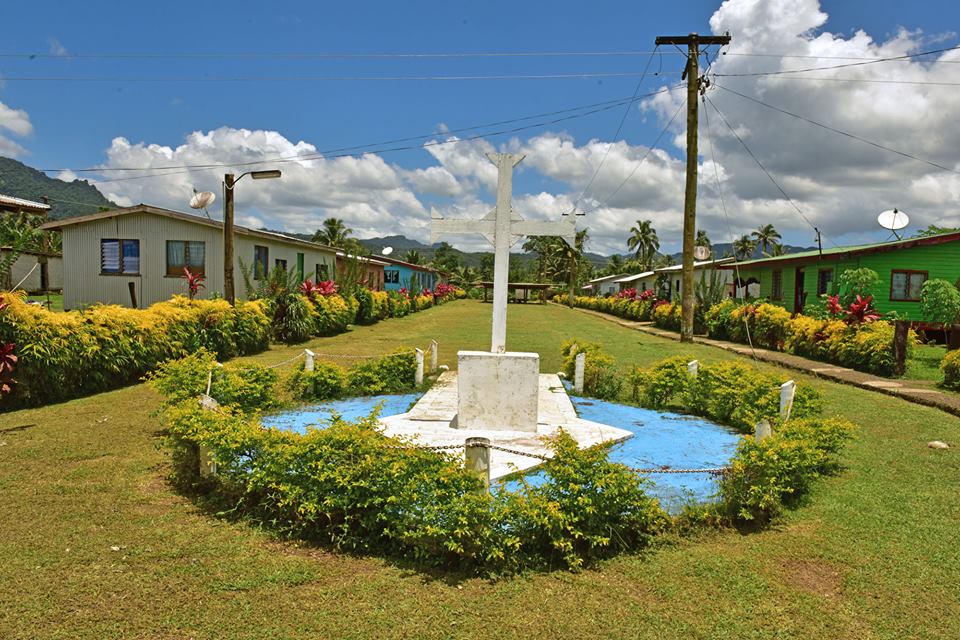
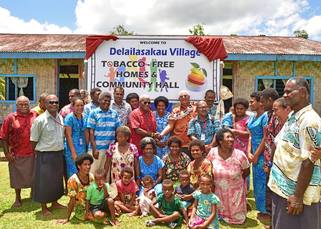
Nawaikula, does this VILLAGE resemble a SQUATTER SETTLEMENT?
 |  |
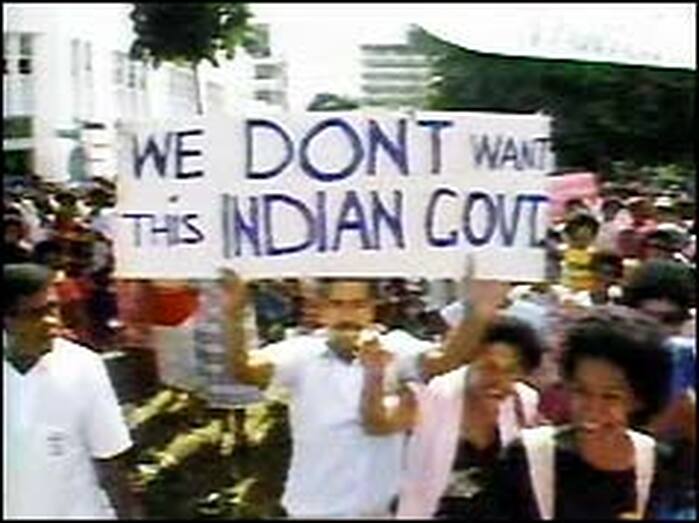
Fijileaks: A raft of regulations were brought in to tighten the regimentation of village life so that Britain could govern Fiji through the "colonial chiefs", effectively making disobedience to chiefs a legal offence. In other words, "Fijians were tied hand and foot by all sorts of enactments". Vakatubuca and Talaidredre were oppressive, prompting one colonial official to call for the Fijians to be "saved from their chiefs". As we have argued previously, Nawaikula's by-laws (and the Government's) will lead to Ridi-bati-ni-tai, or open defiance, by villagers who will desert their villages and head for urban centres. We are sure Niko Nawaikula has heard of "Luveniwai" - what would stop the oppressed villagers from forming secret societies and rebel against enforced authority under the by-laws?
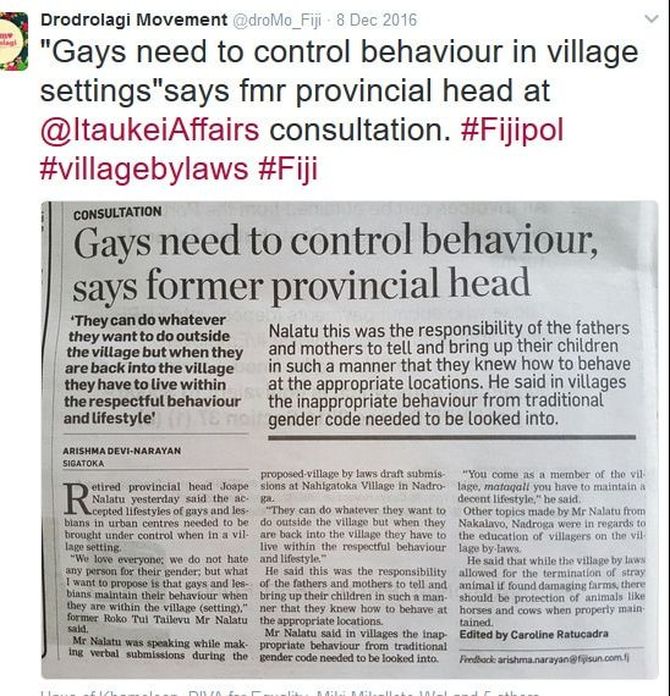
We say with the Reverend William Slade who noted in 1900: "In Fiji, a young man who feels the village boundaries to be too strait for him and has aspirations and ambitions to attain to something beyond the rank of mere hewer of weed or drawer of water, is met at the outset by an inflexible communal system that holds him in relentless grip". We cannot regulate every detail of village life. Also, every village does not have the same identical problem, so we cannot enforce and penalise all the villagers with the same by-laws. Its not an indigenous rights issue. Its about two laws: one for the urban Fijian and other for his/her counterpart in the village. It is discriminatory, pitting Fijian against Fijian.
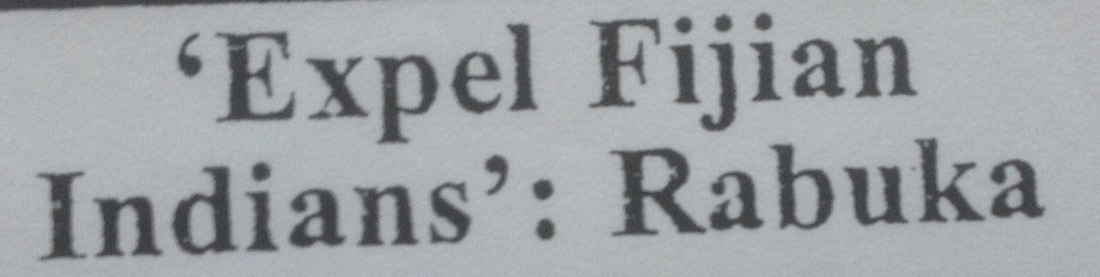
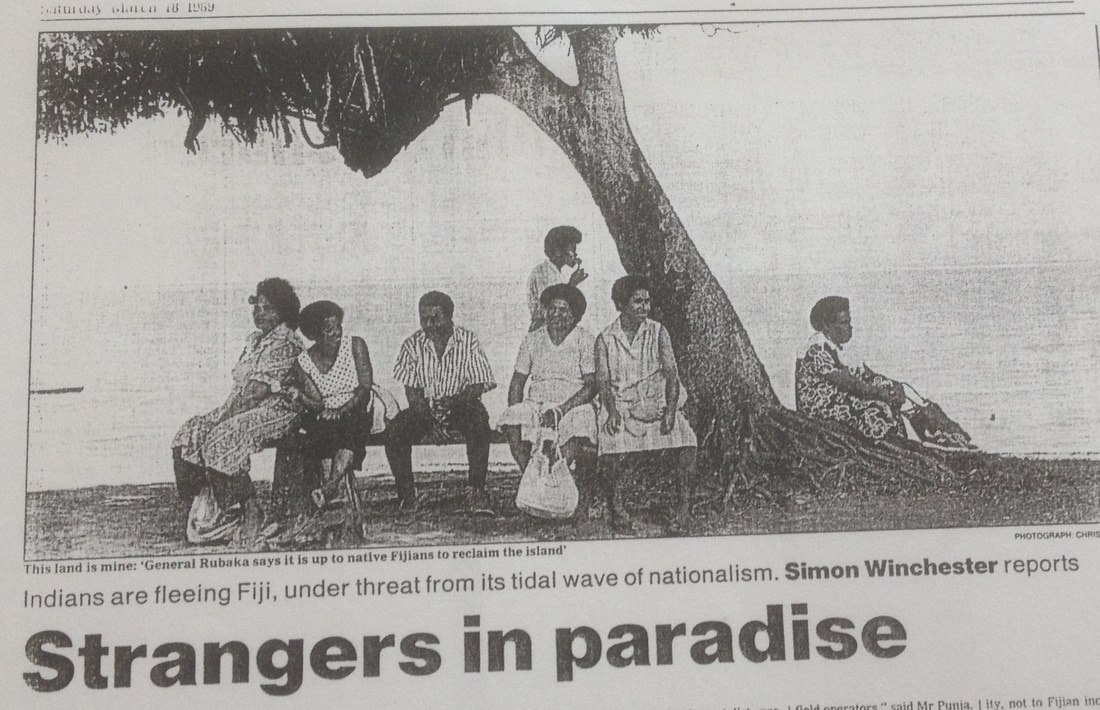
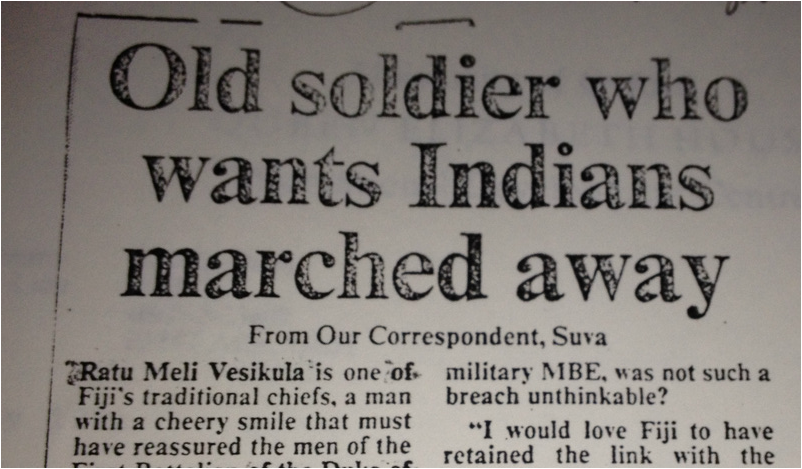
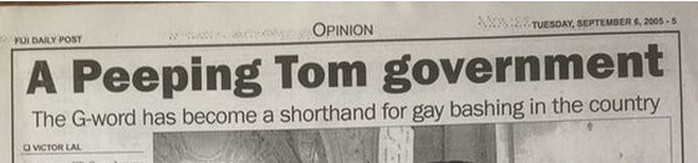
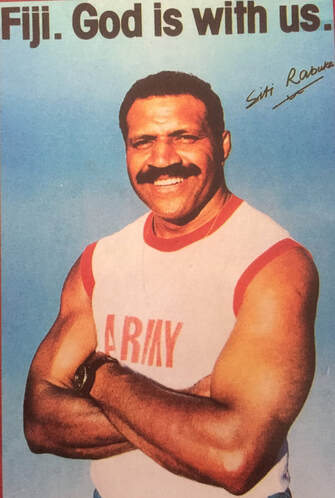
Nawaikula should relocate to his village, clean up his "squatter settlement", and enjoy village life! And take his SODELPA 'political chief' SITIVENI RABUKA with him from Suva
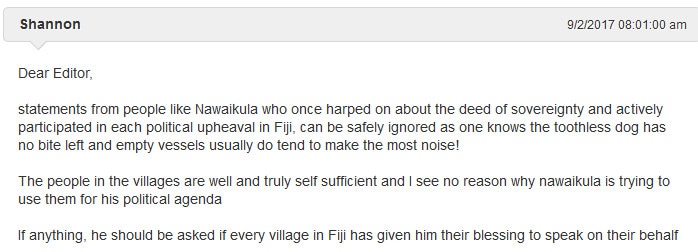
"I know there are people like Shamima Ali who think different. Recently in the media she said “We don’t believe there should be two sets of laws for one people. We have our multi-ethnic community and there is the rule of law and the same laws should apply to everyone. The question is why is the indigenous population being segregated and why is there two sets of laws,” With the greatest respect to Shamima Ali et al, I disagree. Indigenous peoples have a permanent & inalienable right, that is their Human Right, to maintain their separate laws to protect their cultural identity & cultural values."
NIKO NAWAIKULA: I presented the petition against village Bylaws in Parliament today as promised.
I wish to thank all of you that supported the Pettition against the village by laws by signing the petition or organizing & sorry to those that did not arrive in time. We collected about 400 signatures.
Under the new Pettition rules, I was given 20 minutes. The Hon PM replied for 5 minutes in which he alleged 3 times I was a lier. I asked the speaker he withdraw that & he did.
The speech is the same as I have posted here but the difference is that this is made from Parliament.
Below is a copy:
WHATS WRONG WITH THE VILLAGE BYLAWS.
Madam Speaker:
For me simply , the bylaws in its current form, content & process are in breach of our Human Rights on what is now termed as our group rights or Indigenous Rights. Those rights are set out for all the world to see under two UN instruments namely; ILOC169 & UNDRIP.
1. We Need Our Village Bylaws but not In the present, form content & process.
At the very outset let me say that I have been vocal in demanding that we introduce , the better word is reintroduce & re-inforce because the bylaws are already existing & still there but not enforced since the 1966 Fijian Affairs Review ( I maybe wrong on the date )
My reason for being so vocal is because villages have lost the values they used to be known for & central to the native fijianethos & identity ( like veivakaturagataki , veitokoni , veirogorogoci ,veirokorokovi etc). They have also lost their cleanliness & tidyness & have sunk to an all time low looking no different than any squatter settlements. And it's all because since 1966, these bylaws were not enforced ( but they are still there ) as villages became engulfed in one law for all. Village life has lost that cultural uniqueness.
We felt the change, we could see our culture and tradition being assaulted and we did nothing. We probably felt it was inevitable, we respect authority too much or like we are now, we have that culture of silence & indifference to things that matter most to us.
I know there are people like Shamima Ali who think different. Recently in the media she said “We don’t believe there should be two sets of laws for one people. We have our multi-ethnic community and there is the rule of law and the same laws should apply to everyone. The question is why is the indigenous population being segregated and why is there two sets of laws,”
With the greatest respect to Shamima Ali et al, I disagree. Indigenous peoples have a permanent & inalienable right, that is their Human Right, to maintain their separate laws to protect their cultural identity & cultural values. But But But we must not do it anyhow & we must be guided in how we do it & in what we do by ILOC169 & UNDRIP.
Before I measure the process, content & form of the draft bylaws against ILOC169 & UNDRIP I want to first ask the motive of introducing it. Given that we still have existing by laws to contend with ,although not been enforced since 1966, and which are still very much part of our laws because they have not been repealed, why should we have another set of bylaws & funnily this laws do not repeal the existing so that there will be two running side by side duplicating each other.
First, let me brief you all on the village bylaws that are currently there & existing.
2. What Are The Bylaws That Are Already Existing But Not Enforced.
You can easily find all these in the law that established the sovereign but Dependant native government or matanitu I Taukei, that is the Fijian or now the ITaukei Affairs Act or existing as Regulations under that Act. And they are all nicely & separately set out in groups according to their purpose.
For example village laws that are necessary to maintain public order & the morality & cultural values you will find under the Fijian( Itsukei Affairs ) Criminal Offenses Code. You will see 32 offences here including ,1. Preventing marriage and cohabitation , 2. Care of pregnant women, 3. Care of child, 4. Neglect to provide for family, 5. Failing to report sickness for child, 6.Neglect to send children to school, 7. Unauthorized medical treatment, 8. Assault, 9. Theft, 10. Draunikau and luve NI Wai ,11. KEREKERE, vei tauvu and Vasu, 12. Careless use of fire, 13. Polluting drinking water, 14. Killing of turtle and turtle eggs, 15. Abuse of alcohol , 16. Etc etc.
The last amendment to this law was made in 1958 & if not stopped, unnecessarily I say, we may have included,to maintain the dignity & decorum in our villages ( but I don't even see this in the drsft) such things as , dress code & prohibition of mixing home brew & cultivating marijuana.
To maintain village public health the Fijian Affairs Public Health Village by Laws was passed. These laws regulate : 1. Buildings dimention , sight and floor space. 2. Village latrines. 3. Village drainage. 4. Cleaning of villages. 5. Anti-mosquito precautions. 6. Disposal of rubbish. 7. Dead animals. 8. Cattle. 9. Care of animals.10. Attendance to dead animals 11. Proper and clean water supply, wells and maintenance of water tanks.12.Overcrowding.13. Copra dryer to be outside village boundary etc & etc.
There are also other laws like prohibiting personification of Chiefs, land rates applicable only in Ba & education rate applicable only in the Province of Kadavu.
The enforcement of these by laws follow strict and transparent & accountable procedures where investigation is conducted, charges laid & accused brought before the Tikina or provincial courts.
But of course from 1966 the courts were silent & people do as they like & we all know the consequence. There have been no addition & amendment to these by laws since 1966.
For some odd reason , the new bylaws are not repealing the old & it is duplicating it in many areas and adding on it. Its main feature , however , is to introduce the direct authority of the central government through the Turaga ni koro & village council to
Village members . And it is the Turaga ni Koro & his village council , who will now, unlike the native courts & previously, that will administer & enforce the new bylaws & hand out punishment.
Let me just outline first the new bylaws as it is currently drafted.
3. What do the new ( draft ) bylaws look like ?
Unlike the existing by laws that sets out the laws separately under types like criminal offenses,
Village health regulations and living it to the dependent native government ( matanitu itaukei) to administer and enforce it under the native courts, the new bylaws is a constitution on how to run a village directly through the government and the village council that also has the task to administer and enforce the bylaws.
So it is simply a constitution on how the government wants the village to be run.
The purpose of the bylaws as explained in S4 are to ensure traditional leadership, maintain law and order, ensure hygiene and sanitation and preserve leadership. The bylaws then makesbrief reference to the vanua and liuliu ni vanua before moving on to the new seat of authority which is the Turaga ni koro and the village council. These two positions will now become the central and focal authority in a village on behalf of the state and it is expressly stated in S17 that turaga ni koro is the representative as the government.
The village council under S19 is then vested with all the powers to decide development, policies, laws, and discipline and authority. The village council meets once every three months and anyone who doesn't attend will be penalized.
Below the village council are many committees that are subordinate to it including the health committee, the law and order committee, the child protection committee, the culture committee, education, women, Religion etc.
The next part then outlines all the laws and rules to be followed and this is where the bylaws brings in all that are now existing under a single document so that here you will find things that can be termed as criminal offenses, health regulations and others all bundled together.The existing laws are duplicated here and there many additions including prohibition on consumption of alcohol, smoking, sniffing alcohol substance, trade of illicit substance.
Also there is a provision on dress code, wearing of caps, causing nuisance, establishing a church without consent. There is also a new provision against causing damage to infrastructure there is also aprovision forbidding commercial venture without approval of the village council.
All this laws are administered and enforced locally at village level and that role comes under the responsibility of the village council & Turaga ni Koro.
What Can Be The Motive Of The Bylaws in this new Format.?
Given that we have all these existing bylaws that have not been terminated & given that if the government was serious & respectful of our rights it would have just set aside a budget for training & reintroduction of enforcement of these laws, with necessary amendments of course, what was the governmentsmotive in bringing new ones.
I have thought long about this & I can only conclude that the governments motive & intention is to thereby exert a direct control, as opposed to respecting the integrity & independence of our cultural institutions & cultural authority under our chiefly system. That is clearly the effect & impact of the new draft by laws replacing chiefly authority with a village council headed by the Turaga Ni Koro that decides on rules & mete out punishment.
That to me is the rationale of the bylaw, that is to once and for all remove all semblance of the cultural autonomy of the Fiji native government that we know as the Matanitu I Taukei or The Vanua. The government had been vocal about this under its policy of equal citizenry. What I suspect is that government is bringing this under the guise that it is concerned over our villages & our culture when it's not. Because if it is really serious it would simply introduce & leave it to the native government as before but that's not happening here.
So instead of the native government ( Matanitu I Taukei ) and the native court , it will The the Turaga ni koro & his village council as agents of the state administering the bylaws & meting out punishment. One interesting point to ponder however is how will it enforce because it has no coercive power.
Enough of all that and let me now asses the process, content & form of these new bylaws against ILOC169 & UNDRIP.
3. The Bylaws infringe our indigenous rights To Self Determination.
Articles 3,4 & 5 of UNDRIP explain the nature of this Human Right. Article 3 says,"Indigenous peoples have the right to self-determination. By virtue of that right they freely determine their political status and freely pursue their economic, social and cultural development. "
Article 4 says, " Indigenous peoples, in exercising their right to self-determination, have the right to autonomy or self-government in matters relating to their internal and local affairs, as well as ways and means for financ- ing their autonomous functions
Article 5 says, " Indigenous peoples have the right to maintain and strengthen their distinct political, legal, economic, social and cultural institutions, while retaining their right to participate fully, if they so choose, in the political, economic, social and cultural life of the State.
You really don't have to be a lawyer or rocket scientist to see how the introduction of these village bylaws is interfering with our right of self determination. We did not initiate these laws in order that we can say it is made by our choice , no it is made by the government through its agent the ministry of ITaukei & provincial offices.
The existing bylaws if resurrected supports our cultural autonomy but not the draft which has the effect of displacing chiefly authority & cultural institutions & authority.
4. The Bylaws interfere with our indigenous Right Not To Be Subjected To Forced Assimilation.
Article 8 of UNDRIP say, " Indigenous peoples and individuals have the right not to be subjected to forced assimilation or destruction of their culture." It then goes on to say, " States shall provide effective mechanisms for prevention of, and redress for Any action which has the aim or effect of depriving them of their integrity as distinct peoples, or of their cultural values or ethnic identities and Any form of forced assimilation or integration;
The purpose, motive & effect of the bylaws is to assimilate the indigenous community to the control of the central government. This is in breach of our right under article 8 not to be intergratedbut to retain & maintain our independence.
5. The bylaws are in breach of Our Right to A Nation.
Article 10 of UNDRIP say that as indigenous people, we have a right to our community or Nation.
Our Nation, the Matanitu I Taukei was existing in its full glory until the native court system was removed, the provincial offices independence interfered with & of course the GCC terminated. This by laws are but an extension of those unfortunate events which article 10 of UNDRIP is saying are all wrong.
As a nation we are entitled to our own laws & court & justice system as it should & as it was under the Matanitu I Taukeibefore they silenced our village bylaws & native court, before they nationilised the provincial council & TLTB & before they terminated the apex of that native government; the GCC.
UNDRIP is saying the government has no option but to return to us that native government. It will not affect us who live in cities because we have chosen to live outside our villages but every time we go back we are bound.
I herd that one reason they were not keen on the Matanitu I Taukei was because of the cost burden on the state government & that was one reason the " Burns Commission of 1951" recommended it be gold up. But now it is our permanent right & inalienable that it must be resurrected. The opposition has proposed over & over again a special tax on native land & fishing areas to finance it.
6. The Bylaws Are In Breach Of Our Right to be Consulted & To Free & Prior & Informed Consent.
Article 18 & 19 of UNDRIP reproduce article of 5 & 6 of ILOC169 that recognizes the rights of indigenous people to prior and informed consent on any change in law and policy that will affect them.
The government is wanting to tell the world that by attending to all the village to hear their views, it is fulfilling that pre conditions. This is far from the truth.
Consultation must be conducting in good faith. Other then that the government must liase with the proper representative cultural authority and consent must be informed .Clearly it is impossible for the government to fulfill its responsibility given that it has removed S185 of the constitution that required prior consent as well as that it has terminated the GCC that is the representative body of the indigenous people. It has also nationalized all native institutions including the provincial council, tikina council and even the village council.
7 Conclusion.
I have this funny feeling that this government is introducing this village by laws to pull wool over our eyes trying to show us it cares for our interest and welfare. But in truth it is simply enforcing its policy of removing our cultural autonomy and replacing it with the states direct authority and control. Sadly it is doing all that in direct breach of our permanent and inalienable rights as an indigenous people, albeit with a long established nation of our Vanua.
Source:Niko Nawaikula
I wish to thank all of you that supported the Pettition against the village by laws by signing the petition or organizing & sorry to those that did not arrive in time. We collected about 400 signatures.
Under the new Pettition rules, I was given 20 minutes. The Hon PM replied for 5 minutes in which he alleged 3 times I was a lier. I asked the speaker he withdraw that & he did.
The speech is the same as I have posted here but the difference is that this is made from Parliament.
Below is a copy:
WHATS WRONG WITH THE VILLAGE BYLAWS.
Madam Speaker:
For me simply , the bylaws in its current form, content & process are in breach of our Human Rights on what is now termed as our group rights or Indigenous Rights. Those rights are set out for all the world to see under two UN instruments namely; ILOC169 & UNDRIP.
1. We Need Our Village Bylaws but not In the present, form content & process.
At the very outset let me say that I have been vocal in demanding that we introduce , the better word is reintroduce & re-inforce because the bylaws are already existing & still there but not enforced since the 1966 Fijian Affairs Review ( I maybe wrong on the date )
My reason for being so vocal is because villages have lost the values they used to be known for & central to the native fijianethos & identity ( like veivakaturagataki , veitokoni , veirogorogoci ,veirokorokovi etc). They have also lost their cleanliness & tidyness & have sunk to an all time low looking no different than any squatter settlements. And it's all because since 1966, these bylaws were not enforced ( but they are still there ) as villages became engulfed in one law for all. Village life has lost that cultural uniqueness.
We felt the change, we could see our culture and tradition being assaulted and we did nothing. We probably felt it was inevitable, we respect authority too much or like we are now, we have that culture of silence & indifference to things that matter most to us.
I know there are people like Shamima Ali who think different. Recently in the media she said “We don’t believe there should be two sets of laws for one people. We have our multi-ethnic community and there is the rule of law and the same laws should apply to everyone. The question is why is the indigenous population being segregated and why is there two sets of laws,”
With the greatest respect to Shamima Ali et al, I disagree. Indigenous peoples have a permanent & inalienable right, that is their Human Right, to maintain their separate laws to protect their cultural identity & cultural values. But But But we must not do it anyhow & we must be guided in how we do it & in what we do by ILOC169 & UNDRIP.
Before I measure the process, content & form of the draft bylaws against ILOC169 & UNDRIP I want to first ask the motive of introducing it. Given that we still have existing by laws to contend with ,although not been enforced since 1966, and which are still very much part of our laws because they have not been repealed, why should we have another set of bylaws & funnily this laws do not repeal the existing so that there will be two running side by side duplicating each other.
First, let me brief you all on the village bylaws that are currently there & existing.
2. What Are The Bylaws That Are Already Existing But Not Enforced.
You can easily find all these in the law that established the sovereign but Dependant native government or matanitu I Taukei, that is the Fijian or now the ITaukei Affairs Act or existing as Regulations under that Act. And they are all nicely & separately set out in groups according to their purpose.
For example village laws that are necessary to maintain public order & the morality & cultural values you will find under the Fijian( Itsukei Affairs ) Criminal Offenses Code. You will see 32 offences here including ,1. Preventing marriage and cohabitation , 2. Care of pregnant women, 3. Care of child, 4. Neglect to provide for family, 5. Failing to report sickness for child, 6.Neglect to send children to school, 7. Unauthorized medical treatment, 8. Assault, 9. Theft, 10. Draunikau and luve NI Wai ,11. KEREKERE, vei tauvu and Vasu, 12. Careless use of fire, 13. Polluting drinking water, 14. Killing of turtle and turtle eggs, 15. Abuse of alcohol , 16. Etc etc.
The last amendment to this law was made in 1958 & if not stopped, unnecessarily I say, we may have included,to maintain the dignity & decorum in our villages ( but I don't even see this in the drsft) such things as , dress code & prohibition of mixing home brew & cultivating marijuana.
To maintain village public health the Fijian Affairs Public Health Village by Laws was passed. These laws regulate : 1. Buildings dimention , sight and floor space. 2. Village latrines. 3. Village drainage. 4. Cleaning of villages. 5. Anti-mosquito precautions. 6. Disposal of rubbish. 7. Dead animals. 8. Cattle. 9. Care of animals.10. Attendance to dead animals 11. Proper and clean water supply, wells and maintenance of water tanks.12.Overcrowding.13. Copra dryer to be outside village boundary etc & etc.
There are also other laws like prohibiting personification of Chiefs, land rates applicable only in Ba & education rate applicable only in the Province of Kadavu.
The enforcement of these by laws follow strict and transparent & accountable procedures where investigation is conducted, charges laid & accused brought before the Tikina or provincial courts.
But of course from 1966 the courts were silent & people do as they like & we all know the consequence. There have been no addition & amendment to these by laws since 1966.
For some odd reason , the new bylaws are not repealing the old & it is duplicating it in many areas and adding on it. Its main feature , however , is to introduce the direct authority of the central government through the Turaga ni koro & village council to
Village members . And it is the Turaga ni Koro & his village council , who will now, unlike the native courts & previously, that will administer & enforce the new bylaws & hand out punishment.
Let me just outline first the new bylaws as it is currently drafted.
3. What do the new ( draft ) bylaws look like ?
Unlike the existing by laws that sets out the laws separately under types like criminal offenses,
Village health regulations and living it to the dependent native government ( matanitu itaukei) to administer and enforce it under the native courts, the new bylaws is a constitution on how to run a village directly through the government and the village council that also has the task to administer and enforce the bylaws.
So it is simply a constitution on how the government wants the village to be run.
The purpose of the bylaws as explained in S4 are to ensure traditional leadership, maintain law and order, ensure hygiene and sanitation and preserve leadership. The bylaws then makesbrief reference to the vanua and liuliu ni vanua before moving on to the new seat of authority which is the Turaga ni koro and the village council. These two positions will now become the central and focal authority in a village on behalf of the state and it is expressly stated in S17 that turaga ni koro is the representative as the government.
The village council under S19 is then vested with all the powers to decide development, policies, laws, and discipline and authority. The village council meets once every three months and anyone who doesn't attend will be penalized.
Below the village council are many committees that are subordinate to it including the health committee, the law and order committee, the child protection committee, the culture committee, education, women, Religion etc.
The next part then outlines all the laws and rules to be followed and this is where the bylaws brings in all that are now existing under a single document so that here you will find things that can be termed as criminal offenses, health regulations and others all bundled together.The existing laws are duplicated here and there many additions including prohibition on consumption of alcohol, smoking, sniffing alcohol substance, trade of illicit substance.
Also there is a provision on dress code, wearing of caps, causing nuisance, establishing a church without consent. There is also a new provision against causing damage to infrastructure there is also aprovision forbidding commercial venture without approval of the village council.
All this laws are administered and enforced locally at village level and that role comes under the responsibility of the village council & Turaga ni Koro.
What Can Be The Motive Of The Bylaws in this new Format.?
Given that we have all these existing bylaws that have not been terminated & given that if the government was serious & respectful of our rights it would have just set aside a budget for training & reintroduction of enforcement of these laws, with necessary amendments of course, what was the governmentsmotive in bringing new ones.
I have thought long about this & I can only conclude that the governments motive & intention is to thereby exert a direct control, as opposed to respecting the integrity & independence of our cultural institutions & cultural authority under our chiefly system. That is clearly the effect & impact of the new draft by laws replacing chiefly authority with a village council headed by the Turaga Ni Koro that decides on rules & mete out punishment.
That to me is the rationale of the bylaw, that is to once and for all remove all semblance of the cultural autonomy of the Fiji native government that we know as the Matanitu I Taukei or The Vanua. The government had been vocal about this under its policy of equal citizenry. What I suspect is that government is bringing this under the guise that it is concerned over our villages & our culture when it's not. Because if it is really serious it would simply introduce & leave it to the native government as before but that's not happening here.
So instead of the native government ( Matanitu I Taukei ) and the native court , it will The the Turaga ni koro & his village council as agents of the state administering the bylaws & meting out punishment. One interesting point to ponder however is how will it enforce because it has no coercive power.
Enough of all that and let me now asses the process, content & form of these new bylaws against ILOC169 & UNDRIP.
3. The Bylaws infringe our indigenous rights To Self Determination.
Articles 3,4 & 5 of UNDRIP explain the nature of this Human Right. Article 3 says,"Indigenous peoples have the right to self-determination. By virtue of that right they freely determine their political status and freely pursue their economic, social and cultural development. "
Article 4 says, " Indigenous peoples, in exercising their right to self-determination, have the right to autonomy or self-government in matters relating to their internal and local affairs, as well as ways and means for financ- ing their autonomous functions
Article 5 says, " Indigenous peoples have the right to maintain and strengthen their distinct political, legal, economic, social and cultural institutions, while retaining their right to participate fully, if they so choose, in the political, economic, social and cultural life of the State.
You really don't have to be a lawyer or rocket scientist to see how the introduction of these village bylaws is interfering with our right of self determination. We did not initiate these laws in order that we can say it is made by our choice , no it is made by the government through its agent the ministry of ITaukei & provincial offices.
The existing bylaws if resurrected supports our cultural autonomy but not the draft which has the effect of displacing chiefly authority & cultural institutions & authority.
4. The Bylaws interfere with our indigenous Right Not To Be Subjected To Forced Assimilation.
Article 8 of UNDRIP say, " Indigenous peoples and individuals have the right not to be subjected to forced assimilation or destruction of their culture." It then goes on to say, " States shall provide effective mechanisms for prevention of, and redress for Any action which has the aim or effect of depriving them of their integrity as distinct peoples, or of their cultural values or ethnic identities and Any form of forced assimilation or integration;
The purpose, motive & effect of the bylaws is to assimilate the indigenous community to the control of the central government. This is in breach of our right under article 8 not to be intergratedbut to retain & maintain our independence.
5. The bylaws are in breach of Our Right to A Nation.
Article 10 of UNDRIP say that as indigenous people, we have a right to our community or Nation.
Our Nation, the Matanitu I Taukei was existing in its full glory until the native court system was removed, the provincial offices independence interfered with & of course the GCC terminated. This by laws are but an extension of those unfortunate events which article 10 of UNDRIP is saying are all wrong.
As a nation we are entitled to our own laws & court & justice system as it should & as it was under the Matanitu I Taukeibefore they silenced our village bylaws & native court, before they nationilised the provincial council & TLTB & before they terminated the apex of that native government; the GCC.
UNDRIP is saying the government has no option but to return to us that native government. It will not affect us who live in cities because we have chosen to live outside our villages but every time we go back we are bound.
I herd that one reason they were not keen on the Matanitu I Taukei was because of the cost burden on the state government & that was one reason the " Burns Commission of 1951" recommended it be gold up. But now it is our permanent right & inalienable that it must be resurrected. The opposition has proposed over & over again a special tax on native land & fishing areas to finance it.
6. The Bylaws Are In Breach Of Our Right to be Consulted & To Free & Prior & Informed Consent.
Article 18 & 19 of UNDRIP reproduce article of 5 & 6 of ILOC169 that recognizes the rights of indigenous people to prior and informed consent on any change in law and policy that will affect them.
The government is wanting to tell the world that by attending to all the village to hear their views, it is fulfilling that pre conditions. This is far from the truth.
Consultation must be conducting in good faith. Other then that the government must liase with the proper representative cultural authority and consent must be informed .Clearly it is impossible for the government to fulfill its responsibility given that it has removed S185 of the constitution that required prior consent as well as that it has terminated the GCC that is the representative body of the indigenous people. It has also nationalized all native institutions including the provincial council, tikina council and even the village council.
7 Conclusion.
I have this funny feeling that this government is introducing this village by laws to pull wool over our eyes trying to show us it cares for our interest and welfare. But in truth it is simply enforcing its policy of removing our cultural autonomy and replacing it with the states direct authority and control. Sadly it is doing all that in direct breach of our permanent and inalienable rights as an indigenous people, albeit with a long established nation of our Vanua.
Source:Niko Nawaikula